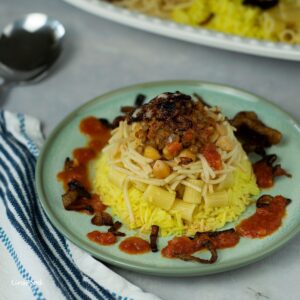
Koshari Recipe (aka Egyptian National Dish)
Koshari, affectionately called the national dish of Egypt, is a no fuss, rustic dish of rice, pasta, noodles, lentils and chickpeas!
Print
Pin
Add to Collection
Servings:
Calories: 438kcal
Equipment
- Knife
- Chopping board
- bowls as needed
- saucepans as needed
- ladles
- serving plate
- sieve or strainer
Ingredients
Chickpeas
- 60 g dry chickpeas (about 200g/7 oz) canned chickpeas, undrained weight, this is give or take
- water (I don't bother with baking soda, the final effect is rather negligible to me)
Fried Onions
- 2 large onions (or just 1, I love onions!)
- 50 ml vegetable oil
Lentils
- 100 g brown lentils
- water (as needed)
- 1 Tbsp onion oil (from frying the onions)
- leftover chopped onions from above (fried onions)
- 125 ml passata (tomato sauce)
- ¼ tsp salt
- 1 pinch sugar
Rice
- 200 g basmati rice (traditionally, Egyptian short grain rice)
- ½ tsp salt
- 1 pinch saffron
- 2 Tbsp hot water (for the saffron)
- water
Vermicelli
- 120 g reshteh (Persian noodles) (or spaghetti/linguine)
- 2 Tbsp salted butter use EV olive oil for Vegan Koshari
- 250 ml just boiled water
- ¼ tsp salt
Pasta
- 150 g small macaroni type pasta
- 1 Tbsp salt
- water
- 1 Tbsp onion oil
Tomato Sauce (Da'ah)
- 2 medium garlic cloves
- leftover chopped onions from earlier (fried onions)
- 1 Tbsp EV olive oil
- 250 ml passata (tomato sauce)
- ¼ tsp salt
- ⅛ tsp sugar
- 1 tsp chilli flakes (or halve this)
Cumin Sauce (Kamouneyah)
- 2 medium garlic cloves
- 1 Tbsp onion oil
- 1 Tbps ground cumin
- 4 Tbsp water
- 3 Tbsp clear vinegar
- 1 pinch salt
Instructions
THE NIGHT BEFORE - Soak Chickpeas
- If using canned, skip to next step. Place your chickpeas in a large bowl and top with water, ensuring that there's at least 7.5cm/3" of water above the surface of the chickpeas.

COOKING DAY
- Go through the ingredients list above and get everything ready, as they are listed.Get the bottles of oil and vinegar out. Weigh out your lentils, rice, pasta and noodles, whatever you've decided to use.Make sure you have measuring spoons and cups ready to go as needed, including a large, flat plate to place them on so you can re use them.You'll also want a sieve and/or colander for draining the grains and pasta.

Chickpeas
- Drain and rinse the chickpeas. Then place is a saucepan and fill with water. Ensure that there's at least 5cm/2" of water above the top of the chickpeas.Bring to a boil, then lower the heat and cook for 1 hour. Stir in the salt halfway through cooking time.When done, drain and set aside.While the chickpeas are cooking, let's move on to soaking the saffron. Set an alarm for the chickpeas.

Bloomed Saffron
- Saffron is listed with the rice in the ingredients above.Put the kettle on with a little water.Place a pinch of saffron in a mortar, along with a pinch of salt. Grind the 2 with a pestle until you've crushed the saffron a little. Don't worry too much about getting a powder, we want to break it up a little.You could also just crumble the saffron pistils up with your fingers, if you prefer, into a small bowl.

- Top with the 2 Tbsp very hot water and leave to soak until we're cooking the rice.Now, let's move on to the fried onions.

Fried Onions
- Peel and slice the onions into rings. Separate the rings.Save half of 1 onion for our lentils and tomato sauce. We'll be frying the rest now.

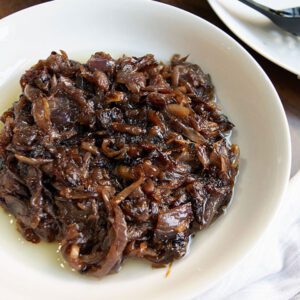
- Heat the oil on medium-low heat in a medium wok, deep frying pan or saucepan. Fry the onions for 20 minutes, stirring every 3-4 minutes. If your onions are browning too quickly, reduce the heat to low.

- We want to fry the onions until they are brown in colour. How brown is a matter of taste. If you fry them to a dark, brown, crispy state, they can be a little bitter, and may not be to everyone's liking. This is what I do. So you can stop at the golden brown stage.Or, if you want caramelised onions, see the tutorial here.When the onions are done (see below), use a slotted spoon to fish them out of the oil and place them on a plate lined with 3 layers of kitchen paper, to absorb excess oil.While the onions are frying, let's get the lentils going, but don't forget to stir the onions from time to time. Set an alarm to remind you.
Lentils
- Pick the lentils to remove any grit, then rinse and place in a saucepan. Top with water, with at least 2.5cm/1" water above the lentils. Bring to a boil, then lower heat right down and simmer, uncovered, for 20 minutes.

- Chop onions. While the lentils are cooking, remember the half onion from earlier? Finely chop it all up and divide into 2. Don't forget to stir the onions and check the time for the chickpeas.At this stage, we'll continue with some prep work while waiting for the lentils and onions to finish.

- GARLIC FOR SAUCES. Finely chop the garlic that we'll be using to make the tomato and cumin sauces. Keep the 2 amounts separate and set aside until needed.Pay attention to the onions too, fish them out when they're done.

- Back to lentils. When the lentils are done, drain and set aside.

- Heat 1 Tbsp of the onion oil in the same saucepan on medium heat and fry half of the chopped onions from before for 1 minute.
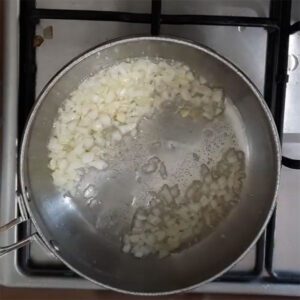
- Add the passata, salt and sugar and bring to a simmer. Lower the heat down and cook, uncovered, for 10 minutes.

- Tip the lentils in and bring back to a simmer. Cook, uncovered, for 10 minutes to get until you have a fairly dry but still moist mixture. If it starts to dry up earlier, that's fine too.Take it off the heat and set aside until assembly. If you are reusing the saucepan, just dish the lentils out into a bowl.

Rice
- Rinse the rice a couple of times and place in a medium saucepan. Then top with water, add the salt and all of the soaking saffron mix and bring to a boil on medium-high heat. You can also just use a rice cooker, if you have one.

- Cook the rice until the water's been absorbed, and you start seeing steam vents/holes on the surface. Cover the saucepan, reduce the heat right down and cook for 12 minutes.At the end of the 12 minutes, take it off the hot hob.While the rice is cooking, let's move on to the noodles.

Vermicelli
- Break your vermicelli in half and put the kettle on with at least 500ml (2 cups) water.

- Heat the butter (or olive oil for vegan version) in a deep frying pan, wok or roomy saucepan on medium-low heat. Drop the vermicelli in and toast the noodles for about 5 minutes, until they are a golden brown and toasty in aroma.They won't all be evenly browned, don't worry about it.

- Pour in about 125ml (½ cup) water, stir and let the noodles continue cooking to absorb the water. It'll only take 3-4 minutes, depending on your heat and to some extent, the noodles.Add another half cup water and again, stir and let the noodles absorb the water. This should be enough, if not, add more water, a little at a time. It will take about 8 - 10 minutes for the noodles to be fully cooked, like spaghetti.I know this may seem like a strange way to cook the noodles, but the toasty flavour remains pronounced this way. You could also boil them first, then drain and toss in butter. That's much quicker and less hassle, but not as delicious. Read the article above for more on this.Tip out onto a cool plate, when done.

Pasta
- Bring a small saucepan of water to boil on high heat with the added salt. Add the macaroni and cook for 10 minutes, or however long it says on the packet. When done, drain and toss in 1 tsp of the onion oil to stop from sticking. Set aside.While the pasta is cooking, let's do the tomato sauce and cumin sauce.

Tomato Sauce
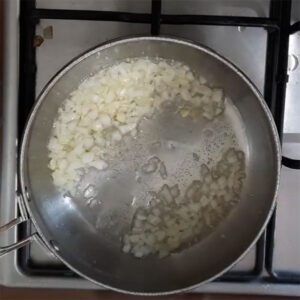
- Heat the oil in a small saucepan on medium heat and fry the rest of the chopped onions and garlic for 1 minute. Add the garlic and fry for 20 seconds.
- Pour in the passata, and add the salt, sugar and chilli flakes. Bring to a simmer, then lower the heat right down and cook for 10 minutes.Let's get the cumin sauce going during these 10 minutes.

Cumin Sauce
- Heat the onion oil on medium-low heat and fry the garlic for 30 seconds.

- Add the cumin, stir quickly, then add the water, vinegar and salt. Simmer for 1 minute on low heat and it's done.

- Using a handheld immersion blender (or a small chopper/blender), blend your cumin sauce to create an emulsion as well as to grind down the garlic. This is optional, but I think it creates a superior sauce - only on MER, no one else does it, I know!ps: don't worry too much about any odd piece of garlic that remains.

ASSEMBLY, Finally!
- You can place all the different parts in separate dishes or "line them up" in a large dish as in the image. Or create little tarabeesh (domes) by layering everything in small bowls (not the sauces).If served separately, everyone can grab a bowl or plate and dish up a serving of everything, finishing up with a little tomato sauce and a drizzle of the cumin sauce.
Everything on 1 large platter
- Fluff up the rice and dish out onto a large platter.

- Arrange the chickpeas, lentils, pasta and noodles on either side of the rice, in layers as you can see in the images. Top with some crispy onions, with the rest on a plate on the side.Honestly, you can create any pattern you like here. Make circles with the different parts, if you prefer.
- Serve the tomato sauce up in a bowl with a spoon.Pour the cumin sauce into a little jug or also place it in a bowl with a spoon.

Tarabeesh
- Get a small bowl (I'm using one that measures 12cm in diameter x 7cm in height (just under 5" x 3"). This will give you a small serving - with the recipe here, you'll easily get 12 servings. Great for parties!You can layer it anyway you like. I went with rice, pasta, noodles, chickpeas, lentils, fried onions.Let the diners do their own sauces.
Nutrition
Calories: 438kcal | Carbohydrates: 63g | Protein: 12g | Fat: 16g | Saturated Fat: 4g | Polyunsaturated Fat: 5g | Monounsaturated Fat: 5g | Trans Fat: 0.2g | Cholesterol: 10mg | Sodium: 2031mg | Potassium: 577mg | Fiber: 9g | Sugar: 6g | Vitamin A: 540IU | Vitamin C: 9mg | Calcium: 75mg | Iron: 5mg
Did you make this recipe?Mention @azlinbloor and tag #linsfood!
Made it? Upload your photosMention @azlinbloor and tag #linsfood!