Enjoyed this recipe? Add us to your Google Search Preferred Sources:
From everyday brews to specialty pour-overs and lakeside cafés, Austin has coffee for different budgets. Here’s what you can expect to pay, what affects the price and when it’s worth spending a little more.
Estimated reading time: 7 minutes

Austin Coffee – the short version
Austin runs cheaper than the coasts for specialty coffee. Here’s how the price tiers stack up, what moves the number up or down within each tier, and how to apply the same value logic you’d use when choosing a cocktail bar.
A well-made espresso drink runs $4–6, pour-overs fall between $5–8, and cold brew tops out around $7 at serious shops. Those figures run consistently below what the same quality costs in New York or San Francisco, where specialty pour-overs routinely reach $10–14. Austin’s range is narrower, its floor is lower, and the cost gap between a thoughtful choice and a random one is usually $2–3.
The most useful frame for an Austin coffee decision is the same one that works for choosing a cocktail bar: there are tiers, there are specific factors that move the price within each tier, and the value question always comes back to whether you matched the category of experience to what you were actually there for. In Austin, the most expensive specialty cup is often priced closer to the mid-tier than most people coming from other cities expect.
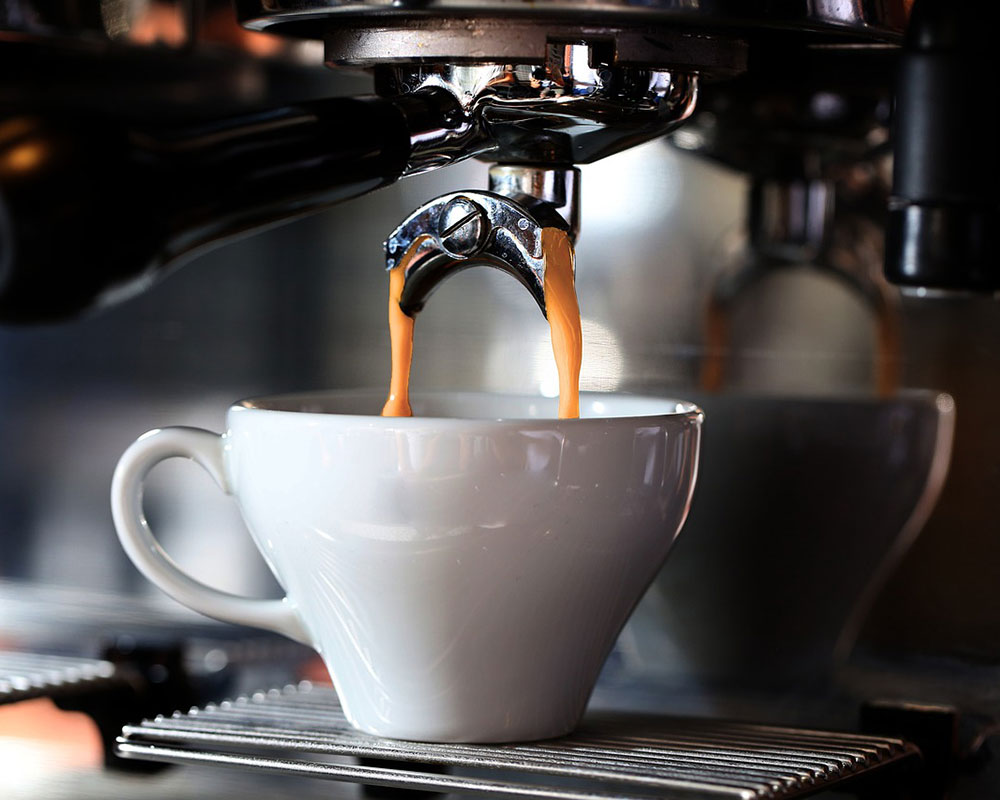
The three tiers Austin coffee actually runs on
Austin has roughly 208 specialty-grade cafés among approximately 874 total coffee shops. Nearly one in four operates at a sourcing level most American cities can’t match. Those operations don’t charge identical prices, and they don’t occupy identical value categories. Here’s where the market actually divides.
$3–5 · Commodity reliable
Standard drip, capable espresso, solid execution without obsession. Jo’s Coffee’s Iced Turbo, the chocolate-hazelnut cold brew, is a genuinely good drink at this price point. Epoch Coffee’s late-night drip serves the same category: dependable, unpretentious, and available when nothing else is. Summer Moon’s lattes start here before the wood-fire profile, and Moon Milk additions push them toward the tier above. None of that is a criticism. When coffee is fuel, social prop, or a reason to extend a conversation, this tier handles exactly what’s asked of it.
Examples: Jo’s Coffee, Epoch Coffee, Summer Moon Coffee (base drinks)
$5–8 · Specialty craft
This is where sourcing becomes the story. In-house or direct-trade roasting programs, beans graded 80 or above on the SCA cupping scale, rotating seasonal menus, and baristas who can name the farm and processing method behind the pour-over. A cup in this tier is a categorically different product from the one below: not better execution of the same inputs, but meaningfully different inputs altogether. Cuvée Coffee’s Black & Blue nitro cold brew sits at the higher end of this range and earns it – the nitrogen infusion changes the texture and perceived sweetness in ways that require genuine production investment, and the result drinks more like a considered cocktail than a standard cold coffee. Flat Track Coffee, Medici Roasting, and Merit Coffee operate throughout this tier.
Examples: Flat Track Coffee, Cuvée Coffee, Medici Roasting, Merit Coffee, Houndstooth Coffee
Same cup price · Different value calculation: destination
The cup might be priced in the same specialty range. What changes is the context it arrives in. Setting, programming, hours, and the experience surrounding the coffee are what determine whether the visit justified itself. That’s a different question from whether the espresso beat the one at a nearby competitor. This tier is where destination shops operate, and the right value frame is closer to “was the outing worth it” than “was the cup better.”
What moves the number between a $4 latte and a $7 one
The same factors that separate a $9 mezcal margarita from a $14 one apply here: ingredient quality, production method, equipment investment, and the cost of the address you’re drinking at. Austin’s specialty coffee scene has developed enough depth that all four factors are operating simultaneously at the better shops, which is why the tier gap is real even when the price difference looks modest.
Bean sourcing. The SCA grades green coffee on a 100-point cupping scale; 80 or above qualifies as specialty-grade, evaluated across aroma, acidity, body, and balance. Below that threshold, the same language appears on bags without the verification. Beans traced to the farm or cooperative level, with documented harvest date and processing method, cost more to source, and that cost reaches the cup. The simplest signal: a knowledgeable barista who can tell you something specific about the lot currently on the pour-over menu.
Roasting approach. An in-house roasting program is a significant capital commitment and a direct relationship between the café and its product. A shop roasting what it serves controls freshness and profile in ways a shop wholesaling from a third-party supplier simply cannot. The roast date on the bag, or the ability to ask when a lot was roasted and receive a specific answer, is the practical indicator.
Equipment tier. Professional espresso equipment carries real capital cost. A Kees van der Westen machine, running at Houndstooth’s downtown location and at Flat Track Coffee on East Cesar Chavez, represents a $20,000–$30,000 investment per group. That amortizes into the cup, and it produces a different extraction than a volume-oriented commercial machine. The logic is the same as the difference between a jigger-measured cocktail from quality spirits and a free-pour house drink.
Setting and real estate. A café on South Congress, the Drag, or Lake Austin Blvd carries meaningfully higher lease costs than a neighborhood spot on a side street in East Austin. The cup price reflects the address. This is the same math explaining why a standard cocktail costs more at a hotel rooftop than at a neighborhood bar: you’re paying for the location as part of the experience.
Drink complexity. A pour-over requires four to five minutes of active barista attention, with specific grind, temperature, pour timing, and adjustment for each lot. A batch brew requires a button. The labor differential is real and shows up in the price. This is partly why specialty pour-over prices in Austin still run below comparable quality in larger coastal markets, where the same labor costs considerably more.

The destination tier, specifically
The value case for a destination shop doesn’t reduce to a cup-for-cup quality comparison. The same cortado in a strip-mall café and on a waterfront deck at 9 p.m. with live music costs the same amount and represents entirely different experiences. The right frame for the destination tier is whether the visit itself earned its place in your day, not whether the espresso beat a rival’s.
Mozart’s Coffee Roasters at 3825 Lake Austin Blvd is the clearest example in Austin. The operation dates to 1993, when four local couples opened the city’s first on-premises coffee roaster on the shore of Lake Austin. The waterfront deck runs directly on that shore, not adjacent to it.
Hours hold at 7 a.m. to midnight every day of the year, which removes the “closes before I can get there” ceiling that limits most specialty shops to a morning proposition. The in-house roasting program means the coffee in your cup was produced on-site.
The surrounding programming covers live music on the outdoor stage, Float-In Theatre on Thursday evenings, and the Festival of Lights from late November through early January, with over a million LEDs synchronized to music and attendance in the hundreds of thousands. The café itself is rarely the only reason the visit paid off.
The value question for a destination like Mozart’s isn’t whether the cortado is better than the one downtown. It’s whether the full experience is worth building the morning around. For a lakeside deck open until midnight with in-house roasting and live music, the honest answer is usually yes.
The one genuine qualifier: a single location on Lake Austin Blvd means a deliberate trip from most of the city, 20 minutes from downtown when traffic cooperates and longer in the afternoon on that stretch. Whether that math works depends on whether you’re building a morning or evening around it versus just looking for coffee on the way to something else.
And there you have it: paying more for coffee can mean better beans, a more involved brew or a lovely place to sit. Choose an Austin café that suits both your plans and your budget.
Lin x
Enjoyed this recipe? Add us to your Google Search Preferred Sources: