
Hey, I’m Azlin Bloor!
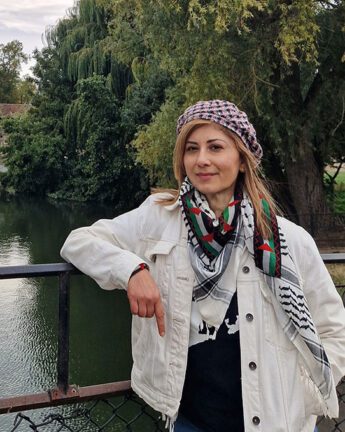
I’m a food writer and culinary instructor, born in Singapore and based on England’s south coast. Welcome to LinsFood, where I share recipes, food culture, history and the occasional language lesson.
When I started LinsFood, I covered a huge range of cuisines, reflecting my multicultural family, life in London, travels and work in professional kitchens, including an Ethiopian restaurant. There were also cuisines I’d spent time learning and later teaching, such as Kashmiri cooking. Between family, work and curiosity, I was never going to have a particularly short recipe list.
Chillies got plenty of attention too. I grow far too many every summer and even ran a newsletter dedicated entirely to them. Because growing them and putting them in everything wasn’t quite enough, apparently.
Over time, my publishing priorities have changed to reflect the focus of my cooking classes. These days, on LinsFood, I concentrate mainly on Middle Eastern, North African and Asian food, with a continuing affection for British cooking and the odd detour elsewhere. I’ve never been very good at walking past an interesting recipe.
What You’ll Find on LinsFood
LinsFood is for curious cooks, whether you’re finding your feet in the kitchen or have been feeding people for decades.
I approach the articles pretty much as I approach my cooking classes, with clear instructions, explanations of unfamiliar ingredients, practical advice and, where I can establish it, the story behind the dish.
Some recipes, such as my Sumac Chicken Traybake, are easy enough for a weekday dinner. Others ask you to set aside time or learn something new. Both have their place. Even those of us who enjoy a kitchen project occasionally need dinner before bedtime.
Explore my World Cuisines page for the full collection, including Middle Eastern and North African, Chinese, South Asian and Thai, Vietnamese and Burmese recipes.
The wider collection is still here too. A good recipe doesn’t acquire an expiry date because my publishing plans have changed.
Food, Culture and the Occasional Language Lesson
I’ve always felt that understanding the culture behind a dish makes cooking it more interesting.
You can follow a recipe for sambal oelek, doro wot, focaccia or halawet el jibn and produce something delicious. But I also like to explore what the name means, how the dish is prepared in different places and what its history can tell us.
I’m interested in the differences between regional and family versions, and I’ll explain which one I’m sharing. Food discussions can become surprisingly heated. Occasionally, an entire country joins in.
I also love languages, so a pronunciation guide or a little explanation of a recipe’s name may find its way into an article. It’s an occupational hazard.
My Singaporean and Malaysian Roots
I grew up mainly in Singapore, with some childhood years in Malaysia, where my dad was from.
My extended family is wonderfully multicultural, with Pakistani, Chinese, Malay, Indian, Arab, Eurasian and European connections, among others. Marrying outside the original ethnic group seems to have become something of a family tradition.
We grew up speaking several languages, and a family conversation can change language more than once before anyone reaches the end of a sentence. Everyone follows along. An unsuspecting visitor will probably need a moment.
I speak four languages, plus enough of a few others to order food and find my way around. My Arabic is rather lopsided: I can read and write it, but conversation? Yeah, totally another matter. I’m hopeless.
Growing up in that family, and in Singapore, gave me a broad foundation of home cooking. Malay, Chinese, Eurasian, South Asian, Middle Eastern and Nyonya food all feel familiar. I am very fortunate.
In January 2021, I launched Singaporean and Malaysian Recipes to give the food of my childhood a dedicated home. That’s where I now publish new Singaporean and Malaysian recipes, alongside their stories, ingredients and cultural context.
I think of it as my nostalgic culinary affair.Thankfully, this is the sort of affair you’re allowed to tell everyone about.
My Connection to Middle Eastern Food
Middle Eastern food has always had a special place in my life, through family connections and the years I spent working and travelling in the region during the 1990s.
Singapore also has a long history of connections with Hadhramaut in Yemen. Many of its early Arab settlers came from there, and names such as Aljunied, Alkaff and Alsagoff remain familiar in Singapore today.
Those connections travelled in both directions. I rather love the National Library’s account of finding sambal belacan on tables in Hadhramaut. Food has a habit of making itself at home.
That affection runs through my Middle Eastern and North African recipe collection. There’s plenty here, and I’m always happy to make room for more.
I’m also particularly fond of British cooking. It deserves far more credit than it gets. There’s a great deal to enjoy once we stop judging an entire cuisine by one unfortunate boiled vegetable. Or two.
Ingredients, Substitutions and Other Opinions
Knowing how an ingredient tastes, what it does in a dish and how to use the rest of the packet makes cooking much easier.
My ingredient guides cover spices, herbs, sauces, pastes and other useful things for your kitchen. You’ll also find my edible garden, where I write about plants I grow or have grown.
I grow too many chillies every summer. I’m aware that “too many” is a matter of opinion. Mine tends to become a problem when I run out of places to put them.
I like to understand a dish in its traditional form before changing it, something I try to instil in my students and readers. You have to apprecitae the original before going off in various tangents. But I also appreciate that ingredients aren’t always easy to find when you’re cooking far from the place a recipe comes from.
Where a substitute makes sense, I’ll explain it, along with what it changes. Where there isn’t a close equivalent, I’ll tell you that too.
Sometimes it’s worth tracking down the original ingredient. Hello, online shopping! Sometimes a practical adaptation gets dinner on the table. I’m happy to help with both, provided we’re honest about the result. Because brown sugar is not the answer to everything. Right?
Cooking Classes and Cookbooks
I’ve been teaching cookery for almost 20 years, and I also spent several years working in professional kitchens in London. Those kitchens taught me a great deal about cooking, organisation and remaining reasonably pleasant under pressure. Reasonably.
I’ve taught on Udemy for more than a decade, and you can browse my online cooking courses here.
I also teach live classes online and in person, with most of my in-person classes held for charity.
I’ve written three cookbooks, including one that reached number one on Amazon. The only one still in print is Christmas Without Borders, with every proceed going to UNRWA. Available on Amazon.
A Glimpse of My Family
The family collage below gives you a small glimpse of the people behind all those culinary connections.

Beyond the Kitchen
I moved to London in the early 1990s and have lived in the UK ever since. Home is now Bournemouth, on England’s south coast. I’m widowed and have four children.
Away from work, I read a great deal, usually around two books a week. Kindle Unlimited has been extremely useful in keeping both the cost and the number of bookshelves under control.
I enjoy working out and can’t live without my nightly yoga.
WHAT OTHERS SAY
"I just wanted to say thanks for this recipe and all those ideas for using it. I’ve made every single recipe you’ve suggested more than once. They were all big hits."
"I can’t remember when I’ve enjoyed a recipe so much. An absolute delight, from start to finish."
"Wow, I’ve honestly never been so impressed by a blog post recipe in my life, and I haven’t even started making this yet. From the bottom of my glass, thank you!".
"This is by far the best Limoncello that I have made."
"I looked at so many recipes than settled for yours as it had the best explanations. Thanks it was one of the best rice dishes I’ve ever had. And being Indian, I’ve had a few!"
Beautiful Food Pictures
And I take Beautiful Food Pictures too! Here are just some of my favourite food and drink shots


Get in Touch
If you have a cooking question, leave a comment on the relevant recipe so other readers can benefit from the answer too.
For cooking classes, interviews, recipe development or working together, head over to my media and contact page.
You’ll also find more Singaporean and Malaysian food stories on my Substack, and you can join the conversation at The Long Table with Azlin.
Thanks for being here. Have a browse, find something you fancy cooking and tell me how it goes.
Lin xx
Share this with someone who'll love it!