Enjoyed this recipe? Add us to your Google Search Preferred Sources:
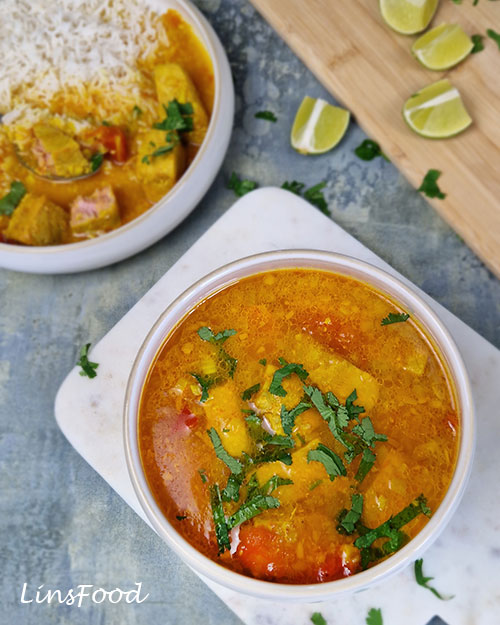
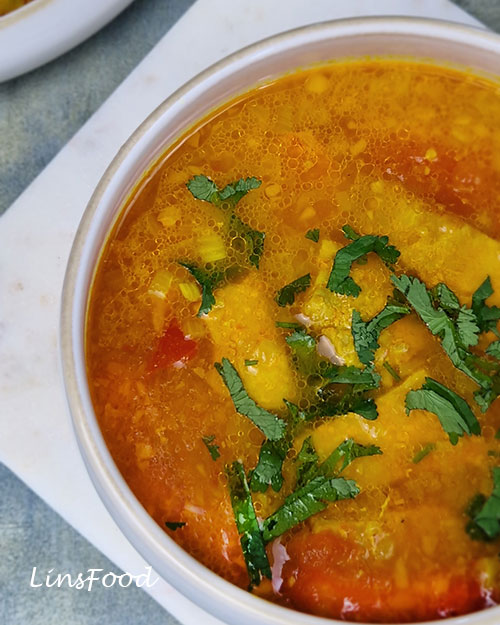
Paplou is a tart, often garlicky Omani fish soup made with turmeric, chillies and plenty of citrus, then served over basmati rice. Tuna is commonly used, although shellfish or samak beed (fish roe) also appear in different versions. I keep the spicing fairly simple and use both fresh lime and brown limoo for a light but deeply flavoured broth.
Estimated reading time: 13 minutes
What Is Paplou?
Paplou is a traditional Omani fish or seafood soup. Some versions are decidedly soupy, while others lean more towards a light fish curry.
It’s particularly associated with the coastal regions of Muscat and Al Batinah, where fish has long been central to everyday cooking.
You’ll also see the name written as paplo, paploh, bablou, bablo or baplo.
A soup by any other name, depending on who’s doing the transliterating.
Paplou is usually sharp with citrus, golden with turmeric and often strongly flavoured with garlic. Tomatoes and onions give the broth sweetness and body, while green chillies bring heat. It’s then ladled over plain rice, which absorbs the broth and turns a relatively light soup into an incredibly satisfying meal.
A Little History
The exact origins of paplou are difficult to separate from Oman’s wider coastal history.
The dish has been associated with both Lawati and Balochi communities in Oman. The Al Lawatiya have longstanding links with Sindh and the Indian subcontinent, while Omani Balochi communities have connections with the region of Balochistan across present-day Iran and Pakistan.
Paplou’s history is perhaps best understood as part of Oman’s wider coastal history, shaped by the communities who lived along its shores and by centuries of Indian Ocean trade. Oman’s links with India brought rice and warm spices such as chillies, cinnamon, ginger, turmeric and coriander into Omani kitchens, while trade with Persia and East Africa added further layers to the country’s cooking.
Paplou reflects that movement particularly well: locally caught fish meets rice, spices, chilli and citrus in a dish that carries the flavours of the Arabian Sea and the trade routes that crossed it.
I haven’t found a verifiable paplou recipe under that name in any early Omani or medieval Arabic culinary text. For once, nothing in my favourite, Kitab al Tabikh. The written recipes that are readily traceable are modern, but that doesn’t mean the dish itself is new. Home cooking, particularly within fishing and minority communities, was often passed down through practice rather than written into formal cookbooks.
Its precise starting point may be uncertain, but paplou is now firmly part of Oman’s coastal food culture.
Every Family Has Its Own Paplou
As with so many traditional dishes, every family – and often every area – will have its own way of making paplou.
Oman’s long trading relationships help explain why the soup appears in so many guises, particularly in the aromatics and spices used.
Some recipes include cumin, ginger, paprika or ground coriander. Fresh coriander may be pounded with the garlic and chillies, scattered over the finished soup or left out altogether. You may also find potatoes, carrots or different proportions of tomato and onion, while the broth can range from light and soupy to something closer to a thin curry.
What remains at the heart of paplou is the combination of fish, lime and rice: fresh seafood from Oman’s coastal waters, a distinctly tart broth and plain rice to soak it all up.
I like to keep my version fairly simple, relying mainly on turmeric, plenty of garlic and citrus. I use both fresh lime and dried lime, or limoo, then add a small cornflour slurry to give the broth a little body without turning it into a thick sauce.
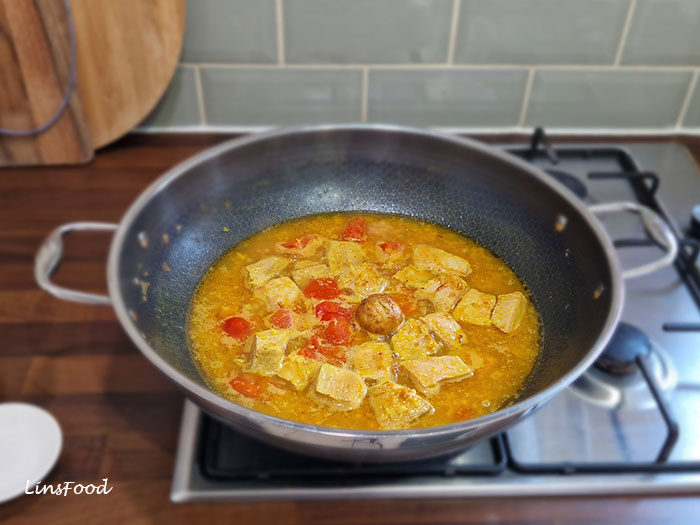
It isn’t intended to be a thick curry. The broth should still flow easily around the rice, with enough substance to carry all that garlic and lime.
Ingredients for Paplou
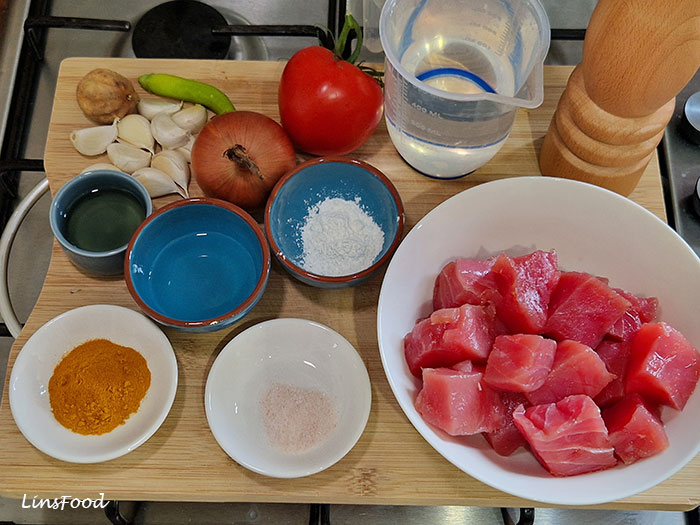
The main ingredients in my paplou recipe are fresh tuna, brown limoo, fresh lime juice, turmeric and a very generous amount of garlic. The tuna gives the soup its firm, meaty texture, while the fresh and dried lime bring two different kinds of sharpness: one bright and immediate, the other deeper and more aromatic.
Turmeric gives paplou its glorious golden colour, and we have plenty of garlic to make a statement. But not too worry, with the lime and turmeric, it doesn’t particularly stand out, it settles down and plays nicely. Tomatoes, onion and green chillies round everything out, but it’s the tuna, citrus, turmeric and garlic that give the soup its character.
Let’s take a look at the fish and limoo amani.
The Fish in Paplou
Tuna is the fish most closely associated with paplou, and its use makes sense geographically.
Oman has a coastline of more than 3,000 kilometres, facing the Arabian Sea and the Gulf of Oman. Its waters support several tuna species, including yellowfin tuna, longtail tuna, kawakawa and skipjack. Yellowfin and longtail tuna are particularly important to the country’s fishing industry.
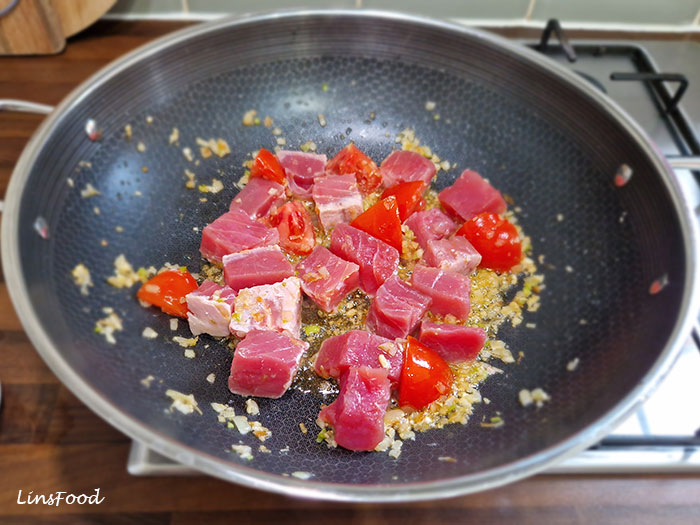
Fresh tuna has firm, meaty flesh, so it holds together better than a delicate white fish when simmered in the broth. Traditional paplou generally uses tuna that’s cooked through rather than served pink in the centre. Large chunks and a very gentle simmer help prevent it from becoming excessively dry.
That said, I’m not a massive fan of tuna. I enjoy it occasionally, but more often than not, I make my paplou with prawns.
Prawns work beautifully with the turmeric, garlic and citrus, and they give the finished soup a slightly lighter flavour. They also cook much more quickly, so they only need to be added towards the end of cooking.
You could also use:
- Kingfish
- Mahi-mahi
- Monkfish
- Firm hake or cod loin
- Halibut
- Snapper
- A mixture of shellfish.
Whichever fish you choose, avoid very thin or delicate fillets that are likely to fall apart in the broth.
Limoo in Paplou
Dried lime is an important part of cooking across Oman, Iran, Iraq and the region.
In Oman, it’s generally called loomi. In Persian, it’s known as limoo amani, meaning Omani lime, while in Iraq you may come across the name noomi Basra. I tend to use limoo in my own writing, although all three names refer to the same family of dried limes.
The limes are usually briefly blanched before being dried until the interior is hard and the peel has turned brown or black. They bring much more than simple sourness. Their flavour is citrusy, earthy and slightly fermented, with a bitterness that becomes stronger the longer they cook.
Brown and black limoo aren’t necessarily different varieties of lime. Their colour is largely connected to how extensively they’ve dried and oxidised.
I prefer the brown dried lime in paplou because it’s lighter, more fragrant and more subtle. Black limoo has a deeper, smokier and often more bitter flavour, which I love in robust meat stews like our Persian khoresh here on LinsFood, but find that it can dominate a delicate fish or prawn broth.
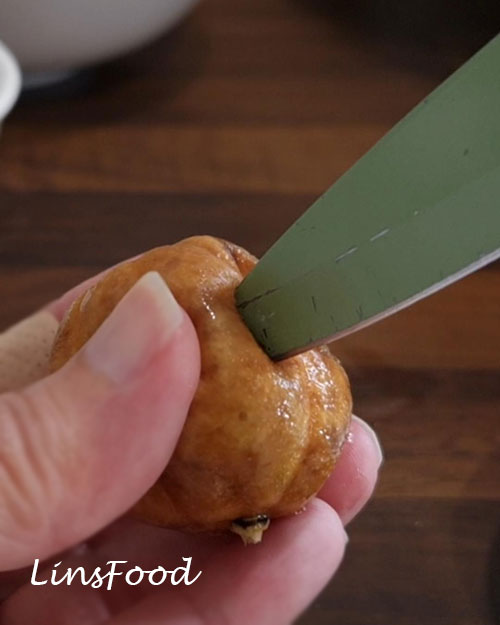
We soak the whole limoo briefly, pierce it a few times and simmer it in the soup. Piercing allows the broth to move through the fruit and draw out its flavour, but there’s no need to treat it like a pincushion. Too many holes can release excessive bitterness.
The limoo is removed before serving, and I add more fresh lime juice (apart from what’s in the recipe) only after tasting. That gives you much better control over the final acidity.
Read more about limoo amani here and also how to use dried limes.
What Does Paplou Taste Like?
Paplou should be noticeably tart, but still balanced enough for you to taste the fish, tomatoes, garlic and spices.
Fresh lime gives it a clean, immediate sharpness, while dried lime provides a deeper citrus flavour. Turmeric adds earthiness and its characteristic golden colour, and the softened tomatoes and onions bring a little sweetness.
Garlic is not a background ingredient here. My recipe uses 8 cloves, which may initially appear ambitious, but it mellows during cooking and has to stand up to the tuna, turmeric, chillies and two types of lime.
The result is warming, sharp and savoury rather than heavy. It’s particularly good when you want something comforting but don’t fancy a rich stew.
Tips for Cooking Paplou
Don’t overcook the tuna
The tuna should be opaque and cooked through but still moist. Cut it into large chunks, keep the broth at a very gentle simmer and start checking it after eight minutes. Depending on the size of the pieces, it may need just a little longer.
Control the sourness
I begin with 60 ml (1/4 cup) of fresh lime juice because the limoo also adds acidity. Remove the dried lime, taste the broth and add more fresh juice only if needed. Paplou should be distinctly tart, but the tuna, garlic and turmeric should still get a look in.
Keep the limoo whole
Soak the limoo briefly, then pierce it three times before adding it whole. Cutting it open or leaving it in the broth for too long can release too much bitterness, so remove it once the tuna is cooked.
Keep the slurry light
The cornflour slurry (or wheat flour, if that’s what you prefer) is there to give the broth a little body, not turn it into a thick sauce. Two teaspoons are enough for a lightly thickened soup; add another teaspoon only if you prefer a slightly fuller consistency.
Adjust the chillies
Remember what I always say: not all chillies are created equal. Green chillies vary enormously in heat. I used one in the video, but you can use more, half a chilli, or leave it out altogether.
Is Paplou a Soup or a Curry?
It can reasonably be described as either.
Some versions are thin enough to be considered a clear fish soup, while the odd one is reduced or thickened until it sits closer to a light curry or salona (stew in the Gulf). Paplo is also sometimes described as an Omani-Balochi lemon fish curry.
I use a small cornflour slurry to give the broth a little body, but it remains loose enough to ladle generously over rice. You can also use wheat flour if you prefer.
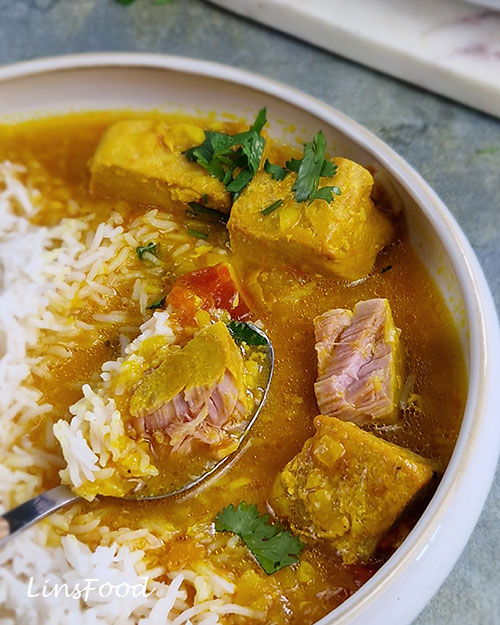
How to Serve Paplou
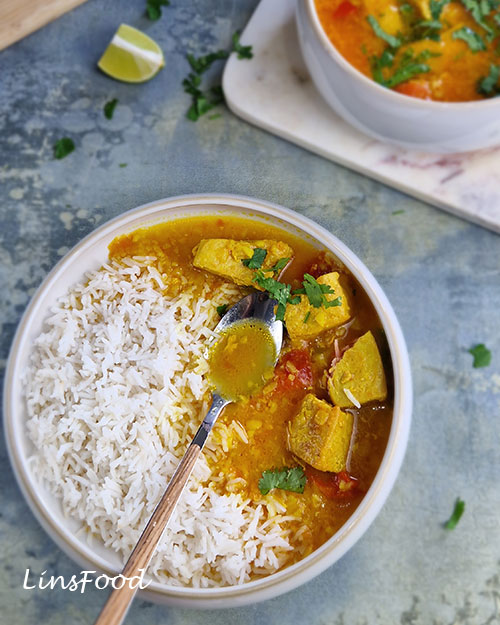
Paplou is commonly served with plain basmati rice.
Spoon the rice into individual bowls, then ladle the fish or prawns and plenty of hot broth over it. The rice absorbs the citrusy liquid, softens the heat of the chillies and makes the soup substantial enough to serve as a main meal.
You can finish it with:
- Chopped fresh coriander leaves (cilantro)
- An extra squeeze of lime
- Sliced green chillies
- A simple cucumber and tomato salad
- Pickled vegetables
- A simple dry mix of chopped coriander leaves (cilantro) and green chillies, flash fried in oil, like a gremolata. I’ll have to do this condiment!
Keep the rice plain to truly appreciate the sublime beauty of paplou.
Can Paplou Be Made Ahead?
You can make the tomato, onion, garlic and chilli base earlier in the day, then finish the soup with the fish shortly before serving.
Cooked paplou can be kept in the fridge for up to two days, although tuna will become firmer when reheated. Warm it slowly over a low heat and avoid bringing it back to a vigorous boil.
Prawn paplou is also best eaten freshly cooked, as reheated prawns can quickly become rubbery. Not that I’ve let it stop me.
Store the rice and soup separately. Rice left sitting in the broth will continue absorbing it, and by the next day you’ll have something much closer to porridge.
Frequently Asked Questions
Paplou is a coastal Omani fish soup associated particularly with Muscat and Al Batinah. Its deeper origins are debated, and both Omani Lawati and Balochi communities have been linked with the dish.
Fresh tuna is commonly used, including tuna loin and, in some versions, tuna roe. Paplou may also be made with kingfish, prawns, shellfish or other firm fish.
Yes. I’m not a great tuna lover, so I make paplou with prawns more often than not. Add them near the end of cooking because they only need a few minutes.
Limoo is a whole dried lime used in Middle Eastern and Gulf cooking. It’s also called loomi in Oman, limoo amani in Iran and noomi Basra in Iraq.
Brown dried lime tends to have a lighter, more fragrant citrus flavour. Black dried lime is generally deeper, smokier and more bitter. I prefer brown limoo in paplou because it doesn’t overpower the fish or prawns.
It can be, but the level of heat varies between recipes and households. Reduce the number of green chillies for a milder soup.
Plain basmati rice is the usual accompaniment. Paplou can also be served with lime wedges, fresh coriander and a simple salad or pickles.
Final Word
And there you have it: paplou, a tart and golden Omani fish soup shaped by coastal cooking and Oman’s long connections across the Arabian Sea.
There’s no single definitive recipe. One family may use ginger and cumin, another paprika and coriander, while tuna roe or shellfish find their way into other versions. Mine keeps the spice list short, allowing the turmeric, garlic, fresh lime and brown limoo to come through clearly.
Tuna remains the traditional heart of paplou. I’m simply not its most devoted admirer, so prawns are usually my go-to when cooking paplou.
Having said that, I love me a good bowl of tuna ceviche or the Hawaiian Ahi Poke (raw tuna bowl – click for recipe).
For more recipes from the region, head on over to my Middle Eastern Recipes page.
Drop me a line in the comments below if you make it or if you have any questions. Tag me on Instagram @azlinbloor with an image if you fancy.
More soon!
Lin xx
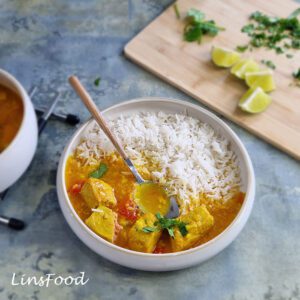
Omani Fish Soup Recipe
Equipment
- Large, wide saucepan or deep sauté pan
- Chopping board
- Sharp knife
- Citrus juicer optional
- ladles and crockery as needed
Ingredients
Aromatics, Vegetables and Herbs
- 1 dried brown lime loomi
- 2 medium ripe tomatoes
- 1 medium onion about 120g / 4 oz pre peeled weight
- 8 garlic cloves
- 1-2 green chillies
Spices and Seasoning
- 1 tsp fine sea salt plus more to taste
- 2 tsp ground turmeric
- freshly ground black pepper
Everything Else
- 4 Tbsp neutral cooking oil
- 500 g fresh tuna loin cut into large chunks
- 60 ml freshly squeezed lime juice plus more if necessary
- 500 ml water
Cornflour slurry
- 2 tsp cornflour
- 2 Tbsp water
To serve
- cooked basmati rice
- chopped coriander leaves (cilantro)
- lime wedges
- chopped green chillies optional
Instructions
Prep Work
- Cover the loomi with boiling water and leave it to soak while you get everything else ready. Drain it, then pierce three times with the tip of a knife. Leave it whole.

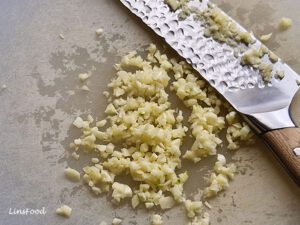
- Finely chop the onion, garlic and chillies.
- Quarter the tomatoes.
- Chop the coriander leaves, chillies (if using) and lime wedges for serving.
- Mix the cornflour and cold water in a small bowl until completely smooth. Set aside until the end.
Let's get Cooking
- Heat the oil in a large, wide saucepan or deep sauté pan over medium heat.
- Add the chopped onions and cook for 3 minutes, stirring frequently, until the onions are soft. Lower the heat if they start to brown.
- Tip in the garlic and chillies and cook for a minute.
- Add the tomato wedges and cook for 1 minute, stirring occasionally.
- Add the tuna chunks. Gently turn them through the softened onion and tomato mixture, taking care not to break them up. Give them 2 minutes to take on a little flavour, turning them. But don’t worry too much about this, just flip the pan to allow most of the pieces to colour slightly.
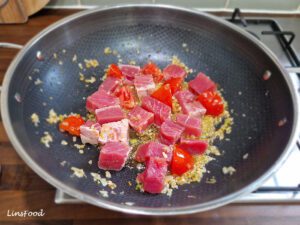
- Sprinkle over the salt, turmeric and black pepper. Gently turn the fish again until every piece is coated and the contents of the pan are thoroughly golden. No more than a minute.
- Pour in the lime juice, followed by the water. Add the pierced loomi and gently stir the liquid around the fish.
- Bring the soup to a simmer, then lower the heat right down. Cover the pan and simmer gently for 10 minutes, until the tuna is cooked through. Avoid a vigorous boil, which will toughen the fish.
- Remove and discard the loomi. Stir the cornflour slurry again, then pour it slowly into the simmering broth, stirring while you do it. Stir carefully between the pieces of fish, or gently shake the pan, and cook for another 1 minute. The broth should be only lightly thickened, not turned into sauce.
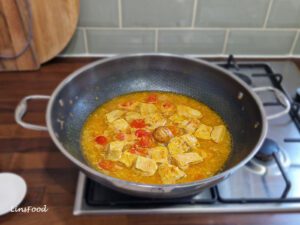
- Taste and adjust the salt and more lime juice if needed. It should be a fairly tart soup but still taste balanced. Add another squeeze of lime at the table when serving if you’d like an even sharper finish.
- Spoon cooked basmati rice into individual bowls and ladle the paplou over it, making sure everyone gets several pieces of tuna and plenty of the garlicky, citrusy broth.
- Finish with a light scattering of coriander leaves (cilantro).
Notes
Nutrition
Enjoyed this recipe? Add us to your Google Search Preferred Sources: