Enjoyed this recipe? Add us to your Google Search Preferred Sources:
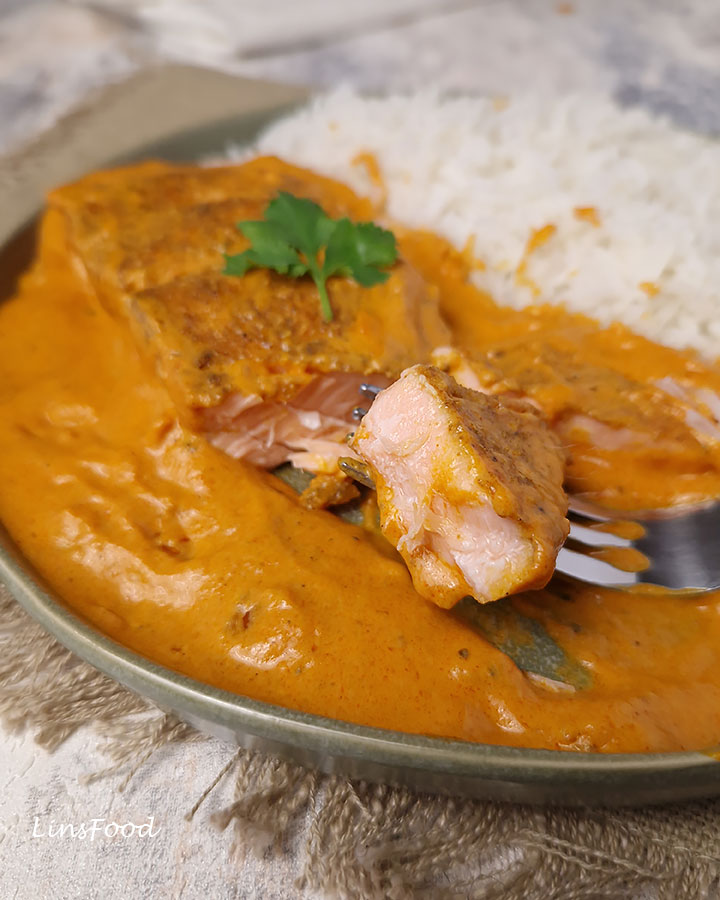
Tender salmon fillets, a creamy tomato sauce and enough spice to keep things interesting. This easy Creamy Masala Salmon uses everyday curry powder, garlic and ginger, with fresh coriander to finish. Serve it with basmati rice and plenty of that sauce.
Estimated reading time: 6 minutes
Table of contents
What is Creamy Masala Salmon?
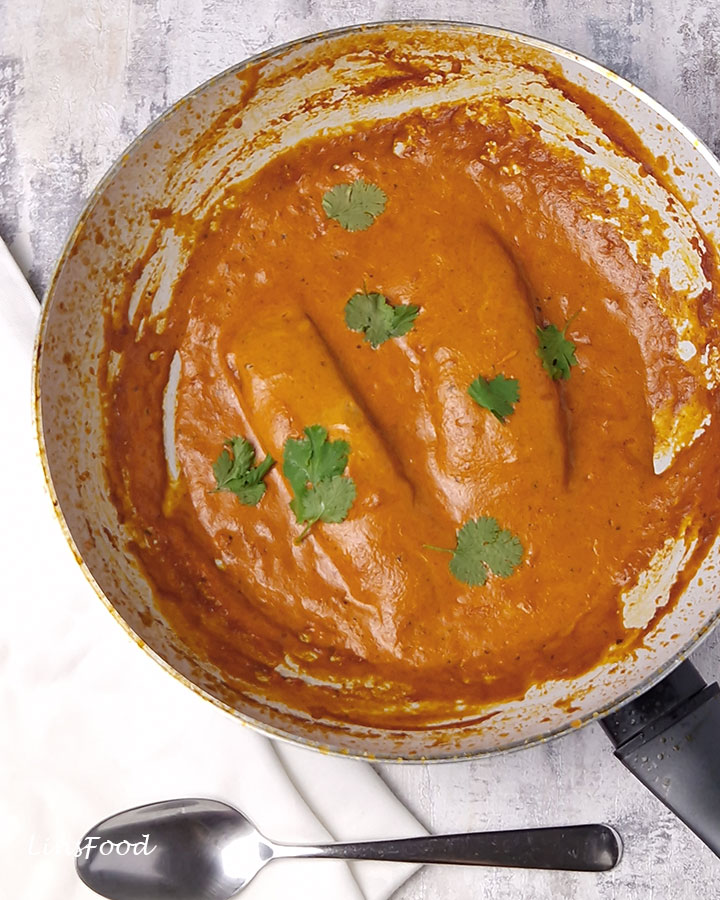
Masala Salmon is an Indian-inspired salmon curry with a buttery tomato and cream sauce. The fillets are briefly seared, then gently finished in the sauce, which takes on the flavour of the seasoned fish.
It’s warming, creamy and lightly tangy, with the heat depending on your choice of curry powder.
The Recipe
I’ve kept the spicing simple here, using one curry powder to season both the salmon and the sauce. Choose a blend you already enjoy: mild for a gentler curry, or medium if you’d like a little more heat. Or hot if you like your walk on the wild side.
The onion, garlic and ginger give the sauce its aromatic base, while tomato purée adds depth to the passata. Double cream goes in before the salmon returns to the pan, so you can stir the sauce properly without breaking up the fish.
Everything cooks in one pan, with no lengthy marinating. Put the rice on while you make the curry.
A Few Ingredient Notes
Salmon: Choose fillets of a similar thickness so they cook evenly. Skinless salmon is convenient here, as the skin would soften once it’s sitting in the sauce. But skinless salmon will also be prone to breaking, and it’s a matter of preference.
Curry powder: Blends vary in flavour, heat and colour, so your finished curry may look slightly different depending on the one you use. If your blend contains salt, reduce the added salt accordingly. I like a medium curry powder here for just a little heat.
Tomato purée and passata: Tomato purée is the concentrated paste, sold as tomato paste in the US. Passata provides the main tomato base without large pieces of tomato. To me, this dish work best with a smooth sauce.
Double cream: This gives the sauce its creamy finish. The water keeps it loose enough to spoon generously over the fish and rice. Don’t want all that fat? Reduce the double cream a little. Want to use Single cream? see below.
Sugar: Taste before adding it. Some tomatoes need a little sweetness to balance their acidity; others are perfectly fine without it.
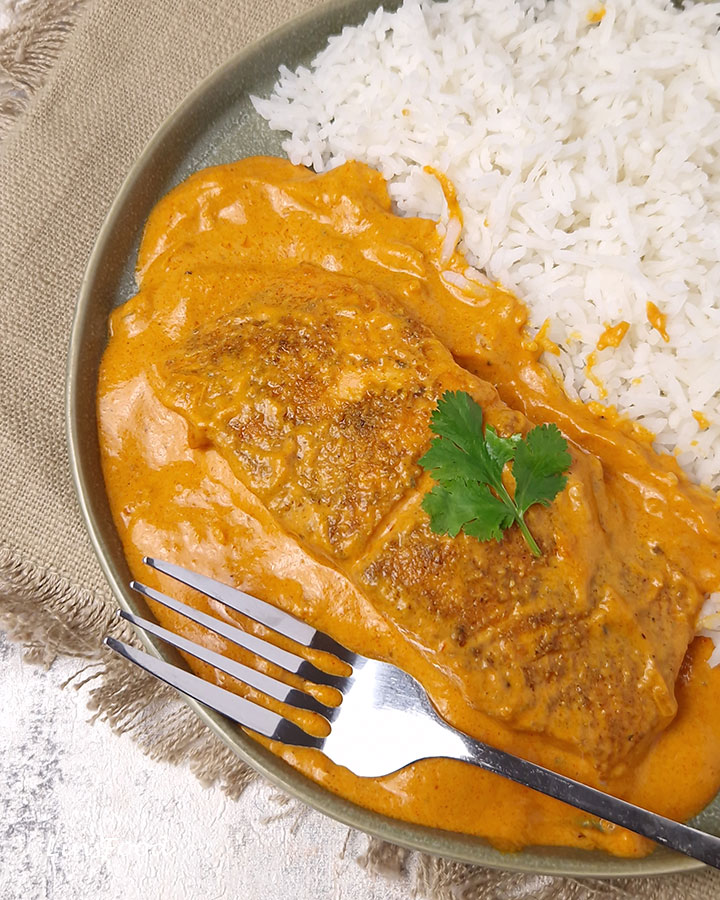
Can I Use Single Cream?
Yes, but I recommend double cream for this recipe. It gives the sauce more body and lets us stir in the cream before returning the salmon to finish cooking.
Single cream has less fat and is more likely to split when heated, particularly in an acidic tomato sauce. It needs gentler handling.
If you prefer single cream:
- Use 150ml single cream for four servings. Start with 75ml water, adding more if needed, as single cream makes a thinner sauce.
- Return the seared salmon to the tomato sauce before adding the cream. Simmer gently for 3-5 minutes, depending on thickness, until cooked through.
- Carefully lift the salmon onto a warm plate. Take the pan off the heat, let the bubbling stop, then stir in the single cream until evenly combined.
- Warm the sauce very gently if needed, without boiling. Return the salmon, spoon the sauce over it and finish with fresh coriander.
Removing the salmon briefly lets you mix the cream into the sauce properly without breaking up the fillets.
How to Serve Masala Salmon
Plain basmati rice is my first choice. It soaks up the creamy sauce and lets the salmon and spices do most of the work. Allow roughly 60–75g uncooked rice per person, depending on appetites and what else you’re serving.
Other good options include:
- Cumin rice, for a little extra cumin flavour.
- Naan or chapatis, for scooping up the sauce.
- Green beans or broccoli, simply cooked.
- A cucumber salad, for something cool and fresh alongside.
And if you’d like both rice and naan, I’m not going to argue.
How to Store Leftovers
Cool the salmon and sauce promptly, refrigerate in a covered container within 2 hours, and eat within 48 hours. Reheat gently in a covered pan with a splash of water until steaming hot throughout, including the centre of the fish. Reheat only once.
You can freeze leftover portions, although the salmon may become firmer and the sauce may separate slightly after thawing. Defrost in the fridge and use within 24 hours of fully thawing.
For a convenient meal ahead, you can also freeze the tomato sauce before adding the cream and salmon, then finish the dish with freshly cooked fish.
Variations
- Use another fish: Thick pieces of cod, haddock or hake work with this sauce. Adjust the cooking time to suit their thickness and handle them gently.
- Add spinach: Stir a couple of handfuls of baby spinach into the tomato sauce and let it wilt before adding the cream and returning the salmon.
FAQs
Yes. Defrost it fully in the fridge according to the packet instructions, then pat it dry before seasoning. This helps the surface sear properly.
Yes. Make the tomato sauce a day ahead, stopping before adding the cream or salmon. Cool promptly and refrigerate.
When you’re ready to eat, sear the salmon and set it aside. Heat the prepared sauce thoroughly, stir in the cream, then return the fish to finish cooking.
Can I make this for two people?
Absolutely. Halve all the ingredients and use a smaller pan so the sauce doesn’t reduce too quickly. The cooking times will be much the same; judge the salmon by its thickness and doneness.
Is Masala Salmon spicy?
That depends on your curry powder. A mild blend gives you the flavour of the spices with relatively little chilli heat. Use medium or hot curry powder if that’s what you prefer.
Final Word
And there you have it: Masala Salmon with straightforward ingredients, one curry powder and plenty of creamy tomato sauce. Add basmati rice, finish with fresh coriander and bring the pan to the table.
If you make it, let me know how you get on in the comments below – and whether you went for rice, naan or both.
More soon,
Lin xx
Creamy Masala Salmon
Ingredients
For the Salmon
- 4 salmon fillets about 150g each, skinless and pin-boned
- 2 Tbsp neutral oil
Aromatics
- 1 small onion finely chopped
- 2 Tbsp garlic and ginger paste or 4 garlic cloves and 20g fresh ginger, finely grated
Spices and Seasoning
- 2 Tbsp mild or medium curry powder divided
- 1 tsp salt divided
For the Sauce
- 30 g salted butter about 2 Tbsp
- 2 Tbsp tomato purée tomato paste
- 250 passata
- 125 ml water plus a little extra if needed
- 125 ml double cream
- ½ tsp sugar only if needed
To Finish
- a few fresh coriander sprigs (cilantro) roughly chopped or left in small leafy sprigs
Instructions
Prep Work
- Finely chop the onion and measure out the remaining ingredients.
- Pat the salmon dry. Mix 2 tsp curry powder with ½ tsp salt, then rub over both sides of the fillets.
Let’s Get Cooking
- Heat the 2 Tbsp oil in a large frying pan over a medium-high heat. Sear the salmon for 1 minute on each side. Transfer to a plate.
- Lower the heat to medium-low. Add the 30g butter and chopped onion. Cook for 6-8 minutes, stirring occasionally, until softened and beginning to turn golden.
- Add the 2 Tbsp garlic and ginger paste and cook for 1-2 minutes, stirring.
- Stir in the remaining 4 tsp curry powder and 2 Tbsp tomato purée. Fry for 1 minute, stirring constantly. Add a small splash of water if the mixture starts sticking.
- Pour in the 250 ml passata and 150 ml water, then add the remaining ½ tsp salt. Stir well and simmer for 5 minutes.
- Lower the heat and stir in the 150 ml double cream until evenly combined. Taste and add up to ½ tsp sugar only if needed.
- Return the salmon and any collected juices to the pan. Spoon sauce over the fillets and simmer gently for 3-5 minutes, depending on their thickness, until cooked through. The centre should be opaque and separate easily into flakes.
- Finish with the fresh coriander and serve straight away.
Nutrition
Enjoyed this recipe? Add us to your Google Search Preferred Sources: