

Enjoyed this recipe? Add us to your Google Search Preferred Sources:
Yemeni lahsa is a soft, savoury egg dish made with sweet onions, cooked-down tomatoes, warming spices, and a creamy spoonful of what many recipes call liquid cheese. It’s rich without being heavy, simple without being dull, and exactly the sort of breakfast that justifies tearing bread with your hands and hovering over the pan.
Estimated reading time: 14 minutes
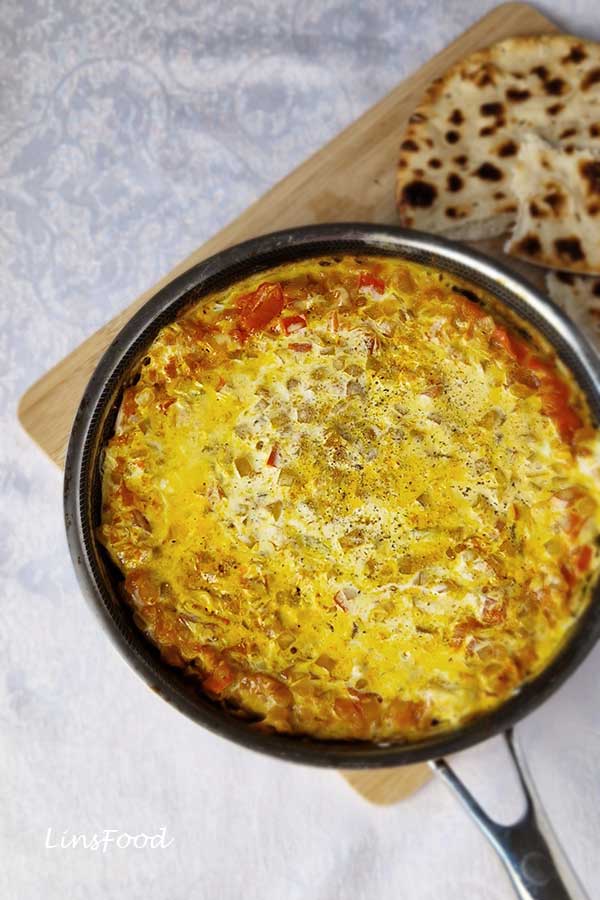
What is Yemeni lahsa?
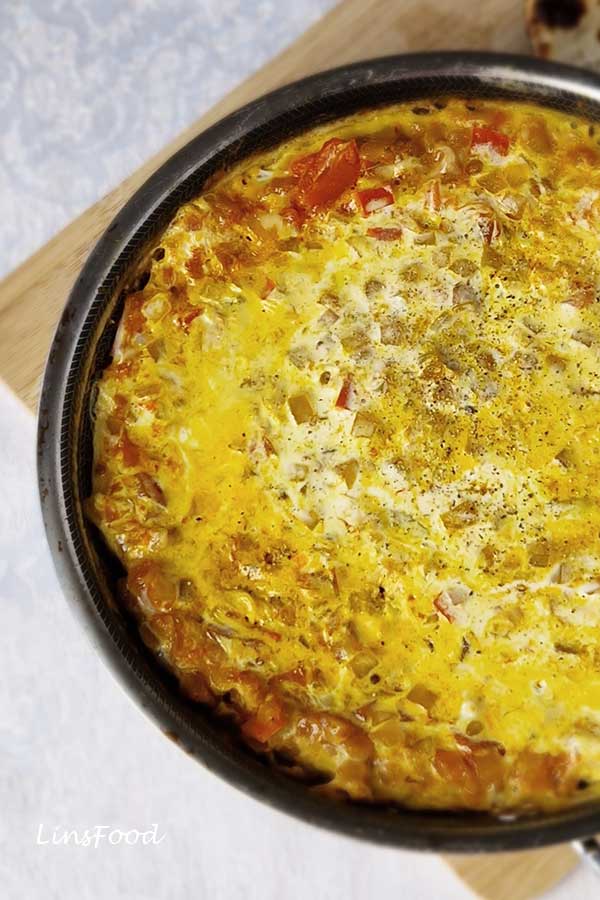
Yemeni lahsa is a soft, savoury egg dish made with onions, tomatoes, spices, eggs, and a mild spreadable cheese. The onions are cooked until sweet, the tomatoes are reduced until thick and rich, and the eggs are stirred in gently so the whole thing stays soft, creamy, and spoonable rather than dry or neatly set.
What makes lahsa stand out is that final layer of cheese. It melts softly into the hot eggs and tomato base, giving the dish a creamy, slightly tangy finish that sets it apart from other tomato-and-egg breakfasts. It’s warm, rich, and very much made for eating hot with flatbread.
It’s often compared to shakshuka, which makes sense up to a point. Both are tomato-and-egg dishes, but lahsa doesn’t usually have whole eggs poached neatly in sauce. The eggs are stirred gently into the tomato base instead, so you get tender folds and soft curds rather than visible yolks sitting on top.
It’s also close in spirit to Turkish menemen, another soft egg-and-tomato dish meant for bread and hungry mornings. And if you’ve made my Persian Mirza Ghasemi, you’ll recognise that same soft, scoopable comfort, though the flavour and finish are different.
This is rustic, kitchen-table food. The kind that smells warm and savoury, disappears quickly, and leaves everyone chasing the last creamy streaks round the pan.
A little background
Lahsa is usually described as a Yemeni dish, but the picture seems a little more layered than a neat one-line origin story. Many Yemenis will tell you they’ve never seen it, much less eaten it, anywhere in Yemen.
To them, this tomato and egg dish is associated very strongly with Yemeni restaurants in Saudi Arabia. Many insist that lahsa is a dish developed in Saudi by Yemenis or by the Yemeni diaspora.
You’ll see it called Yemeni lahsa, and in Arabic recipes you’ll often find it written as اللحسة اليمنية.
So I’m not going to wrestle lahsa into a neat little origin story just to make it behave. It makes far more sense when you place it in that shared Yemeni-Saudi restaurant world: shaped by Yemeni cooks, Yemeni tastes, movement, migration, and the very normal way food travels with people before making itself comfortable somewhere else.
That doesn’t make it any less Yemeni in character. If anything, it shows food doing what food has always done – crossing borders, picking up habits, changing its shoes at the door, and occasionally becoming more famous in the wider world than it ever was back home.
Lahsa belongs less to polished restaurant plating and more to hot pans, warm bread, and breakfast that arrives already asking to be scooped. Which is probably why I love it so much for when friends come over for breakfast or brunch.
Ingredients
Onion builds the base of the dish. Cook it until soft and sweet rather than merely translucent. That gentle cooking gives lahsa the sort of mellow depth raw onion could only dream of.
Tomatoes bring body, brightness, and balance. They need to be cooked down properly so they lose that raw, watery edge and turn thick and concentrated instead.
Because tomatoes vary so much in size, I prefer giving you the weight rather than a strict number. Around 250 g is a good place to start, but anywhere between 200 g and 300 g will work perfectly well, so there’s no need to get precious about it.
Tomato paste adds extra depth and helps the tomato base along, though it isn’t used by everyone. And if you’ve been following me for a while, you probably know what I’m about to say: I use sun-dried tomato paste whenever I can, because it brings even more depth and a richer, rounder flavour.
The spices here are warm rather than wild. Cumin brings earthiness, turmeric gives that lovely golden colour, and paprika adds gentle heat and a deeper savoury note. I like using a little hot smoked paprika here for extra flavour and a hint of heat, but regular paprika is absolutely fine too.
The eggs are lightly beaten before they go into the pan, which is what gives lahsa its soft, creamy texture. You’re not making an omelette, and you’re not leaving whole eggs to poach in sauce. The eggs are meant to settle into the tomato base in tender folds and silky curds.
Then there’s the cheese, which is usually the point where people pause and start squinting at the words liquid cheese. Or in my case, “what on earth is liquid cheese?” when I first saw lahsa on a menu in the Gulf.
That mild, creamy finish is one of the things that makes lahsa, well, lahsa, so it’s worth understanding what it means and what to use.
What is liquid cheese?
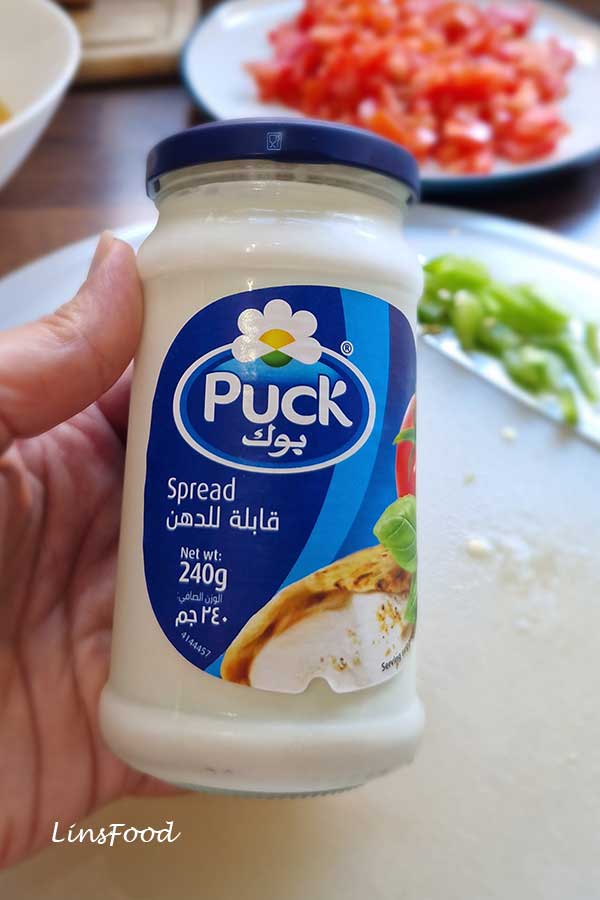
In recipes like Yemeni lahsa, liquid cheese usually means a soft, mild, spreadable cheese rather than anything truly pourable. It’s creamy, spoonable, and loose enough to soften easily over hot eggs, but not so thin that it behaves like a sauce. Think a cross between a cheese spread and cheese sauce.
Like many deli dairy products across the Middle East, it’s often found under the brand name Puck (see image above). If you’ve ever wandered through a Middle Eastern supermarket and noticed tubs and jars of mild cream cheese spread in the chilled section, that’s very much the sort of thing people mean here.
So head on to your nearest Middle Eastern store, that’s where you’ll find it. Otherwise, you know you can find pretty much anything online!
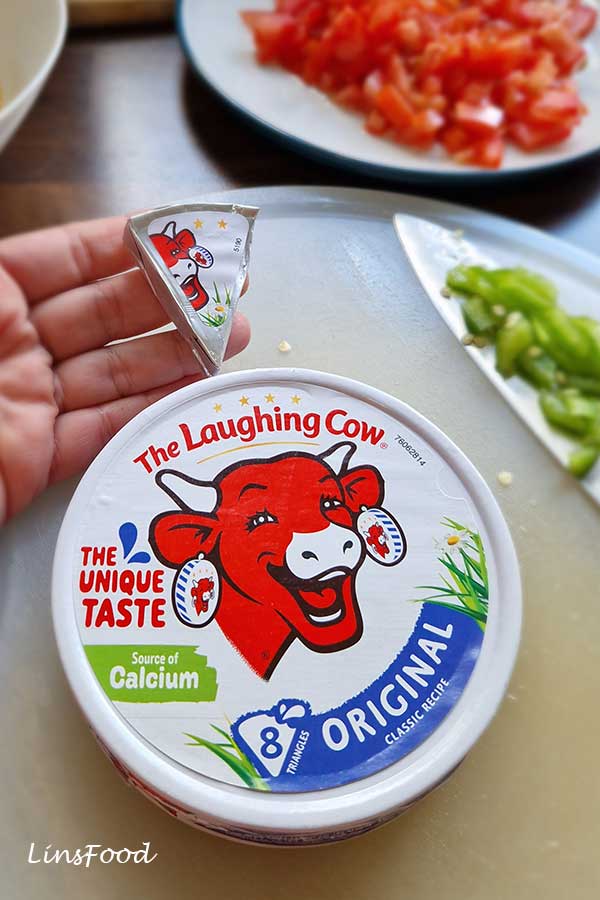
As for flavour, it’s actually quite close to Laughing Cow cheese triangles. Not identical, but very much in that same mild, creamy, processed-cheese family. The main difference is the salt. This Middle Eastern liquid cheese is very salty, so go easy with the seasoning until you’ve tasted it.
So if you want the closest homemade version to the sort of flavour often used in Yemeni lahsa and similar dishes across the region, the best route is to loosen Laughing Cow with a little milk or cream (with optional salt). I’ve given you some ideas below.
Can you make liquid cheese at home?
Yes, very easily.
If you want the closest flavour to the sort of cheese spread commonly used in Yemeni and wider Middle Eastern cooking, start with Laughing Cow triangles and loosen them with a little milk or cream until smooth. You could also use labneh for added tang.
Because Puck’s liquid cheese is pretty salty, I’ve given the option of adding salt to mimic the flavour. Leave it out if you prefer.
Mix together:
- 6 Laughing Cow triangles
- 3 – 4 Tbsp milk or cream
- pinch of salt (optional)
Whisk or mash until smooth and spoonable, then use as needed.
Can’t get laughing cow cheese?
- 100 g full-fat cream cheese
- 1 to 2 Tbsp milk or single cream
- 1/8th tsp salt (optional)
Stir or whisk until smooth and spoonable.
For a slightly tangier version, mix:
- 75 g full-fat cream cheese
- 25 g labneh or thick Greek yoghurt
- 1 Tbsp milk
- pinch of salt (optional)
Whisk until smooth.
None of these will be an exact copy of a shop-bought regional cheese spread, but they work very well in lahsa. They melt softly over the eggs and give the dish that creamy finish it wants.
Don’t say I don’t spoil you!
How to make Yemeni lahsa
This Yemeni lahsa recipe keeps to the heart of the dish: sweet onions, tomatoes cooked down until thick and savoury, gentle spice, softly set eggs, and a creamy cheese finish.
It’s quick enough for a weekday breakfast, but it tastes like something far more indulgent. And the secret, as usual, isn’t complicated. Don’t rush the pan.
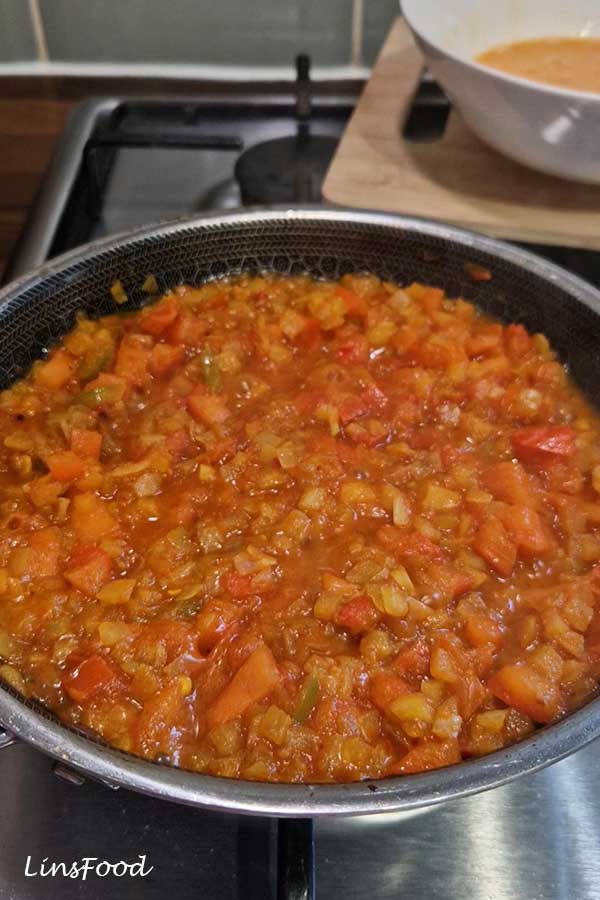
Start by cooking the onion gently until soft and sweet. You’re not trying to brown it deeply, but you do want it properly softened so it melts into the tomato base rather than sitting there in sharp little pieces.
Add the tomatoes, tomato paste, spices, salt and pepper, then cook everything down until the tomatoes collapse and the mixture thickens. This is where the flavour builds. If the tomatoes still look watery, give them a few more minutes.
Watch the heat
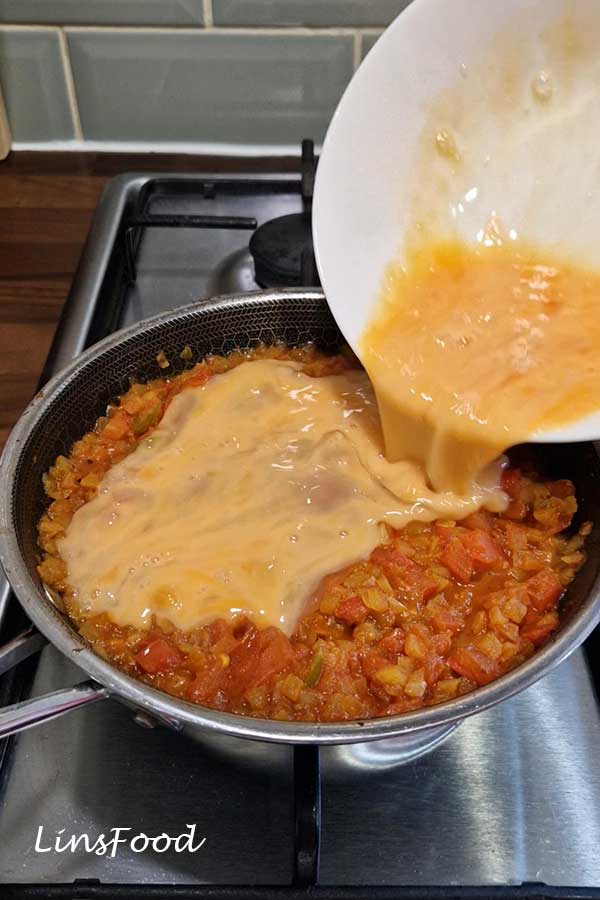
Lower the heat before adding the eggs. This is important. High heat will turn the eggs firm and dry before the tomato base has a chance to hold them properly.
Pour in the beaten eggs and stir gently. Think soft folds rather than frantic scrambling. You want the eggs to thicken the tomato base and form tender curds, not turn into rubbery little pieces.
What you want is:
- the eggs to be just softly set
- still a little glossy and creamy
- no wet raw egg, but also not dry
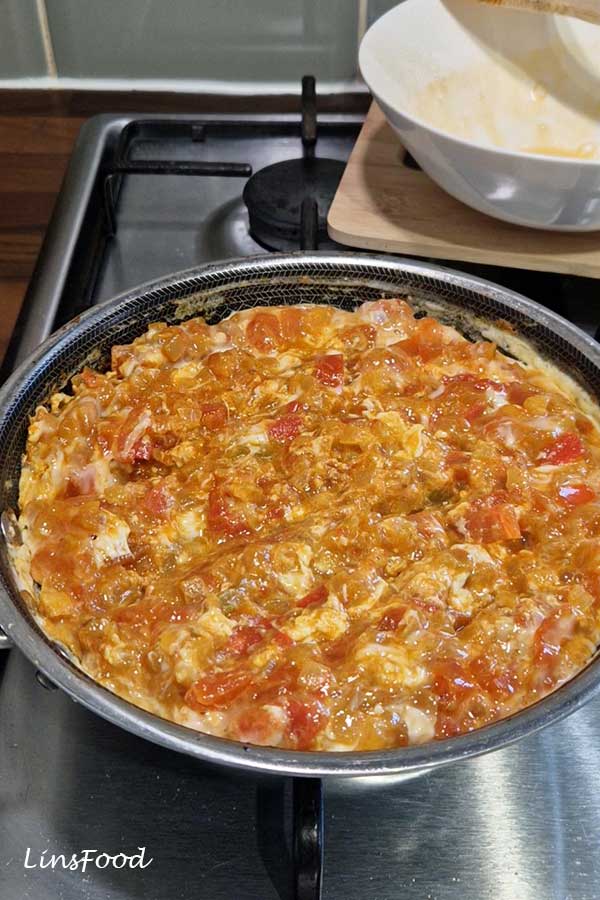
Because they’ll keep cooking from the heat of the pan, it’s better to stop a touch earlier than you think.
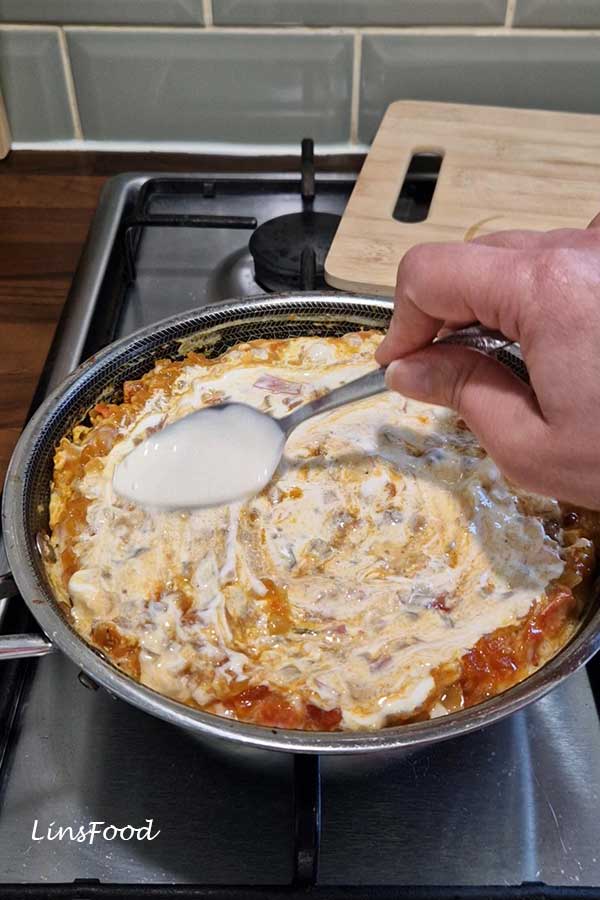
Once the eggs are just set, spoon the cheese over the top and let it soften into the heat of the pan. You can gently swirl it in, or leave it in creamy pockets. Both ways are good. I’m not here to police your cheese.
Serve immediately, while everything is soft, hot and ready for bread.
How do you know when lahsa is done?
Lahsa is done when the eggs are just set but still glossy and soft. The mixture should look creamy and spoonable, not dry or crumbly.
If the pan looks watery, the tomatoes probably needed more time before the eggs went in. Let the tomato base reduce properly next time.
If the eggs look dry, the heat was too high or they cooked for too long. Lahsa wants patience at the end. Not much, just enough to stop the eggs from protesting.
How to serve Yemeni lahsa
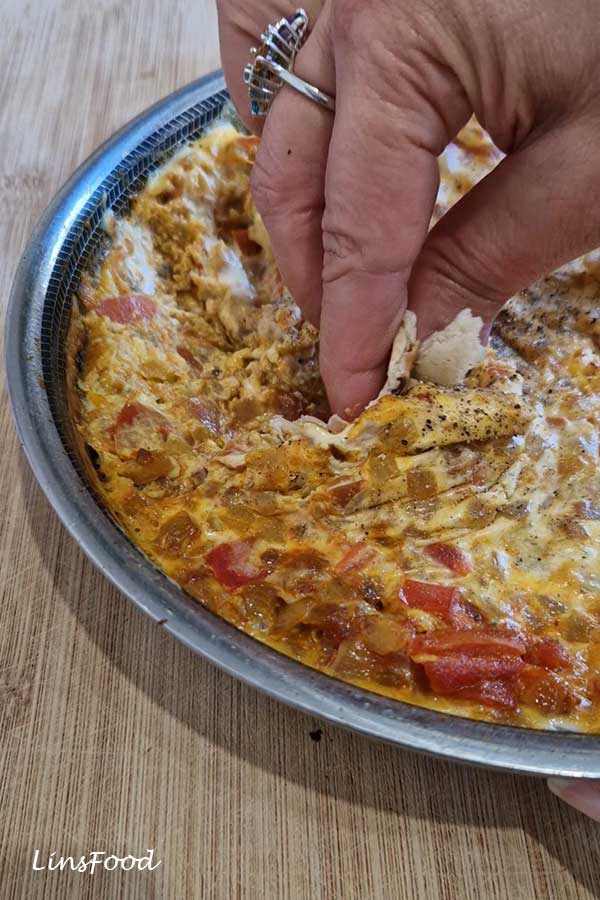
Yemeni lahsa is best served hot from the pan while the eggs are still soft and the cheese is still creamy. It isn’t precious food, and it shouldn’t be treated like it is. This is a tear-the-bread, dip-straight-in, get-on-with-it sort of meal.
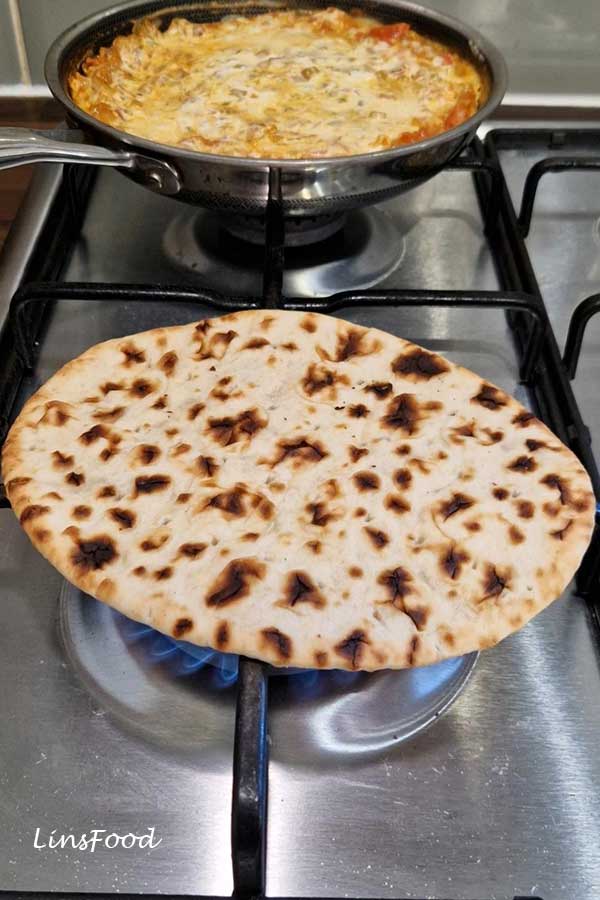
Warm flatbread is the classic companion. Pita, kubz, or any soft flatbread works well. The bread should be warm enough to bend and tear without complaint, because its job is to scoop up every soft, savoury, creamy mouthful.
Alongside it, you can serve sliced cucumber, a simple tomato salad, fresh herbs, olives, pickles, or fresh green chilli.
But honestly, lahsa and bread are already a complete and very convincing meal on their own.
How to store leftovers
Lahsa is best eaten fresh. The texture is at its loveliest when the eggs are just set and the cheese is still warm and silky.
If you want to get ahead, make the onion and tomato base in advance. Let it cool, store it in the fridge, then reheat it and add the eggs and cheese just before serving. That’s the best way to keep all the softness and none of the compromise.
If you do have leftovers, cool them quickly, refrigerate, and eat within 48 hours. Reheat gently until piping hot. The eggs will firm up a little, but the flavour will still be good.
I wouldn’t freeze finished lahsa because cooked eggs and soft cheese don’t always return in the mood you sent them off in. Freeze the tomato base instead, then add fresh eggs and cheese when you’re ready to eat.
Variations on Yemeni lahsa
Like many home-style dishes, Yemeni lahsa has room for personal preference without losing itself.
- Add garlic for a deeper savoury base.
- Make it hotter with extra green chilli, chilli flakes or fresh chopped chilli.
- Use ghee instead of olive oil for a richer flavour.
- Use tinned tomatoes when fresh tomatoes aren’t worth the trouble. Cook them down well so the base isn’t watery.
- Stir a little labneh into the cheese mixture for extra tang.
- Add fresh coriander or parsley at the end if you want a fresher finish.
- Add a little cooked minced lamb or beef for a heartier version, though the simpler egg-and-cheese style is what gives lahsa its soft, comforting charm. Kind of like my Beef Ragù Shakshuka, but gentler and creamier.
Lahsa FAQs
Yemeni lahsa is a soft egg dish made with onions, tomatoes, spices, and spreadable cheese, usually served hot with flatbread.
No. Shakshuka usually has whole eggs poached in sauce, while lahsa is softer, with the eggs stirred into the base and cheese added on top.
Yes. Both are soft egg-and-tomato dishes served with bread, though lahsa usually has a creamy cheese finish.
It’s usually described as Yemeni, though amongst Yemenis, it’s often strongly associated with Yemeni restaurants in Saudi Arabia and the Yemeni diaspora.
Liquid cheese usually means a mild, spreadable cheese with a soft, spoonable texture.
Use a mild spreadable cheese such as Laughing Cow or full-fat cream cheese.
Yes. Mix spreadable cheese with a little milk until smooth and spoonable.
It can be mild or spicy depending on how much chilli you add.
Yes. Make the onion and tomato base ahead, then add the eggs and cheese just before serving.
Any bread works well with Yemeni lahsa, especially anything good for scooping. Pita or really, any flatbread are classic, but crusty bread, toast, baguette, or even a soft roll all work well too.
Yes. Tinned tomatoes work well, especially when fresh tomatoes are lacking flavour. They’ll give added depth to your lahsa.
It’s better to freeze the tomato base only, then add fresh eggs and cheese when serving.
Shall we get cooking?
And there you go. Yemeni lahsa is one of those recipes that reminds you how little it takes to make something genuinely good. A few onions, a couple of tomatoes, some eggs, some cheese, and suddenly there’s a pan of something soft, savoury, rich, and deeply comforting in front of you.
It’s not fancy, and it doesn’t need to be. This is the sort of food that earns its place by being warm, generous, and worth mopping up with bread right to the last streak.
Make it and let me know what you think. Tag me on Instagram @azlinbloor with a pic of your efforts.
Catch you later,
Lin xx
Yemeni Lahsa Recipe
Ingredients
- 2 Tbsp EV olive oil
- 1 large onion
- 1 green chilli
- 2 medium tomatoes about 250 g, give or take
- 1 Tbsp sundried tomato paste
Spices and Seasoning
- ½ tsp ground cumin
- ½ tsp ground coriander
- ¼ tsp turmeric powder
- ½ tsp hot smoked paprika
- ⅛ tsp salt
- 1 pinch sugar
- black pepper to taste
Eggs and Cheese
- 3 large eggs lightly beaten
- 100 g spreadable cream cheese or liquid cheese
- 1 to 2 Tbsp milk or single cream only if needed
To Finish
- pinch chilli flakes optional
- parsley or mint to serve
Instructions
Prep Work
- Peel and finely chop the onion and tomatoes, saving the tomato juices.Chop or slice the green chilli.
- Lightly beat the eggs and set aside.
Let's Get Cooking
- Heat the oil in a small-medium frying pan and cook the onion with a pinch of salt for 5 minutes until soft and golden.
- Add the chilli and spices and cook for a minute.
- Add the chopped tomatoes, tomato paste and the pinch of sugar. Cover, and cook for 8 to 10 minutes until the tomatoes break down and the mixture turns thick and jammy rather than watery. This will depend a lttle on how juicy your tomatoes are.If it's getting too dry, add a splash of water (about 60ml/¼ cup)** I like to cover the pan but most people don't bother. The tomato mixture will dry up quicker if left uncovered.
- Lower the heat and pour in the beaten eggs, stirring very gently so they stay soft and creamy. Cook for just 1 minute.
- Spoon the cheese over the top, loosening it first with a little milk or cream if needed. Leave it to melt and settle for 2 minutes.
- Take it off the hob, top with black pepper and herbs if you like. I don't bother with any herbs. If you want to, parsley is always good, as is mint, chopped up fine.
Notes
- Use Laughing Cow loosened with a little milk for the closest flavour match to regional liquid cheese.
- Full-fat spreadable cream cheese is the easiest substitute if needed.
- Don’t overcook the eggs.
- Make the tomato base ahead if you want to prep in advance.
Nutrition
Enjoyed this recipe? Add us to your Google Search Preferred Sources:


Having just finished dinner, I feel I need to make this very soon!!!
Haha, you will absolutely love it, just so easy and great fo quick meals.
As a shakshuka fan, I went down a bit of a rabbit hole after reading your post because the cheese intrigued me.
Looking through older Yemeni cookbooks and recipes, I found plenty of egg-and-tomato dishes, including Yemeni shakshuka variants from both the north and south. What I didn’t find was the now-characteristic layer of cream cheese, Puck cheese, or “liquid cheese” that seems central to many contemporary lahsa recipes.
That made me wonder whether we’re looking at two historical layers: an older Yemeni egg-and-tomato dish, and a later Gulf-Arab adaptation incorporating the processed cheese spreads that became ubiquitous across Saudi Arabia and the Gulf in the late twentieth century.
In any case, you’ve convinced me that lahsa deserves a try, even if the eggs may be older than the cheese.
Yes! I’m thinking the cheese is definitely a modern interpretation of what is a pretty traditional offering in the region. That’s probably the part that got introduced in the Gulf.
So many of my childhood recipes seem to have taken on this cheesy addition – not all palatable, in my opinion, though.