Enjoyed this recipe? Add us to your Google Search Preferred Sources:
Make these Chinese stovetop braised beef short ribs tonight – sticky, glossy, and impossible to stop eating. Even better the next day!
Estimated reading time: 9 minutes

Asian Beef Short Ribs?
Mini rant coming up.
I get this question a lot on socials and in my classes: “Why do recipes say Asian when they mean Chinese?”
Honestly… same. It’s everywhere. “Asian beef short ribs.” “Asian-style ribs.” “Asian glaze.”
What does that even mean? Asia is massive. It’s not one flavour profile, one pantry, one anything. I’m Asian, but I’m not Chinese. And my food doesn’t magically become Chinese because someone’s thrown soy sauce at it.
Call me pedantic but we are calling these what they are: Chinese Beef Short Ribs. The aromatics, the braise, the whole personality of this dish – it’s Chinese-style. Clear, accurate, no umbrella terms. If you’re here for Chinese braised short ribs, you’re in exactly the right place. If you’re here for Asian beef short ribs, also stick around, because well, it’s the same thing.
Rant done. For now.
Chinese Beef Short Ribs
These Chinese braised beef short ribs are rich, glossy, and deeply savoury, with that soy-and-Shaoxing depth wrapped around warming whole spices like star anise and cinnamon.
We’re cooking it low and slow, so the meat turns incredibly tender, almost spoon-soft at the edges, while the sauce reduces into a sticky, shiny glaze that’s salty, gently sweet, and ridiculously good.
It’s fragrant, bold, and once served, all you’ll hear is crickets as everyone will be too busy enjoying it to say a word.
And before you ask: no, this isn’t “just another beef stew.” It’s Chinese-style braised short ribs – glossy, savoury-sweet, deeply spiced, and made for rice.
The Recipe
This is where LinsFood’s recipe differs. Rant number 2 coming up.
Most, if not all, online recipes for Asian braised beef short ribs (as everyone calls it) will tell you to braise them in the oven. I don’t understand this at all, because the oven is not a common appliance in Chinese cooking. In fact, in much of Asia.
Yes, we use the oven to bake cakes, cookies and such, sure, but you’ll hardly see us using the oven for traditional recipes. Chinese beef short ribs is stovetop territory: a pot, a flame, do like Axl Rose (patience?), and a sauce that clings to the ribs like white on rice.
So yes, I’m showing you how to make Chinese braised beef short ribs on the stove because that’s how it would be made traditionally, and how I’ve always made it.
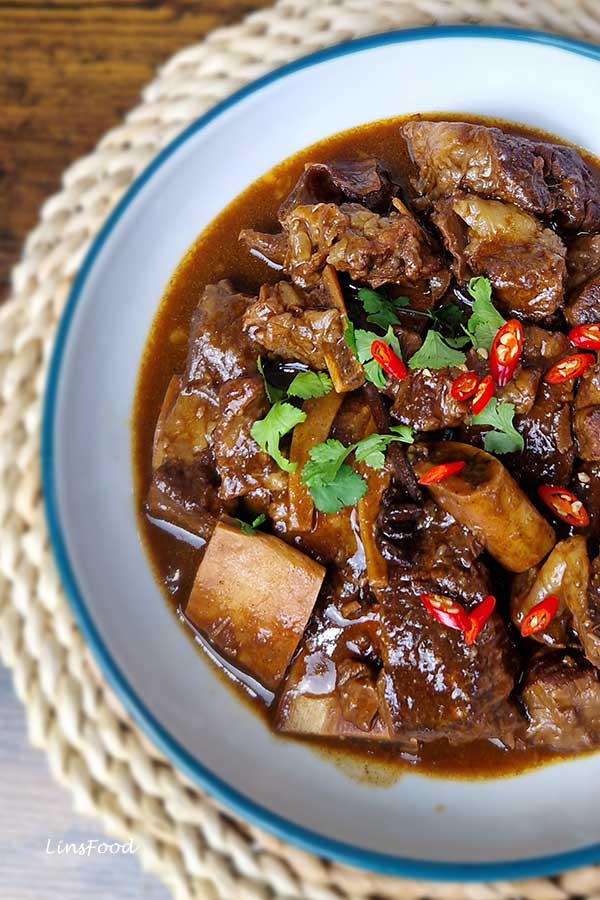
Cooking Chinese Beef Short Ribs
This is what we’ll be doing:
- Brown the ribs.
- Fry the spices and dried chillies for 30 seconds (I skipped the chillies in the video).
- Add the aromatics, then the 5-spice powder.
- Pour in the sauces, followed by the ribs, coat everything well.
- Add the stock, then simmer, covered, for 2 – 3 hours, low and slow, remember?
- Reduce, and skim the fat off if you want.
We want to keep an eye on:
- the heat: you want a lazy simmer, not a rolling boil
- liquid level: top up with a splash of water if needed
- turning the ribs: helps even cooking and glazing and ensures “the top” doesn’t feel dry
Asian Beef Short Ribs Ingredients
Like all good old recipes, everyone’s going to have their own little addition (or subtraction) to this recipe. Let’s take a look at what some of the main ingredients we’ve got in this recipe, and possible variations.
Beef Short Ribs
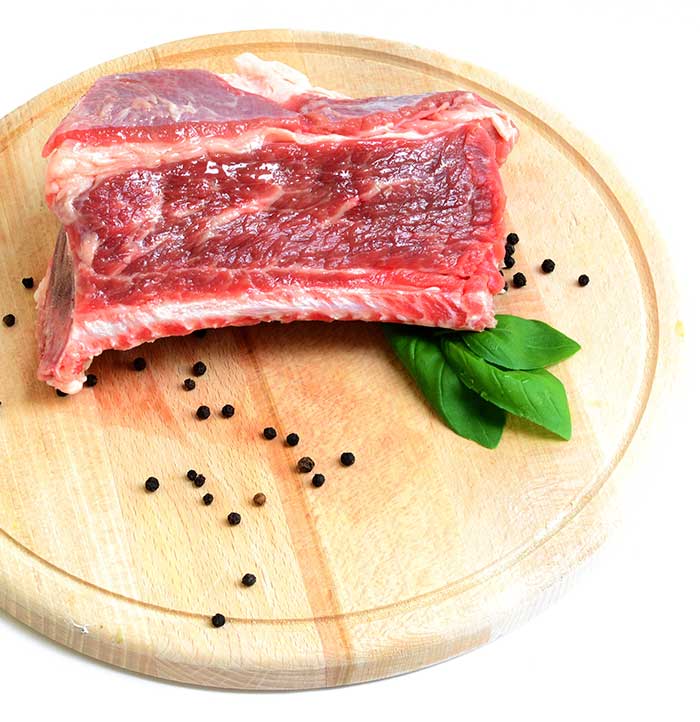
Given the name of the recipe, we are looking for short ribs. They are ideal because they’re fatty, collagen-rich, and built for slow cooking.
For these Chinese-style braised short ribs, you want big, chunky pieces that can take a long simmer without drying out.
- Best size: about 5-7 cm (2-3 inches) long per piece
- How to cut: ideally between the bones so each piece is one bone with a thick cap of meat (or two bones if they’re smaller) – this would be done by your butcher, or sold ready cut
- Thickness: whatever the rack naturally is, but roughly 3-5 cm (1¼–2 inches) thick is perfect
Avoid super-thin flanken-style cross-cut ribs (those 1 cm / ½ inch slices) for this dish – they cook fast, can go stringy, and don’t give you that collagen-melting, glossy-braise payoff.
If you’re buying from a butcher, ask for: “English-cut beef short ribs, cut into 2–3 inch pieces.”
Is it called English cut everywhere?
The cut is broadly the same, but the name isn’t universal.
- “English-cut short ribs” is a very common term in the US/Canada for ribs cut parallel to the bone, into chunky blocks (usually 1 bone per piece, sometimes 2).
- In a lot of places, you’ll just see them labelled “beef short ribs” and you may need to specify how you want them cut.
- In the UK, you might see (or be offered) short ribs, Jacob’s ladder, beef ribs or plate ribs – and the butcher may not say “English-cut,” but they’ll understand:
“Cut between the bones into 5-7 cm (2–3 inch) chunks, one bone per piece.” - In Korean/Chinese markets, you’ll often see flanken-style (thin cross-cut strips across several bones). That’s not what you want for a long, glossy braise.
If you want a foolproof way to ask anywhere in the world, say:
“I want chunky short ribs cut between the bones, not thin cross-cut/flanken.”
There you go. Don’t say I don’t spoil you.
Aromatics
- onions (although some would opt for spring onions/scallions)
- ginger
- garlic
- whole dried chilli for just a little warmth – I’m not using this in the video because I plain forgot!
Sauces
We use a combination of soy sauces, so much so that some people call them soy braised short ribs.
- light soy sauce gives our sauce its salty base
- dark soy sauce imparts colour and deeper flavour
- hoi sin sauce is kind of the star of the sauce – it’s mostly responsible for that signature sweet, savoury umami identity of our recipe.
- tomato ketchup – adds a tangy sweetness
Together, these guys create and addictive, finger-licking mad, mad, sauce!
Shaoxing Wine (and alternative)
Shaoxing wine gives our Chinese short ribs that unmistakable Chinese braised aroma. If you can get it, use it. But if you can’t or don’t do alcohol, see below.
Substitutes:
- dry sherry (closest)
- sake (works, slightly different)
- alcohol free – half teaspoon clear vinegar
Spices
Classic whole spices for Chinese braised beef short ribs:
- star anise
- cinnamon stick
- sometimes I drop half a tsp of Sichuan peppercorns
How to serve Chinese Beef Short Ribs
This dish is basically designed to be served with something that soaks up sauce. So to me, nothing beats plain old steamed jasmine rice. It’s classic and unbeatable. There is nothing there to compete with the flavours of our Chinese braised short ribs.
Naturally, sticky rice will also work beautifully. However, you can also serve it with noodles or egg fried rice, if you prefer.
Pair your Chinese braised short ribs with:
- stir-fried greens (bok choy, gai lan, choy sum) – recipe coming soon
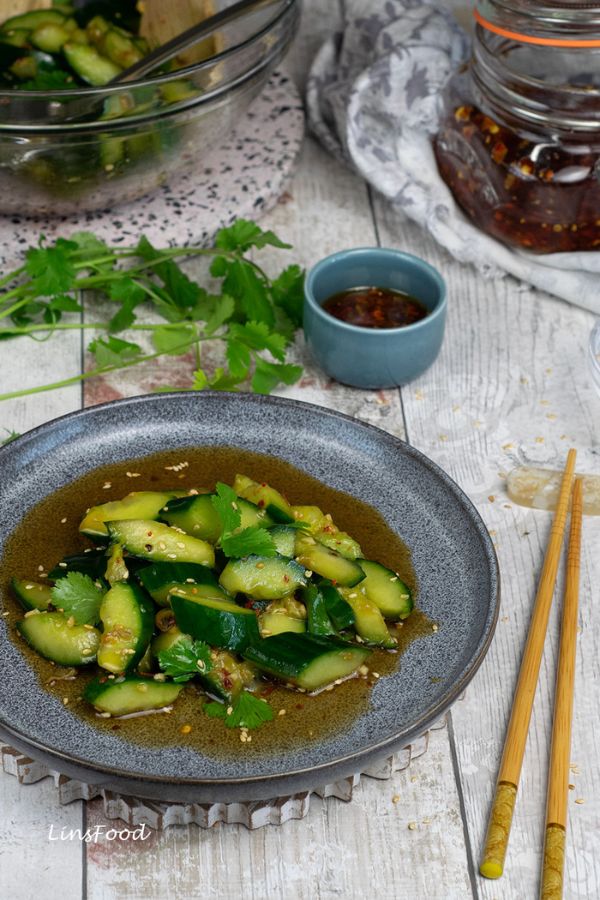
- smashed cucumber salad (cold + crunchy against rich ribs) – recipe is on Instagram, will be posted here soon
- quick pickled veg (radish, carrot, cucumber)
- a simple omelette (yes, really, very home-style)
How to store Chinese Braised Beef Short Ribs
This is a great make-ahead dish. Chinese braised beef short ribs get better after a rest.
In the fridge
- Cool the ribs and sauce completely first.
- Store in an airtight container with the sauce (don’t separate the two – the sauce protects the meat).
- Keeps well for 3 – 4 days.
Freezing
- Freeze ribs in sauce, in portions, so you can defrost what you need.
- Best within 1 month for top flavour and texture.
- Defrost overnight in the fridge for the gentlest result or in the microwave or on the stovetop, with added water.
Reheating without drying them out
- Stovetop: low heat, covered, with a splash of water if the sauce is tight.
- Microwave: doable, but cover and reheat gently so the fat doesn’t separate into sad puddles.
If you refrigerate overnight, the fat will often rise and solidify on top. You can:
- lift it off for a cleaner sauce, or
- stir it back in for maximum richness
Common problems (and how to fix them)
My sauce is too thin
- Uncover and simmer to reduce.
- If you’re impatient, use a tiny cornstarch slurry at the end (tiny).
My sauce is too salty
- Add water and reduce again.
- Add a touch more sugar to balance.
- Serve with plain rice and greens (it’ll calm down).
My ribs are tough
They’re not done yet. Keep simmering gently until tender. Short ribs don’t respond to bullying; they respond to time.
The spice flavour is too strong
Whole spices can overperform if left too long. Next time:
- use fewer
- remove them earlier
Short Ribs FAQ
Yes, and you should. Make them a day ahead, chill, then reheat gently. The flavour deepens and the sauce gets even more cohesive.
No, but it adds depth. If you skip browning, lean harder on aromatics and give the sauce time to reduce properly.
You can, but bone-in gives better flavour and a more luscious texture. Boneless cooks a bit faster and can dry out if you rush the braise.
No. Similar cut, different flavour profile. Chinese braised short ribs lean into soy, Shaoxing, whole spices, and reduction. Korean galbi often uses pear/apple sweetness, sesame, and a different balance.
You can, but stovetop is the most traditional feel and gives you more control over reduction. If you do use a pressure cooker, you’ll still want to reduce the sauce afterwards in an open pot to get that glossy finish.
There you go, Chinese Beef Short Ribs aka Asian Short Ribs, the way we make them in Casa Bloor.
If you make it, let me know how it goes. Post a picture on Instagram and tag me @azlinbloor.
Lin xx

Chinese Braised Beef Short Ribs
Ingredients
- 1.5 kg beef short ribs
- ⅛ tsp salt (generous pinch)
- 1 large onion
- 7.5 cm ginger
- 5 garlic cloves
- 2 Tbsp vegetable or peanut oil
- 750 ml beef stock water + 1 stock cube
Dry Spices
- 2 star anise
- 1 cinnamon stick
- 2 dried red chillies
- 1 Tbsp Chinese 5 spice
Sauces
- 1 Tbsp light soy sauce
- 1 Tbsp dark soy sauce
- 5 Tbsp hoi sin sauce
- 2 Tbsp tomato ketchup
- 1 Tbsp Shaoxing wine OR ½ tsp clear vinegar
To Finish/Serve
- white pepper
- red chillies sliced
- fresh coriander leaves chopped (cilantro)
Instructions
Prep Work
- Rub the salt all over the ribs (not in video) and set aside while you get everything else ready.1.5 kg beef short ribs, ⅛ tsp salt
- Peel and finely chop the onion and garlic.1 large onion, 5 garlic cloves
- Peel and cut the ginger into long, thin strips as you see in the video.7.5 cm ginger
- Mix all the sauce ingredients in a small bowl. This will make your cooking easier.1 Tbsp light soy sauce, 1 Tbsp dark soy sauce, 5 Tbsp hoi sin sauce, 2 Tbsp tomato ketchup, 1 Tbsp Shaoxing wine
Let's get Cooking
- In a large wok on medium-high heat, brown your beef ribs for 2 – 3 minutes each side. It's best to do this in 2 batches, as you don't want the ribs to simmer in their liquid.I don't bother with oil here as the ribs have plenty of fat to help the browning and I'm using a non stick wok. If necessary, you could add 2 Tbsp of oil for each batch. Flip the ribs over halfway.Take them out onto a plate and set aside.
- Pour in the oil and lower the heat to medium and fry the whole spices and dried red chillies for 30 seconds.2 Tbsp vegetable or peanut oil, 2 star anise, 1 cinnamon stick, 2 dried red chillies
- Tip in the chopped onion and fry for 1 minute.
- Now add the garlic and ginger and fry for another minute.
- Next we stir in the 5-spice powder for 30 seconds.1 Tbsp Chinese 5 spice
- Then, in go the ribs, stir to coat the ribs with the spices and aromatics.
- Add the sauces and stir to coat again.
- Now pour in the beef stock, stir well and bring to a simmer. Lower the heat right down, cover and cook for 2 – 3 hours. Check at the 2-hour mark. If the meat isn’t melting soft and tender, go for 3 hours. Also, check at least 3 ribs. In my experience, they don’t always cook uniformly. Add a little water if it’s getting too dry.750 ml beef stock
- When your beef is all cooked, you should have a thick, glossy sauce/gravy. Check seasoning and add salt if necessary. Stir in a little ground white pepper – a pinch or to be specific, about ⅛ teaspoon.If you want more sauce, you can add a little water to it. But be sure to check the seasoning and adjust accordingly.white pepper
- Dish up and top with the sliced red chillies and chopped coriander leaves. Serve as suggested in the article above.red chillies, fresh coriander leaves
Notes
Nutrition
Enjoyed this recipe? Add us to your Google Search Preferred Sources: