

Enjoyed this recipe? Add us to your Google Search Preferred Sources:
Gnudi or malfatti, as they are also known, are a kind of gnocchi; little balls or rolls of spinach and cheese, cooked in boiling water, just like pasta. Think spinach and ricotta ravioli but only the filling, with no pasta dough covering it.
Estimated reading time: 7 minutes
Table of contents

What are Gnudi and Malfatti?
They are one of my favourite Italian recipes for entertaining, because, besides the fact that I could eat them everyday, after all these years of making them, I have yet to come across someone who’s familiar with them!
A long, long time ago, someone, somewhere in Italy, must have run out of flour, and decided to go ahead and just cook the filling!
Gnudi means naked, from the word, gnuda. So that makes perfect sense right? Naked ravioli.
And that’s what they are called in Tuscany. Sometimes, they are also known as Ignudi, the same meaning, which is why I cannot help but think of Michael Angelo’s The Ignudi in the Sistine Chapel, every time I’m cooking them!
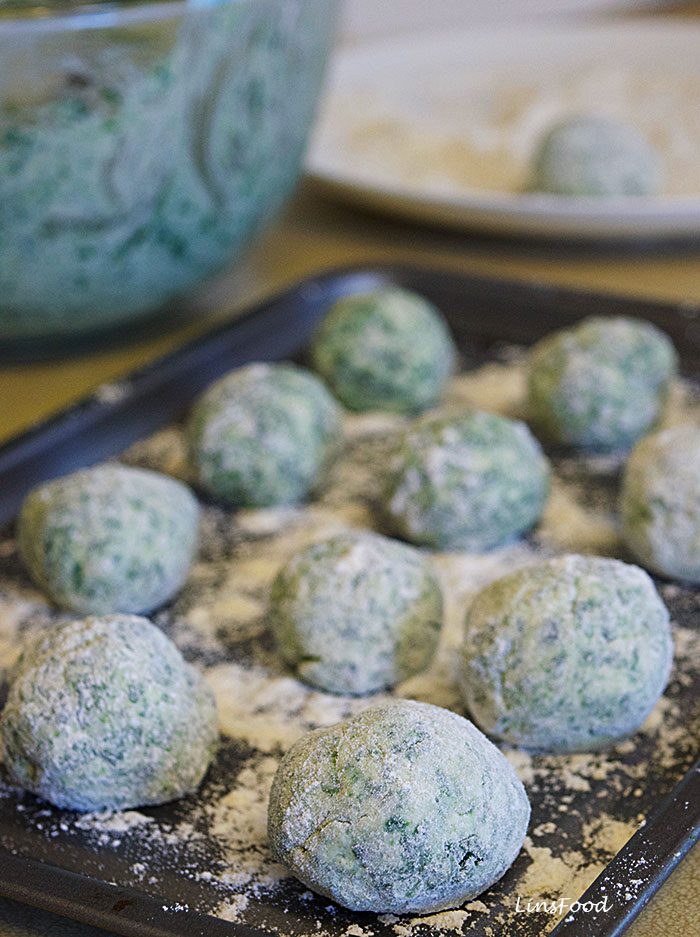
Malfatti, on the other other hand, is what they call them up in Lombardy, and they are little rolls, like thick fingers.
Malfatti means poorly made, referring to their rather rustic look – roll, cut, dust in flour, and there you have it – malfatti!
I’ve heard it said that these rustic, poorly made, naked ravioli have a long history, going back to Roman times, and perhaps even earlier. I’ve not really been able to glean any more information on this, despite years of intermittent reading.

Gnudi are also sometimes made with just the cheese and a starch, whether flour or semolina, and this is the version (with semolina) that in recent years has gained a huge following in the US, after gnudi were added to The Spotted Pig’s menu by April Bloomfield.
But that’s a recipe for another day!

Gnudi and malfatti are often served in the traditional sage and butter sauce, although I serve them just as often with other sauces; a simple tomato sauce is always quick and easy but my favourite besides sage and butter is chilli pesto. The deep, full on flavour of the chilli pesto is the perfect foil to the rustic, guileless nature of the gnudi.
Click here for the recipe or on the picture below.
What do gnudi and malfatti taste like?
Well, they are very, very moreish. There is no way you can stop at one. Or 6! Have you ever had a spoonful of ricotta or mascarpone? How was that? Heaven, right? Multiply that and add touches of nutmeg, salt, pepper and spinach. And that’s before you take into account whatever sauce you’re serving it with.
It’s like biting into a cloud of nirvana.
So let’s take a look at a few things to note in making gnudi or malfatti.

Cooking Gnudi and Malfatti at Home
The gnudi recipe I am featuring today, is the traditional spinach and ricotta one, learnt at the hands of Mamma Anna, a former flatmate’s mum, as mentioned in my Carbonara post. I have also been fortunate enough to have had both gnudi and malfatti in little off the beaten track eateries in the Tuscan and Lombard regions. And they all varied in composition and sauce that they were served in.
The Shape
As mentioned above, gnudi are little balls, while malfatti are little rolls, like fat fingers. To make malfatti, just follow the recipe, and roll into a long log about 2.5-5cm (1-2″) thick, before cutting into fingers about 7.5cm/3″ long. Cook and serve in the same way.

The Binding Agent
Some people use flour, as I do, some use semolina, while others use breadcrumbs. We only use a small amount, just to bring it together, as the overriding flavour is that of creamy ricotta and spinach.
Spinach to Ricotta Ratio
This is probably where the biggest difference lies between recipes. Some prefer a higher spinach ratio, while others, like me, prefer an almost equal amount of the two. My advice is to follow the recipe here, and then play with it!
Type of Spinach
I’ve only ever used fresh spinach, you can use frozen too, but be very vigilant about squeezing it dry, as it does contain more water.

Make Gnudi and Malfatti Ahead
Naturally, they are best when eaten warm. You can shape them up to about 6 hours ahead, cover lightly with a damp cloth or foil and keep in the fridge, until it’s time to cook them.
I have also cooked them hours ahead, dropped them in boiling water for 30 seconds, then proceeded with serving them with whatever sauce.
Can you freeze Gnudi?
Gnudi and malfatti can be frozen. Once the gnudi and malfatti are formed in balls or logs, they can be frozen.
- Open freeze them on a tray for 2 hours.
- Then place them into a freezer bag or a container and freeze for up to 1 month.
Variations of Gnudi
As mentioned above, you can make gnudi without the spinach. Just use equal amounts of ricotta and semolina flour (fine semolina) and follow the rest of the recipe.
Leave the egg out for eggless gnudi or eggless malfatti.
How to Bake Gnudi and Malfatti
After cooking them in water, place them in a baking dish, grate your favourite cheese all over, some breadcrumbs and bake in the oven at 200˚C (400˚F) for 20-30 minutes until golden brown. Or with béchamel sauce or any other sauce you fancy.
Images by LinsFoodies

If you like the recipe, don’t forget to leave me a comment and that all important, 5-star rating! Thank you!
And if you make the recipe, share it on any platform and tag me @azlinbloor, and hashtag it #linsfood
Lin xx

Gnudi and Malfatti, Naked and Poorly Made Ravioli
Ingredients
- 400 g ricotta
- 500 g fresh spinach
- ½ tsp salt + 1 heaped tsp for boiling
- freshly ground black pepper
- generous amount of freshly ground nutmeg
- 1 large egg lightly beaten
- 60 g grated parmesan PLUS extra to serve
- 2 Tbsp all purpose flour
- a bowl of all purpose flour for dusting
Sage and Butter Sauce
- 120 g salted butter
- 20 sage leaves
- some Gnudi cooking water
- 1 pinch salt
- freshly ground black pepper
- 2 tsp freshly grated parmesan cheese
Instructions
Let’s make Gnudi
- Place the ricotta in a colander and leave to drain.400 g ricotta
- Rinse your spinach and place in a large saucepan, cover with a lid and leave to cook on medium heat for about 5 minutes, until the spinach is cooked right through. Alternatively, place in a large microwaveable bowl and cook for 2-3 minutes until the spinach is fully cooked.500 g fresh spinach
- When the spinach is cool enough to handle, squeeze any excess water out, either just using your hands or place in a colander and press down. Tip the spinach onto a chopping board.

- Using a large, sharp knife, chop the spinach up fairly finely, see the images. Tip all the chopped spinach into a large bowl.
- Add the ricotta in, along with the salt, pepper and nutmeg. Using a large fork or ladle, mix it all in, breaking up the ricotta well and making sure everything is mixed in.½ tsp salt, freshly ground black pepper, generous amount of freshly ground nutmeg
- Add the egg, parmesan and flour in, and once again, mix everything thoroughly. I use my hands at this stage.1 large egg, 60 g grated parmesan PLUS extra to serve, 2 Tbsp all purpose flour
- Tip half the flour onto a large plate. Take a baking sheet and generously flour it, leaving some flour in the bowl for your hands.a bowl of all purpose flour for dusting
- With well floured hands, form balls out of the gnudi dough. Roll each ball in the flour on the plate, shake off excess and place on the floured baking tin, until it's time to cook. Keep going with the rest of the dough.
- If making malfatti, take a quarter of the dough and roll it into a long, thin log about 2.5cm (1in) thick, on a well floured surface. Cut into 7.5cm (3in) long rolls and place on the floured baking sheet until it's time to cook them. Pictures soon!

- When ready to cook, bring a large pan of water to boil on high heat. Add 1 heaped tsp salt to it.
- When the water is boiling, reduce the heat to medium-high, then slowly drop about 12 gnudi in at a time, depending on the size of your pan. Cook the gnudi for 2-3 minutes; they are done when they float to the surface. Fish them out with a slotted spoon/skimmer and place them aside and keep warm, while you finish the rest off.
- Let's now make the sauce to serve them with.


Sage and butter sauce
- Heat a large frying pan on medium heat and melt the butter.120 g salted butter
- Add the fresh sage leaves to the butter and stir for 1 minute.20 sage leaves
- Add a couple of ladles of gnudi cooking water to lighten and stop the butter from browning (unless you prefer a browned butter sauce).some Gnudi cooking water
- Add a pinch of salt and some freshly ground black pepper.1 pinch salt, freshly ground black pepper
- Add 2 tsp of freshly grated parmesan cheese, stir, lower heat and simmer for a minute.2 tsp freshly grated parmesan cheese
- Check seasoning and add more salt if necessary. The sauce is done.
Finishing our Recipe
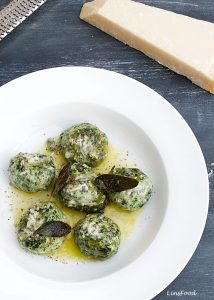
- Gently add the cooked gnudi in, and, give the pan a gentle couple of shakes to roll the gnudi in the butter, and cook for a minute to heat right through and absorb the sauce.
- Lighten the sauce with more pasta water if necessary.
- Serve the gnudi with more parmesan and some freshly ground black pepper.

Notes
Prep and total time also does depend on the amount you are making. Halve the recipe, if you like.
Nutrition
Enjoyed this recipe? Add us to your Google Search Preferred Sources:


Dear Azlin, I am discovering your recipes for the first time. I am a very old lady and the malfatti have been in my life forever, their taste is delicate and refined. Therefore, I find it offensive when your readers take the liberty of dissacrating your original recipe, by adding sauces of various nature, garlic, etc. I imagine that in doing so they obtain an acceptable result, but their product can no longer be called gnudi nor malfatti, they are just step relatives of the original ones.
There is also an old version made with Amaretti, that is even more celestial as is, without any touch ups.
With gratitude and admiration,
Marilena from Milano
Hi Marilena, thank you for taking the time to leave me a comment. When I teach, I always tell my students that the first time they make a recipe, they really should make it exactly as it’s meant to be. How else are they going to know otherwisewhat it’s supposed to taste like? But not much I can do about these things!
And thank you so much for reminding me of the gnudi made with amaretti, something I totally forgot about! I had it twice, both times around Christmas, and I am pretty sure they had pumpkin too? I also remember once having a tortellini filled with pumpkin and amaretti, in Lombardy.
I’m sure I wrote down the recipe for the gnudi with amaretti (sometime in the 90s), I’ll have to see if I can find it somewhere in the loft! Thank you again.