

Enjoyed this recipe? Add us to your Google Search Preferred Sources:
Daqqus is a fresh, punchy tomato and chilli salsa from the Arabian Peninsula, commonly served alongside kabsa and other rice dishes. My version uses green chillies, with a little shallot, fresh coriander leaves (cilantro) and tomato purée for extra depth.
Estimated reading time: 9 minutes
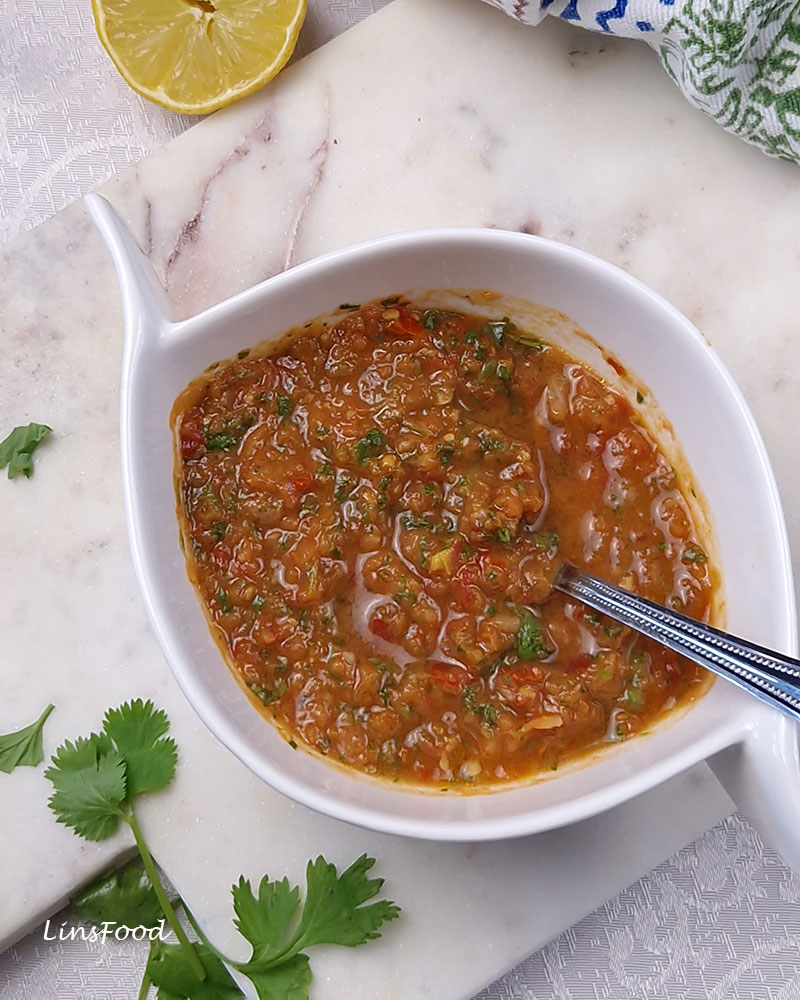
What Is Daqqus?
Daqqus, also spelt daqoos, dakkous or daggous, is a tomato and chilli condiment associated particularly with Saudi and Gulf cooking.
The name daqqus comes from Gulf Arabic and means chilli sauce or hot sauce – essentially the same general meaning as shatta. The two names don’t necessarily describe an identical recipe, however. Shatta is a broad Arabic term for chilli sauce, while daqqus commonly refers to the tomato-based chilli sauce served with kabsa and other Gulf rice dishes.
You’ll come across both fresh and cooked versions. Some are smooth and pourable, while others are thick, fresh and slightly chunky. The recipe can include garlic, coriander, onion, tomato purée, cumin, black pepper, lemon juice or vinegar, depending on the cook and where you’re eating it.
In other words, there isn’t one definitive daqqus recipe. Even I hardly ever use exactly the same quantities twice.
Use the ingredient list as your starting point, then adjust the chilli, tomato, lemon and salt to suit your taste. If you want more heat, add another chilli. If you want something milder and more tomatoey, add another tomato.
Is Daqqus a Salsa or a Chilli Sauce?
Daqqus can be described as either a salsa or a chilli sauce. I prefer calling this fresh version a salsa because that’s what it looks and tastes like, with its vibrant tomatoes, green chillies, coriander and lemon juice.
In looks, it’s not dissimilar to toe Dagga Gazawiyyah, the tomato and dill salsa from Gaza. Image below.
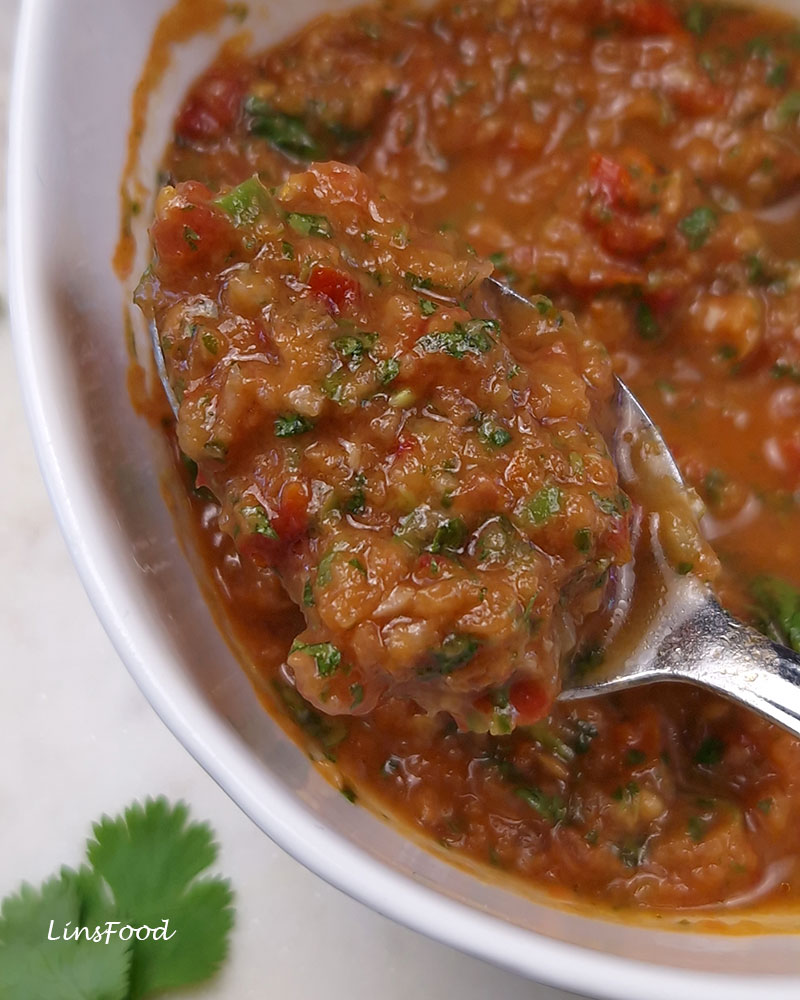
It isn’t chunky, but it isn’t cooked down into a completely smooth sauce either. A quick pulse gives it a fresh, spoonable consistency.
You could equally call it an Arabian chilli sauce. In Britain, it even plays a similar role to the ubiquitous chilli sauce found at kebab shops: something sharp and spicy to spoon generously over rice and grilled meat. Daqqus, however, has its own distinct ingredients and place in Arabian cooking.

Daqqus Across the Arabian Peninsula
Daqqus is particularly well known in Saudi Arabia, Kuwait and elsewhere around the Gulf, although recipes differ between countries, regions and households.
Some versions are made with fresh tomatoes and served raw. Others are briefly simmered, which softens the tomatoes and gives the daqqus a rounder flavour. Tomato purée is common in many recipes, but it isn’t universal.
The amount of chilli also varies considerably. You’ll find mild daqqus made with one green chilli and considerably livelier bowls containing several. I prefer daqqus to have a proper chilli presence. Kabsa is a large plate of fragrant rice and chicken; the salsa needs enough character to hold its own beside it.
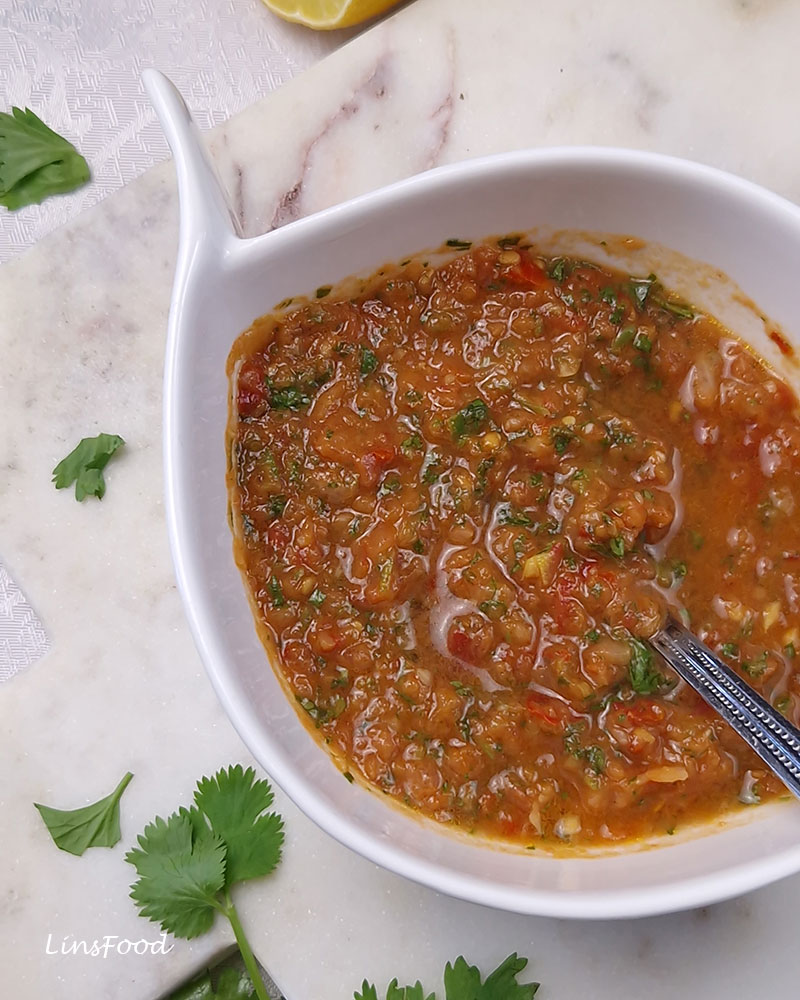
The Recipe
This is a quick, uncooked daqqus recipe. The tomatoes remain fresh, the green chillies keep their bite and the small amount of shallot adds sharpness without taking over.
The tomato purée deepens the tomato flavour without requiring more fresh tomatoes.
It takes about 10 minutes to make, although I recommend leaving it to stand for 15 minutes before serving. This gives the shallot, garlic, chilli and lemon a little time to settle in together.
Ingredients
- Tomatoes: Use ripe plum or vine tomatoes. Plum tomatoes are particularly good because they’re usually less watery. The ripeness of your tomatoes will affect how watery or thick your daqqus is.
- Green chillies: Remember chilli heat varies greatly. I use 2 mild-to-medium green chillies because I want the chilli to be noticeable but not make it too spicy. For very hot varieties, such as bird’s eye chillies or Scotch bonnets, begin with half or 1 or whatever you are usually used to, and add more after tasting. Removing the seeds and pale membranes will reduce the heat.
- Shallot: One small shallot, about 15-20g once peeled, adds gentle onion flavour and texture without overwhelming the salsa.
- Garlic: One small clove is enough. Raw garlic becomes stronger as the daqqus sits.
- Fresh coriander: Use both the leaves and tender stems.
- Tomato purée: This concentrates the tomato flavour and gives the salsa more body. In the US, use concentrated tomato paste.
- Lemon juice: Adds freshness and acidity. Taste the daqqus after resting and add a little more if needed.
- Olive oil (extra virgin): Rounds out the flavours without making the salsa oily.
How to Make Daqqus
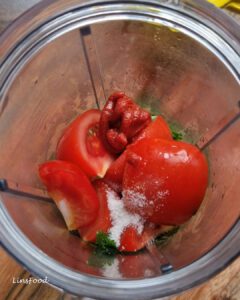
- Pulse all the ingredients briefly until combined but still have a little texture. Don’t leave the motor running continuously or you’ll end up with tomato soup.
- Transfer the daqqus to a bowl and leave it to stand for 15 minutes, then taste. Add more salt, lemon juice or chilli as needed. I like to place it in the fridge so it chills slightly, providing a great contrast to any hot dishes.
The finished daqqus should taste fresh, sharp and distinctly chilli-hot, with enough tomato to give it body but not so much that the chillies disappear.
How to Serve Daqqus
Daqqus is traditionally at home beside Arabian rice dishes. Its fresh acidity and chilli heat cut through the richly spiced rice and meat. But you don’t have to stop there. Serve it with:
- Chicken or lamb kabsa
- Mandi
- Machboos
- Bukhari rice
- Grilled chicken
- Grilled lamb or kofta
- Grilled fish
- Roasted vegetables
- Flatbread and labneh
- Steaks
- Biryanis
- it also makes a great sandwich spread
You can serve it in a bowl at the table or spoon it directly over the rice.
How to Store Leftovers
Transfer leftover daqqus to a clean airtight container and refrigerate it immediately. Use it within 3 days.
The tomatoes will release more liquid as the salsa sits, so give it a good stir before serving. The garlic and shallot will also become stronger over time.
I don’t recommend freezing the fresh version. It will still be edible, but the tomatoes and herbs lose their fresh texture when thawed.
Variations
- Use red chillies: Replace some or all of the green chillies with fresh red chillies. The flavour may be slightly sweeter, depending on the variety.
- Make it milder: Reduce the chillies or remove their seeds and membranes. You can also add another tomato, followed by a little more salt and lemon juice to maintain the balance. Want it completely mild? Use half a capsicum (bell pepper) for the recipe here, instead of chillies.
- Make it hotter: Add more green chilli or include a bird’s eye chilli. Taste home-grown chillies first; they have a habit of ignoring whatever the plant label promised.
- Add cumin: Add ¼-½ tsp ground cumin for a warmer, earthier flavour. This works particularly well when serving daqqus with lamb or grilled meat.
- Add fresh mint: Blend in a few mint leaves alongside the coriander for a cooler herbal note.
- Make it completely smooth: Blend for longer if you prefer a smooth, pourable chilli sauce. Add a tablespoon of water only if the processor needs help.
- Cook the daqqus: Simmer the processed mixture gently for 10-15 minutes for a deeper tomato flavour and a softer, more sauce-like consistency.
Frequently Asked Questions
Daqqus is associated with the Arabian Peninsula and is especially well known in Saudi and Gulf cooking. It’s served with rice, meat and fish dishes, and recipes vary between countries and households.
It can be either. Fresh, chunky versions such as this one are best described as tomato and chilli salsa. Cooked or smoothly blended daqqus is closer to a spicy tomato or chilli sauce.
No, although kabsa and daqqus are a particularly good pairing. You can also serve it with mandi, machboos, grilled meat, fish, roasted vegetables or flatbread.
Not necessarily. Some versions use only one chilli, while others are considerably hotter. Adjust the amount and type of chilli according to your preference.
Not every daqqus recipe contains onion. This version uses a small shallot, which adds flavour and texture without overwhelming the tomatoes and chillies.
You can leave it out, but the tomato purée adds depth, colour and body. Without it, you may need to use a little more fresh tomato or drain the tomatoes well to prevent a thin salsa.
Yes. It’s actually better after resting for about 15 minutes. You can also make it a few hours before serving and keep it covered in the fridge.
This fresh daqqus will keep for up to 3 days in an airtight container in the fridge. A cooked version can be refrigerated for up to 4 days.
Final Word
And there you have it: a fresh, touch fiery daqqus with plenty of green chilli, a little shallot and just enough tomato purée to give it body.
There’s no single definitive recipe, so treat these quantities as a reliable starting point and then make it your own. More chilli, more lemon or another tomato—it should taste right to you and work with whatever you’re serving it alongside.
Although if you’re eating it with kabsa, I’d make plenty. One spoonful has a way of becoming three. Trust me.
Make it, let me know what you think, and tag me on Instagram or Facebook @azlinbloor with a picture.
More soon.
Lin xx
Daqqus Recipe – Arabian Tomato and Chilli Salsa
Ingredients
- 2 medium ripe tomatoes about 200g/7 oz
- 2 fresh green chillies
- 1 small shallot
- 1 small garlic clove
- 1 small bunch fresh coriander cilantro, leaves and stems
- 1 Tbsp tomato purée
- 1 Tbsp fresh lemon juice
- ½ tsp salt
- 1 Tbsp olive oil
Instructions
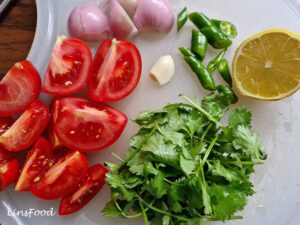
- Roughly chop the tomatoes, green chillies, shallot, garlic and coriander leaves, for easier grinding.2 fresh green chillies, 1 small shallot, 1 small garlic clove, 1 small bunch fresh coriander

- Then place all the ingredients in a food chopper and pulse a few times until combined but not overly smooth. Don’t process continuously or the tomatoes will become too liquid. 5 or 6 times should do it.2 medium ripe tomatoes, 2 fresh green chillies, 1 small shallot, 1 small garlic clove, 1 Tbsp tomato purée, 1 Tbsp fresh lemon juice, ½ tsp salt, 1 Tbsp olive oil, 1 small bunch fresh coriander

- Leave to rest for 15 minutes. Taste and adjust the lemon juice and salt before serving.The final drizzle of juice and oil you see in the video is completely optional, so I haven't listed it in the ingredients.
Nutrition
Enjoyed this recipe? Add us to your Google Search Preferred Sources:


