Enjoyed this recipe? Add us to your Google Search Preferred Sources:
Haydari is a thick Turkish yoghurt dip made with strained yoghurt, feta, garlic, dill and dried mint. Creamy, tangy and full of flavour, this easy haydari recipe is perfect with warm flatbread, grilled meats or as part of a Turkish meze spread.
Estimated reading time: 11 minutes
Table of contents
- What Is Haydari?
- Haydari and the Turkish Meze Table
- What Does Haydari Taste Like?
- Haydari vs Cacık and Tzatziki
- Choosing the Best Yoghurt for Haydari
- Getting the Texture Right
- Haydari Ingredients
- How to Make Haydari
- How to Serve Haydari
- Can You Make Haydari Ahead of Time?
- How to Store Haydari
- Haydari Variations
- Haydari FAQs
- Final Word
What Is Haydari?
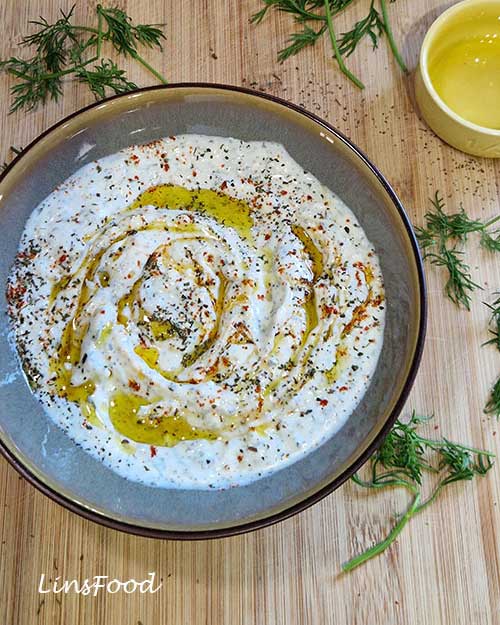
Haydari is a cold Turkish meze made with strained yoghurt, garlic and herbs. Dill and dried mint are most commonly used, while many versions also include Turkish white cheese, butter, olive oil or walnuts.
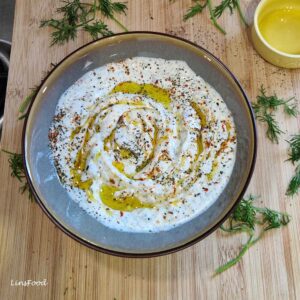
Unlike thinner yoghurt sauces, haydari should be thick enough to scoop and spread. It’s usually served on a shallow plate or in a bowl, finished with olive oil, herbs or a sprinkling of pul biber.
There isn’t one single fixed recipe. Some versions are made with little more than strained yoghurt, garlic and herbs, while others include beyaz peynir, a Turkish brined white cheese, for extra body and saltiness.
This recipe uses feta, which is the easiest substitute to find in the UK. Feta tends to be quite salty, so taste the haydari before adding any additional salt.
Haydari and the Turkish Meze Table
Haydari is part of the Turkish meze tradition, where a selection of small cold and hot dishes is served for everyone to share.
It sits comfortably alongside olives, stuffed vine leaves, salads, grilled vegetables, aubergine dishes, bread and other yoghurt-based meze. It can also be served with kebabs, grilled lamb, chicken or fish.
Although it’s often described simply as a dip, haydari has a much thicker texture than most yoghurt sauces. It shouldn’t run across the plate or drip from the bread. The yoghurt needs to be properly strained, giving the finished dish enough structure to hold its shape.
What Does Haydari Taste Like?
Haydari is creamy, tangy, savoury and deeply herby.
The strained yoghurt provides acidity and richness, while the feta adds saltiness and body. Fresh dill gives the dip a clean, grassy flavour, and dried mint adds a cooler, slightly earthy fragrance.
The garlic should be noticeable without overpowering everything else. It becomes stronger as the haydari rests, so one large clove is usually plenty.
Warming the dried mint briefly in butter helps release its aroma and softens the dry, dusty flavour it can sometimes have when stirred straight from the jar into cold yoghurt.
Haydari vs Cacık and Tzatziki
They all contain yoghurt, garlic and herbs, but they aren’t the same dish.
Haydari
Haydari is thick, rich and contains no cucumber. It’s made with strained yoghurt and often includes Turkish white cheese or feta.
Cacık
Cacık contains cucumber, and cooks may loosen it with water. Depending on the recipe and serving style, it can range from a thick accompaniment to something closer to a chilled yoghurt soup.
Tzatziki
Tzatziki also contains cucumber, garlic and strained yoghurt. It’s usually thicker than a loose cacık but still has a fresher, wetter texture than haydari.
The absence of cucumber is important. Haydari relies on thick yoghurt, cheese and herbs rather than the crispness and moisture of grated cucumber.
Choosing the Best Yoghurt for Haydari
Turkish haydari is traditionally made with süzme yoğurt, which is yoghurt that has been strained to remove excess whey.
In the UK, full-fat Greek yoghurt is the easiest substitute. Look for one with a firm, spoonable texture rather than a loose pouring consistency.
Some products labelled Greek-style yoghurt contain more liquid and may need draining before use. Place the yoghurt in a fine sieve lined with muslin, a clean tea towel or strong kitchen paper, then leave it over a bowl in the fridge.
Thirty minutes may be enough for a slightly loose yoghurt. A very wet yoghurt may need several hours.
Full-fat yoghurt gives the best flavour and texture. You can use lower-fat yoghurt, but it tends to release more liquid and won’t give the haydari quite the same richness.
Getting the Texture Right
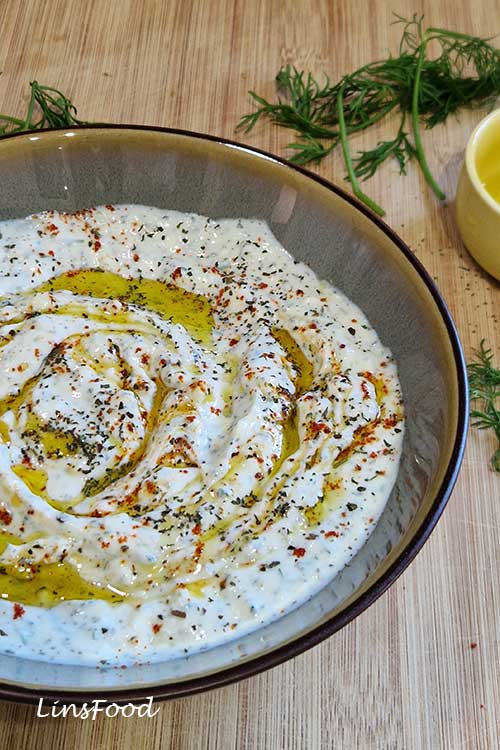
A good haydari should hold its shape when spooned onto a plate. You should be able to make swirls and a shallow well in the centre without the edges slowly collapsing.
Drain loose yoghurt
If the yoghurt looks watery in the tub, it’ll still be watery in the haydari. Drain it before adding the other ingredients rather than trying to correct the texture afterwards.
Mash the feta thoroughly
Mash the feta with a fork before adding the yoghurt. This helps distribute the cheese evenly and prevents large, unexpectedly salty pieces.
The mixture doesn’t need to be completely smooth. A little texture is fine; a whole slab of feta hiding under the dill is less helpful.
Cool the mint butter
Let the mint butter cool for two or three minutes before stirring it into the yoghurt.
It should still be warm and fluid, but it shouldn’t be bubbling or piping hot. Hot butter can cause the yoghurt to separate, while completely cold butter may form small solid lumps.
Chill before serving
Chilling the haydari for at least 30 minutes gives the herbs and garlic time to flavour the yoghurt.
The dip may also thicken slightly as it rests. Take it out of the fridge around 10 minutes before serving so the flavours aren’t muted by the cold.
Haydari Ingredients
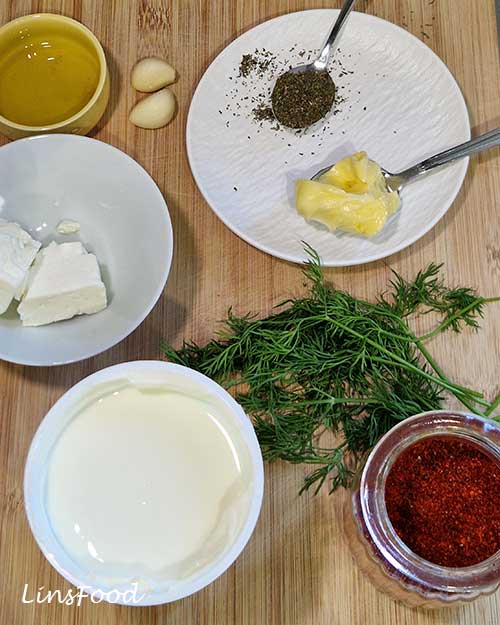
Strained yoghurt
Use full-fat Greek yoghurt or Turkish strained yoghurt. It should be thick enough to sit firmly on a spoon.
Turkish white cheese or feta
Beyaz peynir means white cheese and refers to the brined white cheeses commonly eaten in Türkiye.
Feta makes a convenient substitute, although its flavour can be sharper and saltier. Taste the completed haydari before deciding whether it needs more salt.
Garlic
Use one large clove, finely grated or crushed into a smooth paste.
Raw garlic becomes more assertive over time. When preparing the dip a full day ahead, you may prefer to use slightly less.
Fresh dill
Fresh dill brings a clean herbal flavour and works particularly well with yoghurt and white cheese.
Chop it finely so it blends throughout the dip rather than forming long strands.
Dried mint
Cooks traditionally use dried mint in many Turkish yoghurt dishes because it has a deeper and sharper flavour than fresh mint.
Warm it very briefly in butter, taking care not to let it brown. Burnt dried mint has a medicinal bitterness that no amount of feta can disguise.
Butter
A small amount of butter carries the mint flavour through the yoghurt and makes the dip slightly richer.
Use unsalted butter because the feta may already provide all the salt the dish needs.
Olive oil
Drizzle extra virgin olive oil over the haydari shortly before serving.
It adds flavour, highlights the swirls and makes a bowl of pale yoghurt considerably more interesting to look at.
How to Make Haydari
Haydari is quick to prepare, but the order of the steps helps create a smoother and more evenly flavoured dip.
Prep Work
Finely chop the dill, grate the garlic, crumble the feta and drain the yoghurt if it looks loose.
Mash the Feta
Mash the feta in a mixing bowl until finely crumbled.
Add the Yoghurt, Garlic and Dill
Stir in the yoghurt, garlic and dill until evenly combined.
Make the Mint Butter
Melt the butter over low heat, add the dried mint and leave it to cool for two or three minutes.
Mix and Chill
Stir in the mint butter, taste before adding salt, then cover and chill for at least 30 minutes.
Plate the Haydari
Spoon the haydari onto a shallow plate or serving bowl.
Use the back of a spoon to create swirls across the surface, then drizzle with extra virgin olive oil.
Finish with extra dill, dried mint or a little pul biber.
How to Serve Haydari
Serve haydari cold or cool as part of a Turkish meze spread.
It’s particularly good with:
- Warm pide, pita or flatbread
- Acılı ezme
- Çoban salatası
- İmam bayıldı
- Stuffed vine leaves
- Olives and pickled vegetables
- Grilled lamb or chicken
- Köfte
- Grilled fish
- Roasted peppers
- Courgettes or aubergines
It also works well as an accompaniment to barbecued food. The cool yoghurt, herbs and salty cheese are a good contrast to smoky meat and vegetables.
Use torn bread to scoop it up, or spoon a little beside grilled food. Both methods are perfectly acceptable, although the bread tends to disappear more quickly.
Can You Make Haydari Ahead of Time?
Yes, you can prepare haydari several hours ahead or the day before serving.
A short resting time improves the flavour, allowing the garlic, dill and mint to spread throughout the yoghurt.
Bear in mind that the garlic will become stronger overnight. When making the dip a full day ahead, use half to three-quarters of a large clove if you prefer a gentler flavour.
Add the final olive oil and garnishes shortly before serving.
How to Store Haydari
Keep leftover haydari in a covered container in the fridge for up to three days.
A small amount of whey may rise to the surface during storage. Stir it back into the dip, or pour it away if the haydari has become looser than you’d like.
Haydari isn’t suitable for freezing. Yoghurt can separate once thawed, leaving the dip watery and slightly grainy.
Haydari Variations
Haydari Without Feta
You can make haydari without feta by using extra-thick strained yoghurt.
The flavour will be lighter and less salty, so you may need to add a little salt. Make sure the yoghurt is especially thick, as the cheese normally helps give the dip more body.
Haydari with Walnuts
Add 30-40g finely chopped toasted walnuts.
Walnuts provide a gentle bitterness and a little texture. Chop them finely rather than leaving large pieces in the dip.
Haydari Without Butter
Replace the butter with one tablespoon of extra virgin olive oil.
Rub the dried mint between your fingers before stirring it into the yoghurt. This helps release some of its fragrance.
Spicy Haydari
Haydari is generally herby and garlicky rather than spicy.
For a little heat, sprinkle pul biber or Aleppo pepper over the top before serving. Adding it as a garnish allows the mint and dill to remain the main flavours.
Vegan Haydari
Use a thick, unsweetened plant-based yoghurt and a vegan feta-style cheese.
Choose a yoghurt with a neutral flavour and drain it if necessary. Coconut yoghurt tends to be too sweet and distinctive for this recipe.
This is an adaptation rather than a traditional version, but the same principles apply: keep the base thick, season carefully and don’t add cucumber.
Haydari FAQs
Haydari is made with strained yoghurt, garlic and herbs, usually dill and dried mint. Many versions also contain Turkish white cheese or feta, butter, olive oil or walnuts.
Yes, haydari is a Turkish yoghurt meze. It’s commonly served with bread and as part of a larger selection of cold and hot meze dishes.
No. Tzatziki contains cucumber, while haydari doesn’t. Haydari is also often made with white cheese and has a thicker, richer texture.
No. Cacık contains cucumber and may be diluted with water. Haydari is cucumber-free and should have a thick, spreadable consistency.
Many traditional versions of haydari contain beyaz peynir, a Turkish brined white cheese. Feta is an easily available substitute, although some haydari recipes don’t contain cheese.
Yes. Full-fat Greek yoghurt makes the best widely available substitute for Turkish strained yoghurt.
Drain it first if it looks loose or releases a large amount of whey.
You may have used yoghurt that was too loose, or stirred in the mint butter before it had cooled enough.
Drain loose yoghurt before using it and allow the butter to cool for two or three minutes before mixing.
Yes, although garlic is one of the characteristic flavours.
Use a smaller amount for a gentler dip or leave it out if necessary.
Haydari is usually mild, garlicky and herby rather than spicy.
Pul biber or Aleppo pepper may be added as a garnish for a little warmth.
Don’t freeze haydari, as thawing can make the yoghurt split and turn watery or grainy.
Final Word
And there you have it. Haydari is a thick, creamy Turkish yoghurt dip with salty feta, garlic, dill and dried mint.
The key is to begin with properly strained yoghurt, let the mint butter cool a little before mixing and taste before adding any salt. Serve it with warm bread, grilled food or a full meze spread, and make sure there’s enough bread to go around.
Make it and let me know what you think. Don’t forget to tag me on Instagram at @azlinbloor.
Afiyet olsun.
Lin xx
Haydari Recipe
Equipment
- Mixing bowl
- Fork
- Fine grater or garlic press
- small saucepan (or frying pan)
- Fine sieve and muslin, if the yoghurt needs draining
Ingredients
- 400 g full-fat Greek yoghurt or Turkish strained yoghurt usually 1 large tub
- 60 g feta cheese
- 1 large garlic clove finely grated
- 4 g fresh dill finely chopped, about 2 tablespoons
- 15 g unsalted butter
- 1 tsp dried mint
- Salt only if needed
To Serve
- 1 Tbsp extra virgin olive oil
- Extra dill or dried mint
- Pul biber or Aleppo pepper optional
Instructions
Prep Work
- Finely chop the dill and grate or crush the garlic.
- Check the yoghurt. If it looks loose or watery, place it in a fine sieve lined with muslin or strong kitchen paper.
- Set the sieve over a bowl and drain the yoghurt in the fridge for at least 30 minutes.
Mix the Haydari
- Place the feta in a mixing bowl and mash it thoroughly with a fork.
- Add the yoghurt, grated garlic and chopped dill.
- Stir until the ingredients are evenly combined.
Make the Mint Butter
- Melt the butter gently in a small saucepan over a low heat.
- Remove the pan from the heat and stir in the dried mint.
- Let it sizzle gently for about 15 seconds, then leave the mint butter to cool for two or three minutes.
- Stir the warm, but not hot, mint butter into the yoghurt mixture.
- Taste and add salt only if needed.
Chill and Serve
- Cover and chill the haydari for at least 30 minutes. This will also help thicken it a little.
- Spoon it onto a shallow serving plate and create swirls across the surface with the back of a spoon.
- Drizzle with extra virgin olive oil and garnish with dill, dried mint or pul biber.
Notes
Nutrition
Enjoyed this recipe? Add us to your Google Search Preferred Sources: