

Enjoyed this recipe? Add us to your Google Search Preferred Sources:
Limoncello is a sweet and potent Italian lemon liqueur made with steeping lemon peel in grain alcohol, or vodka, as a substitute.
Estimated reading time: 19 minutes
Table of contents
- What is Limoncello?
- How do you drink Limoncello in Italy?
- Limoncello History
- How to Drink Limoncello
- How do you make Limoncello from Scratch (Limoncello Ingredients)
- What alcohol to use for making Limoncello
- What’s the difference between proof and abv (alcohol by volume)?
- Limoncello Alcohol Percentage Calculation
- LinsFood’s Limoncello Calculator
- How much Sugar in the Simple Syrup?
- Lemons for Limoncello
- Limoncello Troubleshooting
- What to do with the lemons after making limoncello?
- Readers’ Questions
- How to Store Homemade Limoncello
- Limoncello FAQs
- Limoncello Cocktails
- Sterilising Jars and Bottles
- Images from LinsFoodies

What is Limoncello?
It’s a lemon liqueur and is also known as limoncino and limonello, depending on which part of Italy you happen to be in. While it’s popular all over the country (and elsewhere), it has its roots in Southern Italy, specifically, the Amalfi Coast, Sorrento and the island of Capri.
Homemade limoncello is the best! If you make it right, that is. If you’ve been following me a while, you know that I love making up cocktails and alcoholic infusions. In this post, I’m going to share with you how I make traditional Italian limoncello.
Suffering for my craft through many an experiment, I long ago discovered that limoncello in Italy is quite different from limoncello elsewhere. My first experience of real limoncello was at a friend’s wedding on the island of Capri, 20 years ago, almost to the day (they just celebrated their 20th wedding anniversary).

How do you drink Limoncello in Italy?
The first thing I noticed was how it was served – straight out of the freezer, in ice cold shot glasses. And it was smoother too. And finally, at 35 – 40% abv, the Italian limoncello was most certainly more potent.
That would explain why, I felt no pain (nor shame), when the table I was dancing on, fell apart!
Here, in the UK, most of the limoncello I come across is an insipid 25-28%, which makes it impossible to be placed in the freezer. But more of that later.
Limoncello History
Limoncello doesn’t have a long history. British journalist Lee Marshall in his article entitled L’invenzione della tradizione (The Invention of Tradition) in The Internazionale, says:
“but nobody (that I know) makes mention of limoncello before the beginning of the twentieth century. And, out of a handful of families and social clubs, only a few were to drink it before 1988, when the caparese Massimo Canale registered the Limoncello di Capri brand and started to produce the yellow liqueur… “
How to Drink Limoncello
- Serve it neat, straight out of the freezer, as an aperitif or digestive (before or after a meal)
- Use it in cocktails (see below)
When chilled in the freezer, your limoncello becomes thick and syrupy, it’s like drinking lemon flavoured nectar.
So the alcohol level is important, because anything below 30% is going to freeze, and unless you’re thinking of limoncello ice lollies, we need our FINAL CONCOCTION to be at least 30%. And I’m going to talk you through how to do that even if the best alcohol you can get is 37% vodka.

How do you make Limoncello from Scratch (Limoncello Ingredients)
- Alcohol
- Lemons
- Sugar
- Water
⇒ 4 ingredients. That’s all it takes to make a smooth, classy, Italian limoncello. Let’s take a closer look at the first two.
Please, please, for the love of Bacchus, DO NOT use lemon juice to make limoncello! No matter what you read on other sites! Add lemon juice, and it’s no longer limoncello.
What alcohol to use for making Limoncello
This, to me, is probably the most important thing to get right, if we want to make the real thing. So we need to start with a high level of alcohol. You want to get your hands on grain alcohol or pure alcohol, commonly sold under the brand name Everclear.
Grain alcohol is commonly bottled at 151 proof (75.5% alcohol by volume or ABV) and 190 proof (95% ABV). The 190 proof is very difficult to get and is illegal in many U.S. states because it can very easily lead to alcohol poisoning.
⇒ 151 proof grain alcohol (Everclear) is perfect for making Limoncello
That means that it will contain 75.5% alcohol. So to ensure that we don’t dip below our 30% alcohol volume, a little maths is called for here:
- The traditional method of making limoncello is to dilute the alcohol with a simple sugar syrup made with water and sugar.
- If you use the same amount of alcohol to sugar syrup, you will be halving (give or take) the amount of alcohol in your final mixture.
- So 1 litre of alcohol (75.5% abv) + 1 litre of simple syrup (water +sugar) = 37% abv (give or take)
⇒ Can’t get grain alcohol for Limoncello? Let’s use Vodka!
Ok, so here, we have to think a little. The highest abv you’re going to get for vodka is 50%, which is 100 proof.
Immediately, we can see that diluting it by the same amount of water just isn’t going to work for us, as that would take that right down to just 25% abv – you’re gonna get limoncello ice lollies at 25%! Don’t give them to the kids!
Before we get down to the maths, let’s talk proof and abv.

What’s the difference between proof and abv (alcohol by volume)?
The words are quite commonly misunderstood and mistakenly used to mean the same thing. Briefly, the word proof goes back to England in the 16th century, when gunpowder was drenched in alcohol to test for its potency. If the wet gunpowder lit, then the liquor was considered above proof and taxed at a higher rate.
This use of the word proof carried over to the US. In the mid 19th century, to standardise the amount of alcohol sold, given the practice of diluting spirits, 50% alcohol in a spirit was chosen as the standard, or baseline. And, this was described as being 100 proof. As in, it would light up.
Incidentally, chemistry doesn’t allow you to get 100% abv, 200 proof. 95% or 190 proof is as high as it goes.
Be sure to start off with a good quality vodka. That doesn’t mean expensive, be sure it’s something you would drink on its own. Like cooking wine, you infuse rubbish, you’ll get rubbish!
Limoncello Alcohol Percentage Calculation
So, if vodka is all you can get, and what if you can only get 40% abv or only 37%? The trick is to lower the amount of water used. Here’s my formula for making limoncello with vodka, all starting with 1 litre (4 cups) of vodka.
Since I first published this in 2018, I’ve tweaked the measurements a little.
The main change is the amount of sugar I use. Real Italian limoncello is like nectar, it’s sweet. The amount of sugar I give now will produce a sweet limoncello but not overly so. You can stir in more sugar at the end, if you want it sweeter.
And after a couple of nudges from 2 readers, I’ve also standardised the sweetness in all the calculations.
So, for the most up to date calculations, refer to what follows, as well as the recipe card, depending on the strength of your alcohol. The older comments will refer to my original calculations. Drop me a comment and I’ll help if you can’t work it out.
Basically, if you want your limoncello stronger, reduce the amount of simple syrup (water + sugar).
LinsFood’s Limoncello Calculator
This is my own formula that I base our limoncello calculations on:
x = total amount of liquid (original alcohol + the syrup we’ll be adding)
y = original volume of alcohol in millilitres (so 50% abv of 1 litre vodka = 500ml of alcohol)
z = target abv
x = y÷z
When you have calculated x, you will remove the amount of vodka or grain alcohol you are starting with. This will leave you with the amount of simple syrup you need. Simple!
Example: 1 litre vodka with 50% abv (as below this pink box)
x = 500 ÷ 0.33 (which is 33%) x = y÷z remember?
x = 1515 millilitres (1.515 litres)
So the total liquid (vodka + simple syrup) is 1515 millilitres
Since we started with 1 litre vodka, 1515 – 1000 (millilitres) = 515 ml
So we need 515 ml simple syrup (water + sugar)
How much Sugar in the Simple Syrup?
The next part is a matter of taste. More sugar = sweeter limoncello.
Every 100g of sugar (1/2 cup) will give you 50 ml of syrup. Just add water to that for your total simple syrup.
Edit May 2023: I’ve had many messages about the amount of sugar in the simple syrup. So here goes.
I work on a 1:4 ratio, which gives a total of 5 parts.
So 1 part sugar in ml : 4 parts water (because you can’t compare weight to volume, we convert the sugar to its liquid amount first).
- Calculate your simple syrup amount. (Let’s say we have 800ml simple syrup)
- Divide that amount by 5 (that’s 160)
- Your answer (160) is 1 part of 5 – this is the amount of the sugar you need in volume. (that’s 160ml of sugar in liquid form)
- So 800 ml – 160 ml = 640 ml >> you need 160 ml sugar and 640 ml water (that’s 1:4)
- 160 ml sugar is 320 g in weight, see above.
This is how you work out how much sugar and water you need for your simple syrup.
How to make Limoncello with 50% vodka
- 1 litre (4 cups) vodka @50% abv
- Target = 33% final abv
- Lemons = 12
- Simple Syrup = 520 ml (rounded up, just over 2 cups) made with:
- Water = 400ml (1 3/5 cups)
- Sugar = 240 g (1 1/5 cups)
Limoncello with 40% vodka
- 1 litre (4 cups) vodka @40% abv
- Target = 33% final abv
- Lemons = 10
- Simple Syrup = 220 ml (4/5 cup) rounded up, made with:
- Water = 120ml (just about 1/2 cup)
- Sugar = 200 g (1 cup)
How to make Limoncello with 37% vodka
⇒ why don’t we keep it simple and skip the water?! That’s what I would do, giving you a limoncello with about 37% abv – fabulous stuff, but a little sweeter than the formulae above.
- 1 litre (4 cups) vodka @37% abv
- Target = 35% final abv
- No Water
- Lemons = 8
- Sugar = 200 g (1 cup)
just fyi, this amount of sugar will give you the equivalent of 100 ml of liquid (about 2/5 cup) - If your sugar isn’t completely dissolving after 4 weeks, add 60ml water (1/4 cup) to the mix, stir, and leave for another 2 weeks. (EDIT Sep 2021)
⇒ If you are making your limoncello with no water, that is, with 37% or even 40% vodka, just add the sugar on Day 15. NO WATER.
Lemons for Limoncello
Traditionally, the most celebrated Italian lemons for limoncello are the Ovale di Sorrento and the Amalfi Coast’s sfusato amalfitano, both protected regional varieties prized for their fragrant, oil-rich peel and strong ties to southern Italian limoncello culture.
But let’s be sensible: you do not need to track down those specific lemons to make proper homemade limoncello. But unless someone is posting you lemons straight from Campania, don’t panic.
What matters far more at home is using excellent unwaxed, aromatic lemons, peeling them carefully so you avoid the bitter pith, and getting the final alcohol balance right.
The sweeter and more aromatic your lemons are, the more sublime your limoncello will be. Ideally, your lemons want to be organic and unwaxed. Because whatever pesticides were used and that wax? That’s going into your limoncello, as it’s only the peel we will be using.
Be careful not to have any of the white bitter pith, or your drink is going to be bitter.
If you can’t get organic lemons and/or unwaxed lemons? Scrub them gently with a vegetable brush with warm water.
Can You Use Meyer Lemons?
Yes, you can use Meyer lemons for limoncello, but they do change the flavour slightly. They are sweeter and softer than regular lemons, so the finished limoncello will usually taste less sharp and may need a little less sugar. Lovely, yes. Classic, not quite
Limoncello Troubleshooting
My limoncello is bitter
This usually means too much of the white pith made its way in with the peel. We only want the yellow outer skin here, because that is where all the fragrant lemon oil lives. The white part is what brings the bitterness and can make the whole bottle taste a little sulky.
My limoncello froze solid
Your final alcohol percentage is probably too low. This is exactly why I drone on about calculations in this post, because limoncello that drops below about 30% abv is far more likely to freeze rather than stay thick, syrupy and gloriously pourable.
My limoncello is too strong
Leave it longer. Young limoncello, especially one made with stronger alcohol, can taste a bit fierce at first. As it rests, it mellows and smooths out, which is why a longer steeping and resting time nearly always gives you a better result.
My sugar is not dissolving
This can happen with lower-strength vodkas and no-water versions. If you are using 37% vodka and the sugar is still being stubborn after a few weeks, add a small splash of water, stir it well and leave it a little longer. That usually sorts it out without drama.
My limoncello is cloudy
Good. In many cases, that is exactly what you want. The cloudiness comes from the lemon essential oils emulsifying when the syrup is added, and that is a very good sign that you have extracted plenty of flavour from the peel.
My limoncello is clear, not cloudy
That is not necessarily a problem either. Lower-strength alcohol can sometimes give you a clearer limoncello. As long as it smells properly lemony and tastes good, we’re good.
My limoncello is not lemony enough
That usually comes down to the lemons. The sweeter and more aromatic they are, the better your limoncello will be. Good lemons matter far more than people think, and sad lemons make sad booze. Truth.
My limoncello has bits in it
Just strain it again. A fine mesh sieve is fine, but for a cleaner finish you can go through muslin, cheesecloth or even a coffee filter if you are channeling Axl Rose. Tidy up while waiting? Paint your nails? Read a book?
What to do with the lemons after making limoncello?
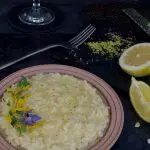
- Make some lemonade for everyone, and spike the adults’ portions!
- Or any of the recipes in the gallery below!


Readers’ Questions
What is Simple Syrup?
Simple Syrup is just water and white sugar, heated up and left to simmer (on the lowest heat) for 2 minutes on the stove. The time may differ from person to person, but that is really all you are doing, making a sweetener for your drinks.
If you need to figure out how much simple syrup you will get from however much water and sugar you use, just remember this (also mentioned above):
Every 100g of sugar (1/2 cup) will give you 50 ml of liquid (when the sugar is melted). Just add water to that for your total simple syrup.
So there really isn’t any reason to buy a commercially made one as it’ll inevitably contain other ingredients that you don’t need.
In my cocktails, I always give you more than one portion, because I assume you’ll want more, and also because the syrup will keep happily for weeks. You only need to worry about the ants!
Is homemade limoncello supposed to be cloudy?
Essentially, what makes limoncello is the essential oil from the peel, which is why we don’t add lemon juice to the mix. Over time, the essential oil seeps out into the alcohol.
When sugar syrup is added to the mix, you get a spontaneous emulsification, resulting in an essential oil and water emulsion. So you have a louched (cloudy) limoncello. You want this, because that means you’ve got enough essential oil of lemon, creating a delicious limoncello.
This louche effect is also known as the ouzo effect (same thing happens) and is what you get when you dilute absinthe. In the latter, the process is known as la louche.
However, this does depend on the strength of alcohol you are using. If you are using a low strength vodka, chances are your limoncello will remain fairly clear.
How to Store Homemade Limoncello
Once your limoncello has been strained and bottled, keep it in clean glass bottles with tight-fitting lids. If you can, strain it really well before bottling, because tiny bits of peel or sediment can affect the flavour over time and can also make freezer-stored limoncello less smooth.
For the best drinking experience, store homemade limoncello in the freezer and serve it straight from there in ice-cold glasses. That is how it’s traditionally enjoyed, and it is what gives it that gorgeous thick, syrupy texture. If your final alcohol percentage is too low, though, it may freeze solid rather than stay pourable, which is exactly why getting the maths right matters.
As for shelf life, 1 month in the fridge and up to 1 year in the freezer. Either way, keep it sealed, keep air exposure low, and use common sense: if anything looks odd, smells wrong or has gone cloudy in a suspicious rather than lemon-oil sort of way, sling it.
If you’re making limoncello with a lower-strength vodka, freezer storage may not work in the same way as it does with stronger versions, so the fridge may be the better home for it.
Limoncello FAQs
Traditionally, limoncello is made with high-proof neutral alcohol because it extracts more lemon oil from the peel. But vodka also works beautifully, as long as you adjust the water and sugar properly so the final alcohol level stays where you want it.
Yes. You do not need Everclear to make good homemade limoncello. Vodka works, but weaker vodkas need different sugar-and-water calculations, which is exactly why an ABV-based method is more useful than a one-size-fits-all recipe.
Yes. You can make limoncello with 40% vodka and even 37% vodka, but the proportions need adjusting. With weaker vodka, you cannot simply follow a standard grain-alcohol recipe and hope for the best unless you want a watery, freezer-sulking disappointment.
Bitterness usually comes from too much white pith on the peel. For the cleanest flavour, use only the yellow outer skin and avoid digging into the white layer underneath. The better and more aromatic the lemons, the better the finished limoncello too.
Often, yes. A cloudy homemade limoncello usually means the lemon oils have emulsified with the syrup, which is a good sign. The louche effect is perfectly normal and is part of what gives limoncello its lovely texture and flavour.
A month will give you a very drinkable limoncello, especially with vodka, but longer steeping and resting generally improve the flavour. Many recipes sit around the one-month mark, while others go well beyond that for a smoother finish.
Limoncello is best served very cold, straight from the freezer, in small chilled glasses. That icy, syrupy texture is part of the charm and one of the reasons the final alcohol percentage matters so much.
Store homemade limoncello in clean, sealed glass bottles and keep it cold for best flavour. Many home recipes suggest the fridge or freezer, and freezer storage is especially common because limoncello is traditionally served well chilled. Use bottles that can cope with low temperatures.
Ideally, yes. Because limoncello uses the peel rather than the juice, unwaxed and preferably organic lemons are best. If that is not possible, scrub the lemons very well before peeling them.
Yes, you can. Meyer lemons tend to be sweeter and softer in flavour than standard lemons, so some people prefer to reduce the sugar slightly when using them. The result will taste a little different, but still lovely.
Not if you want a classic limoncello. Traditional limoncello is made from lemon peel infused in alcohol, then mixed with sugar and water. Add lemon juice and you are moving away from proper limoncello into a different sort of lemon liqueur.
Your final alcohol percentage was probably too low. Limoncello needs enough alcohol to stay pourable in the freezer, which is exactly why calculating the finished ABV matters when you are working with vodka rather than high-proof grain alcohol.
Limoncello Cocktails
It makes a perfect cocktail ingredient, and besides the Limoncello Margarita on this site, here’s a simple way to enjoy limoncello in a drink:
- 2 shots limoncello
- 1 shot vodka
- top with 7Up
- add some ice & berries of your choice
Sterilising Jars and Bottles
- Turn the oven on to a cool 130˚C/250˚F/Gas Mark ½.
- Wash the jars, bottles and lids in hot soapy water.
- Place the jars, bottles and lids upside down in the oven and leave them to dry, with the door closed for 15 minutes.
- Turn the oven off and leave the jars, bottles and lids in there, bringing them out only when you are ready to fill. Be careful, as they’ll be hot.
Images from LinsFoodies


Did you enjoy this article and found it useful? Or got a question? Drop me a comment and if you’re feeling like a star, don’t forget that all important, 5-star rating! Thank you!
And if you make the recipe, share it on any platform and tag me @azlinbloor, and hashtag it #linsfood.
Lin xx
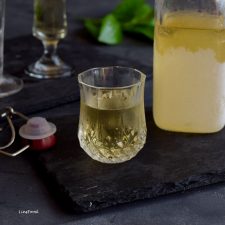
Homemade Limoncello Recipe
Equipment
- 1 large preserving jar that will hold 2L (8 cups)
- Sieve and muslin cloths
- Bottles to strain the final mix into, after 4 weeks
Ingredients
- 1 L grain alcohol, Everclear, 75.5% (150 proof) – if using vodka, read my explanation and formulae above
- 15 lemons
- 400 g sugar (when that sugar melts, you will have the equivalent of 200ml melted sugar) SEE NOTES BELOW
- 800 ml water (so when the sugar above melts, we'll have a total of 1L Simple Syrup) SEE NOTES BELOW
You will also need
Instructions
Day 1
- Rinse and dry the lemons. Peel or grate the skin, carefully. We only want the yellow parts, the white is bitter.15 lemons

- Place the lemon peel into your preserving jar.
- Top with the alcohol, cover, and keep in a cool, dark place for 2 weeks. Stir every 4-5 days.1 L grain alcohol, Everclear, 75.5% (150 proof)


Day 15 (Week 3)
- At the end of 2 weeks, make a simple syrup with our water and sugar, by simmering them together in a saucepan for 2 minutes.800 ml water, 400 g sugar

- Cool completely, then add to the lemon peel mix. Stir well.

- Cover, and return to the cool, dark place, this time for a minimum of 4 more weeks, but ideally, 10 more weeks, so that your grain alcohol can mellow out, and so you'll have a smoother drink.


If you are making your limoncello with no water, that is, with 37% or even 40% vodka, just add the sugar now, along with the lemon zest/peel. NO WATER NECESSARY.
Straining the Limoncello (minimum 1 month. 3 months is good)
- Strain through a fine mesh sieve into your bottles. For a crystal clear drink, strain through a coffee filter (which takes forever), or line your sieve with a double layer of muslin or cheesecloth.
- Place the bottles in the freezer and serve in ice cold shot glasses for the best experience.


If you are making this with good quality vodka, your limoncello will be very drinkable at 1 month, and great at 2.
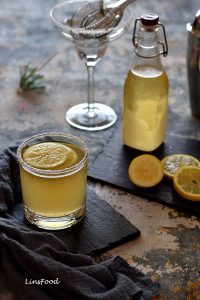
Fancy a Limoncello Margarita?
Notes
Plus that 800ml water, we’ll end up with 1 litre of simple syrup. 1000 ml = 1 litre. Simple syrup = water + sugar. Every 100g of sugar (1/2 cup) gives you 50 ml of syrup (without taking into account the water). Steep the limoncello for 1 – 3 months. Total time does not include this steeping period, only the hands on time. 1 shot = 1 serving = 30 ml = 1 fluid oz (I’ve rounded off the number of servings).
Nutrition
Enjoyed this recipe? Add us to your Google Search Preferred Sources:



We followed the given recipe to the letter using 40% Vodka. The drink still came out tasting just like 40% Vodka. Is there anything we can do to salvage this mixture ? Please advise ! Diana & Carlo
Hi Diana and Carlo, that’s a shame. I’m really puzzled on how your drink would taste just like vodka (which is a negligible taste), when you’ve added lemon peel and sugar. Did you adjust the water and sugar amounts for using 40% vodka? Because how much simple syrup you add will change depending on the strength of your vodka/grain alcohol.
With 1 litre of 40% vodka, you would have only needed to use 120 ml water and 200 g sugar (not 800 ml water and 400 g sugar as in the recipe card).
I can’t offer a solution until I know exactly what you used.
If you added too much water & sugar, the solution would be to add more lemon peel and vodka, because the abv is low with all that water.
Hi, I was so excited to make this, then you totally confused me with the following in the recipe:
400g sugar will make 200ml simple syrup
800ml water plus sugar will give a total of 1litre SS
??
So what do I use for the recipe?
I’m probably dumb, but please help!!!
Hi Es, sorry to hear the recipe confused you.
I’ve tried to break everything down so my readers can understand why I’m doing something. This is what the lighter coloured font explains. I’ll edit that slightly to make this even clearer.
So you will need 400g sugar and 800ml water.
I’m going to explain the stuff in grey, ignore it if you don’t want the science. This is explained in the post.
When sugar is melted, the final volume in ml is half the number of grams. So that 400g sugar will give us 200ml liquid sugar (syrup). Plus that 800ml water, we’ll end up with 1 litre of simple syrup.
Simple syrup = water + sugar.
1 litre = 1000 ml
I hope that helps to clarify matters. Let me know how it goes.
I have 190 proof everclear-750ml and 375 ml. What is sugar/water ratio? Also could raspberries be added? If so, would they be added at the same time as the zest? I just started the limoncello today. Thank you!
Hi Mary, I wasn’t sure if you were making the 2 separate amounts as you’ve listed above or adding them. So I’ve given you the amounts for both. If you are making one big batch, just add the amounts I’ve given.
I’m working on a ratio of 3:1 water:melted sugar. At the end of 4 weeks, taste it. If it’s not sweet enough, add sugar, a little at a time until you are happy with the level of sweetness.
750 ml: 960 ml water, 640 g sugar (This will give you 320 ml melted sugar).
375 ml: half of the above amounts, so 480 ml water, 320g sugar.
Raspberries: sure, you can add raspberries, but it will no longer be pure limoncello. It will be raspberry flavoured limoncello or raspberry and lemon liqueur.
I have a few other infusions with vodka and gin that you might be interested in, if you fancy the idea of raspberry liqueur. You’ll find the here: https://www.linsfood.com/drinks/
Using vodka will be like using Everclear, just a lower percentage of alcohol, and a smoother base to work with.
Using gin gives you a delicious base as a start.
One of my favourites is the Raspberry Gin, I have a couple of jars proofing at the moment.
I hope that helps. Let me know how it goes.
Thank you for your knowledge ! I’m so looking forward to trying this cocktail and sharing at Christmas with friends
A pleasure.
Hi can you tell me how I move forward with the recipe when I’ve started with 95% alcohol? I’m in Italy and got the grain one easily but it’s way stronger than any of the ones you suggested
Hi Amy, you didn’t mention how much you’ve got.
Say we start with 1 litre of grain alcohol at 95% abv. And we are aiming for a final abv of 35%:
You’ll need 1700 ml of simple syrup.
I usually aim for a quarter of that simple syrup to come from sugar, so a ratio of 3:1 (water:melted sugar).
But as you are starting with a very high level of alcohol, we have to play around with the water and sugar to get the right sweetness.
I would suggest starting with 600g of sugar (which will convert to 300ml as a liquid).
So you will need 1400ml of water.
Your total simple syrup will be 1700ml.
Stir in more sugar at the end of 4 weeks if you don’t think it’s sweet enough.
If you want your limoncello to have a higher abv, reduce the simple syrup.
1375ml of simple syrup will give you a final abv of 40%.
I hope that helps.
Wow, I’ve honestly never been so impressed by a blog post recipe in my life, and I haven’t even started making this yet. From the bottom of my glass, thank you!
I’m looking for feedback on timing – my husband and I “Jingle Booze” our neighbors and close friends with a different homemade adult beverage every Christmas. If I’m looking to have these ready to be gifted around December 20th of this year, can you help me with a timeline to make sure these are ready in time?
Also, I just picked up 3 1.75L bottles of 151 grain alcohol yesterday, do you know an approximate yield so I can get an order together for giftable bottles?
Lastly, if I did this with blood oranges, will I be disappointed?
Thank you so much in advance!!
Hi Courtney, thank you, I’m really pleased you think so. A lot of work has gone into it, and I still find myself improving parts of it from time to time.
Timeline: I think 2-3 months is best for a mellowed out limoncello. So if you count back, anytime from this weekend to mid October would be a great time to get going.
Yield: Since you’re starting with 151 proof, you’ll need the same amount of simple syrup (the calculation on the recipe card itself). You’ll end up with double the amount, so I believe 10.5 litres of limoncello.
Blood Oranges: in theory, there is no reason why this wouldn’t work, after all, orangecello is made with regular orange peel. I can’t get blood oranges here in the UK until sometime in December, so I can’t give it a quick try to get back to you! Probably worth doing 1 litre of it, which will give you 2 litres of blood orangecello.
Let me know how it goes, and I hope that helps.
Thanks for a detailed run down of what alcohol to use and why, it was the hardest thing to find!
Would I be able to make a batch mixing two different types of alcohol, i.e. a 500 ml bottle of 190 proof and a bottle of vodka around 40-50% to get more overall volume?
A litre bottle of vodka around 40-50%*
Hi Michael, yes, you can definitely do that. Then just get the average abv for the total amount to work out how much sugar syrup you’ll need.
Working on 40% for the litre of vodka, you’ll end up with 1.5 litres with an abv of 58% (116 proof).
Hi Azlin
When I added the sugar syrup to my lemon peel and alcohol mix, the mixture went cloudy (which I was hoping for) but in the 3 or 4 weeks since it has become clear again. Do you know why this might be? Should have I removed the lemon peel before adding the sugar syrup to the alcohol?
Hi Michael, that is perfectly normal. The limoncello going cloudy is called the louche effect. I explain it in my post, you’ll find it easier by going to the Table of Contents at the top of the post.
So the limoncello goes from being a stable liquid to a state of precipitation. It will eventually clear, as yours did. How long this takes depends on the level of alcohol, water, oils from the peel and sugar.
ps: you want to leave the peel for as long as you can.
I can’t thank you enough Azlin. I’ve made limoncello twice before following recipes I found online. I only wish I saw yours first! I finally have the perfect tasting limoncello like I used to drink in Italy. You’re a GODDESS!
Haha, thank you, Emerald, I’m pleased to hear that. I get so many folks saying the same thing.
Hi Azlin,
This is Clay again…
Now I am going to try “orangecello.” If I use large navel oranges, how many do you suggest I use for 1.75L of vodka?
Thanks
Hi Clay, sorry for the late reply, I’m currently away from home, working.
There is no hard rule to the number of fruit you use. I think with large navel oranges, 10 – 12 ought to suffice.
Sorry, I meant to say 4 cups…
Hi I wish I would have read your article before I started. Hope you can help me going forward. I used alot of alcohol and lemons for a very large batch. 5 bottles 1.75 liters of 100 proof vodka and 1- 750ml bottle 151 proof vodka and 1- 750 ml of 151 proof everclear grain . How do I begin to know how much simple syrup to add? I was going to do equal parts water and sugar. But after reading your recipe I’m thinking twice about that. Can you please help with your expertise? Thank you!
I don’t know why my question appeared under a reply. Sorry about that.
Not a problem. I’m away from home working at the moment. I’ll leave a reply here by the end of the day, UK time.
Thank you so much!! You are so kind!! !!!!
Hi Gina, for the 750ml at 151 proof (both vodka and Everclear), you need the same amount of simple syrup and 12 lemons. This can be made with 300g sugar and 600ml water. This will give you a fairly sweet limoncello, as it’s meant to be.
If you want it less sweet, reduce the sugar by 100g and increase the water by 50ml.
Basically, just bear in mind that 100g of sugar, when dissolved (or heated) gives you 50ml of liquid, or syrup.
When the 4 weeks are up, just taste it. Add more sugar if you would like it sweeter. Every 100g of sugar will increase the amount of liquid by 50ml. As you are starting with 151 proof, you’ve got a bit of margin to play with, before you hit the minimum 60 proof (30% abv) needed to freeze the limoncello without it turning to ice.
For the 1.75ml of 100 proof, you need 900ml simple syrup, made up with 700ml water and 400g sugar. This will give you a final product with 33% abv (66 proof). 20 lemons.
Have fun!
Just wanted to double check sugar and water amounts for simple syrup. I’m ready to add to alcohol. I have 8.75liters of 100 proof vodka and 1500ml of 151 proof. Also is it better to add syrup without straining first? And best amount of time before bottling? Thank you very much! I’m excited and hope I get this right.
Hi Gina, 8.75 litres at 100 proof, you just need to multiply the following by 8.75:
How to make Limoncello with 50% vodka
1 litre (4 cups) vodka @50% abv
Target = 33% final abv
Lemons = 12
Simple Syrup = 515 ml (just over 2 cups) made with:
Water = 400ml (1 3/5 cups)
Sugar = 230 g (1 1/2 cups)
SO YOU’LL NEED:
>>> 3.5 litres water
>>> 2 kg sugar
1500ml at 151 proof, multiply the following by 1.5:
Ingredients
1 litre grain alcohol, Everclear, 75.5% (151 proof)
15 lemons
400 g sugar (will make 200ml simple syrup)
800 ml water (plus the sugar above will give a total of 1 litre SS)
SO YOU’LL NEED:
>>> 600 g sugar
>>> 1.2 litres water
Bottling: 1 month is the minimum. I find 2 gives a great result. 3, if you can wait that long, but will give you the smoothest limoncello.
Adding syrup: you definitely want to add the syrup before straining. The idea is to give the ingredients as much time to mix. This is why if you are adding more sugar at the end of 4 weeks, I always suggest giving it another week or two before straining.
You’ve got a huge amount there. I would strain some off at the end of 4 weeks and enjoy that, while you let the rest sit. That’s what I tend to do.
Have fun!
Hi Azlin,
Quick questions… (I cannot find it in any of the comments)… What would be the simple syrup amount for 1.75L of 80 proof vodka. Also, I used ten good sized medium lemons for four quarts of vodka. When do you suggest pouring the rest of the bottle in?
Hi Clay, we want to ensure that the abv stays above 30% (60 proof), so we can place the limoncello in the freezer. So we only need a small amount of simple syrup: 175ml water + 200g white sugar.
I know it doesn’t seem like much but that’s because we’re starting with a lower proof than that of standard grain alcohol.
I don’t think 10 lemons are enough for the amount of vodka you have. I’d add at least 5 more, and be sure to give it at least another 2 weeks.
Add the rest of the vodka asap, to allow the flavours to mingle. Ideally, you want to mix the vodka and lemon peel right at the start to allow the flavours to develop and the alcohol to mellow. I’ve tried this before, topping up my limoncello with fresh vodka. The limoncello ends up having a “raw” alcohol taste.
I hope that helps.
ps: at the end of the time, if your limoncello isn’t sweet enough, stir in more sugar.
I’ve had a few complaints over the years that the limoncello here is too sweet, but that’s just it, real limoncello is really sweet.
Thank you so much. I wish I had found your recipe first when doing my search… Anyway, just add 5 more lemons and the rest of the vodka. I will let it set for another 2 weeks then do the simple syrup combination you suggested.
Thanks again.
A pleasure.