

Enjoyed this recipe? Add us to your Google Search Preferred Sources:
Sumakiyyah, or Sumaghiyyeh, is an old, rustic stew synonymous with Gaza in Palestine. Every mouthful is a symphony of flavours with tangy, meaty and earthy flavours, with a pleasant hint of bitter (from the chard), nutty and finally, spicy and a little garlicky.
Estimated reading time: 12 minutes

Sumakiyyah (or is it Sumaghiyyeh, Sumaghieh?)
Firstly, let’s take a look at the name, shall we?
In Arabic, it’s spelt السماقية. Arabic pronunciations, like those of many other languages, can differ from country to country, region to region and even community to community. On top of that, English spelling translations of foreign words are always subjective.
But depending on where you are and your cultural origin (it’s not always geographical), the ق sound in السماقية can also be pronounced as q, k, g, gh, or spelt with a q, as in the book below.
I’ve always prononunced it with the k sound, since I first came across the recipe in a translated version of Kitab al-Tabikh, the 13th century medieval Arab cookery book I’ve mentioned a few times on this site. See below.
If you’re an Arabic speaker, I would love to know where you’re from and how you pronounce ق.

The Glory of Sumakiyyah
Sumakiah or Sumaghieh, however you want to say it or spell it, has a long, long history. Named after it’s main flavour, sumac, it is, for many Palestinians, a treasured recipe intertwined with many, many childhood memories, both bitter and sweet. This is the sort of recipe that’s passed down through generations, and in all those hundreds of years, has hardly changed in its contitution, despite personal touches from every cook.
This glorious Palestinian stew is a dish for celebrations, despite its rather humble appearance. You’ll find it on the Eid and Christmas table, as well as at birthdays, weddings and funerals. It rather reminds me of the Pakistani Haleem, which itself is a descendant of the Arabic dish Harisa. Interestingly, the first written record of harisa was also in Kitabh al Tabikh.
The preparation of Sumakiyyah before a festive (or solemn) occasion begins the night before with much of the prep work being done. On the morning of Eid, many families will cook this sumac stew up in large quantities and distribute it amongst their neighbours, along with some fresly baked bread.
We’ve got a few Palestinian recipes here on LinsFood already, with the two Maqluba recipes and Musakhan being the most popular. Come with me on an adventure once again as we cook up this glorious traditional Palestinian sumac and chard stew.

Sumakiyyah Recipe
Cooking it is a fairly straighforward affair. Traditionally, sumac berries would have been used, and we’d soak them to extract the flavour. But it’s perfectly fine to use commercially prepared ground sumac. I have a sumac bush in my garden but hardly ever bother using it in the kitchen.
This is what we’ll be doing to cook up sumaghieh:
- Brown the meat (lamb or beef), then get it cooking (1 – 1/2 hours, mostly hands off). Or use an instant pot/pressure cooker, if that’s your thing.
- Soak the sumac in hot water.
- Prep all the vegetables and aromatics.
- Optional – make your tahini if you don’t have it ready made or not using shopbought (about 10 minutes). I don’t use shop bought tahini, as homemade requires just 1 ingredient and is so easy. Recipe below.
- Add the flour and tahini to the sumac.
- When the meat is done, sautè your onions, then add the chard.
- Tip in the cooked meat, sumac paste and chickpeas and cook for 10 minutes.
- Pound (or use a food chopper/spice mill) your dill seeds, chilli flakes and garlic and fry for 30 seconds in hot oil. Pour this on your sumakiyyah and stir well.
- Dish up, topped with a drizzle of olive oil, and a sprinkle of sumac and chilli flakes. See video, at the end.
Pretty straighforward, right? While the meat is simmering away, we’ll be doing everything else. So perhaps, and hour and a half in all? Or thereabouts.

Ingredients for Sumaghieh
As mentioned above, the components that make up a tradional sumakiyyah have remained the same over generations, and don’t change, no matter who’s cooking it. What does differ, is the ratio of the ingredients. Some like less meat, more chard, only a handful chickpeas, and likewise, a handful of onions.
Let’s briefly take a look at the ingredients we’ll need to cook up sumaghiyyeh.
Meat
You can use lamb or beef for this, and you want them chopped up in little bite-sized pieces. You could even use minced meat for this. I like a little fat on the meat, which I think adds flavour and body. So 10% is perfect.
I’m using beef. What cut? My favourite cut of meat for cooking Sumakiyyah and many stews is the chuck. It’s sourced from around the shoulder of the cow and is low on price but high on flavour because of its fat content. Here in the UK, it is also sold as braising steak and is popularly found as mince.
Cuts of meat have different terms in different parts of the world, so when cooking recipes, you may need to do a search online to get the equivalent name for where you are.
Sumac
Sumac is the underlying flavour of sumakiyyah. After all, the dish is named after this deep red, tangy spice. These ground up berries are very, very easy to find in the UK, with all our large supermarkets stocking it. And naturally, you’ll find it being sold online too.
Something to note: pretty much all the sumac found commercially has a little salt added to it. It may be 1%, it may be 10%. Try and get your hands on salt-free sumac, but don’t worry too much about it if you can’t. Just don’t add any salt to what you’re cooking until the end, and you’ve had a taste. Here, because I’ve made this same recipe a gazillion times in my Middle Eastern classes, I’m suggesting 1/8 tsp to begin with.
This is the Sumac I stock in my kitchen, found on Amazon, by Yaffa. Image below.
Can’t get sumac? The best sumac substitute is the humble lemon juice. Be sure it’s fresh, and not out of a bottle. Sumakiah is a very tangy dish, so I’d start with 4 Tbsp of fresh lemon juice, then taste and add more if necessary. You’ll also want to serve it up with a squeeze of lemon juice. With more lemon wedges if anyone wants more.

Chard
Chard, or Swiss chard, is a pretty common vegetable in many parts of the world. Rainbow chard will also work in sumakiyyah. We’ll be cutting off the tough, white stems and only using the leafy part.
If you can’t find chard, any large, leafy green can be used. Chard has an earthy and pleasantly bitter flavour, so that’s what you’re looking for. Pak choi might be the closest? Besides that, kale, beet greens and collard greens will work too. If the vegetable is very strong in flavour, use less of it.
Can you use spinach to cook sumaghieh? Sure, you can. It’s green and earthy, without a hint of bitter, so why not?
Tahini
There’s quite a bit of tahini going in our Sumaghieh recipe. I don’t ever use shop bought tahini, as homemade has a fresher, nuttier and “cleaner” taste. And all you need is sesame seeds. Optionally, to make the process slightly quicker, some neutral flavoured oil can be added when blitzing in the food processor.
This is how we make tahini at home:
- Dry toast 100g (3.5 oz) white sesame seeds over medium-low flame in a large frying pan, tossing frequently. You want to do this until they are a light golden brown and you can smell that nutty aroma.
- Cool for 5 minutes.
- Tip into a food chopper and process for about 6-8 minutes, scraping down the sides and dislodging any stuck bits frequently. Eventually, your seeds will form a paste, just like making nut butter.
** This last step can be made shorter by adding a little vegetable or peanut oil, so it’ll blend quicker. It’s not something I do, preferring the full-on sesame and nutty flavour, not the diluted version.
>> if you are only doing a small amount, use a small food processor.
>> want to make lots of tahini? It’ll keep in the fridge for 6 months. On the kitchen counter for 1.
Red Tahini (aka Red Tahina) from Gaza
In Gaza, there are 2 types of tahini, the usual, beige coloured one and the brown, rust coloured tahini or tahina. How is red tahini different from regular tahini?
Besides the colour, red tahini has a nuttier aroma with a deeper flavour, that has hints of toasted sesame oil.
The colour difference is because of how the sesame seeds are roasted. For the pale coloured tahini, the seeds are steam roasted. To achieve the darker shade for the red tahina, the sesame seeds are given a much longer roasting time, on direct heat. So you could replicate this to some extent by dry toasting your seeds in a frying pan, as I’ve always done.
This is why when I make tahini at home, I roast the sesame seeds for 20 – 30 minutes, on the lowest heat possible to attain that deeper colour and flavour. How long I go depends on my patience and schedule for the day!
If you prefer buying your tahini, add 1 tsp of toasted sesame oil to it, for the amount required in the recipe here.
Chickpeas
I like using chickpeas out of a can because it’s perfect for our purpose. There’s no soaking nor pre boiling required and doesn’t make a difference to the final flavour.
Olive Oil
We use quite a lot of olive oil in this recipe, in cooking, as well as in the final drizzle. So get a good quality olive oil to use in making this Palestinian recipe. I have many varieties of olive oil at home, and like to pair them differently, according to what I’m cooking or using for salads.
For Middle Eastern recipes, I tend to use olive oil from Morocco or Palestine. It’s pricier, but no more so than a good quality olive oil from Italy, Greece or Spain. This is the olive oil I used for cooking today’s Sumaghieh, found on Amazon. Image above, with the sumac.
Chilli Flakes and Aromatics
Sumakiyyah has a spicy bite to it, but how spicy you make it is a matter of preference. I love my chilli, as you probably know, so I tend to be heavy handed here. Use mild chilli flakes if you like or a spicy variety, it’s completely up to you.
We’ve also got onion and garlic making up the flavour. I use quite a bit of onion in mine, because I love it so. You can use half the amount of mine if you prefer.

Dill Seeds and Other Spices
I’m not actually a fan of dill. In fact, you can safely say that I rather detest it. But it’s a necessary part of the recipe, and thankfully, blends in with everything else, enhancing the final flavour.
We pound the seeds, along with the chilli flakes and garlic, before quickly frying them in hot oil and pouring over the finished sumakiyyah. Much like South Asian tadka or tarka, or tempering.
I get mine on Amazon, or my local “ethnic store”. Here’s the Amazon link for dill seeds.
Can’t get dill seeds? Substitute it with caraway seeds or fennel seeds, both easily available in the spice aisle at supermakets. Or use fresh dill if you can get it.
Besides dill seeds, there aren’t really any other necessary spices. Some people add some cumin or coriander, or cardamom, or cloves and perhaps even bay leaves, like in Kitab al Tabikh. I’ve included bay leaves when cooking the meat here, but you can leave it out.

How to Serve Sumaghieh?
As mentioned above, this is a dish for big occasions, so it’s perfect for feeding a crowd. I also like to make this for Ramadan, because it’s just what you need, after a full day of fasting. As I’m the only meat eater in the house, it’ll last me a few meals, which is a bonus!
Sumakiyyah or sumaghieh is always served with some bread. That bread can be anything you like, whether that’s Middle Eastern style flatbread like pita, or naan, tortilla, baguette, or anything else you can think of.
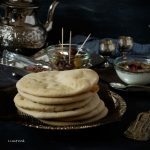
What is traditionally also served alongside sumakiah is some pickles or marinated vegetables. While in a Palestinian home, these would be homemade, it goes without saying that you can use shopbought. So something like pickled chillies, olives and, as you can see in the images here, makdous, cured Middle Eastern eggplants, stuffed with walnuts. Recipe soon!
Right then, shall we get our aprons on?
More Palestinian Recipes


If you enjoy the recipe, drop me a comment and let me know. And if you are feeling like a star, don’t forget that 5-star rating!😉
If you make this recipe, post it on Instagram and tag me @azlinbloor.
Lin xx
Images by LinsFoodies


Sumakiyyah Recipe (Palestinian Sumac Stew, aka Sumaghiyyeh)
Ingredients
- 500 g stewing beef or lamb
- 5 Tbsp EV olive oil
- 750 ml water or chicken stock I find beef stock adds too much flavour, see Notes below
- 2 bay leaves optional
- 500 g chard
- 1 large onion about 250 g (8.8 oz) pre peeled weight
- 400 g chickpeas in water from a can this is a large can in the UK
- salt as needed
- freshly ground black pepper
For Sumac & Tahini Mix
- 6 Tbsp sumac
- 250 ml very hot water doesn't want to be boiling, just off the boil, see Notes below
- 250 ml room temperature water
- 4 Tbsp AP flour
- 100 g tahini homemade recipe in article above
- 1 tsp toasted sesame oil
Tempering
- 3 Tbsp dill seeds or 1 handful fresh, or 1 Tbsp fennel or caraway seeds
- 1-2 Tbsp chilli flakes depends on how hot you'd like it
- 6 medium garlic cloves
- 2 Tbsp EV olive oil
Garnish
- EV olive oil as desired
- sumac as desired
- chilli flakes as desired
- a few chickpeas (from the can)
Instructions
Let's Cook the Meat
- Cut up your beef or lamb into bite-sized pieces if not bought ready cut.
- Heat 2 Tbsp olive oil in a pan and brown the meat for 3-4 minutes over medium-high heat. If your saucepan isn't big enough, do it in 2 batches.
- Pour the water (or stock) in and bring to a boil. If using a stockpot or stockcube, just drop it in with the water. See Notes below.Add the bay leaves, if using.
- Skim off excess foam/scum that rises to the top. Then stir, cover with a lid, reduce heat to low and simmer for 1 hour until the meat is soft and fully cooked.This will depend on the cut and size of your meat. You may need 1½ hours.
Soak the Sumac
- Put the kettle on and tip the sumac into a large jug or bowl (you'll be adding 1 more cup of water and tahini to it later).
- When the water's boiled, count to 10 slowly, then pour 250ml (1 cup) of the very hot water on the sumac. Stir, and set aside.
Other Prep Work
- Cut off and discard the tough white stems of the chard, see video on how I do this.Pile the leaves on each other, then roll into a chiffonade. Slice the chard rolls into thin strips. You'll want to do this in 2 batches (2 rolls of leaves) for easier cutting.
- Peel the onion and chop it up finely. You can do this by hand or in a food chopper.
- Peel and finely chop the garlic too. We'll be pounding it later with the dill.
- Rinse and drain the chickpeas well.
- Since I always make fresh tahini when needed, this is when I get it done. You can do that, if you'd like to, or do it days/weeks earlier or use shopbought.
Sumac & Tahini Mix
- When the sumac has been soaking for 30 minutes, top it up with 250 ml (1 cup) of room temperature water and stir to mix.
- Tip in the flour, in 3 additions, and whisk well between each addition. Then continue whisking for a minute or so until it's lump free. Shouldn't take too long.
- Pour in the tahini and sesame oil and mix well. Set aside.
Let's Cook Sumakiyyah
- When the beef is done cooking, it's time to cook the whole dish.Heat 3 Tbsp of olive oil on medium heat and fry the onions for 2 minutes.
- Add the chard, stir well, cover and leave to steam for 1 minute.
- Tip in the cooked beef, along with any liquid and stir to mix.
- Add most of the chickpeas, saving a few for garnishing. Stir.
- Pour in the sumac and tahini mix, stirring well to mix. If you've only used water, add ⅛ tsp of salt. If you've used stock, leave it out for now.Even if your sumac has salt, you'll need this tiny amount.Bring everything to a simmer, reduce heat to medium-low and leave to simmer, uncovered, for 10 minutes, while you get the tempering ingredients done.
Let's Finish our Sumakiyyah
- Pound the dill seeds and chilli flakes until semi-fine. Don't worry to much here on how fine it needs to be. You are pounding them more to release the aroma and oils.You could also use a spice mill or food chopper here.
- Add the garlic and pound for another minute or so.
- Heat 2 Tbsp of olive oil in a small frying pan on medium-low and fry this pounded spice mix for 30 seconds.
- Tip the spiced oil into the sumakiyyah and stir well. Finish with some freshly ground black pepper.Taste the stew and add a little more salt if necessary.
Serving Sumakiyyah
- Divide into individual bowls and drizzle a little olive oil all over.
- Sprinkle a little more sumac and chilli flakes and top with a few chickpeas. Canned chickpeas are fine eaten straight from the can.Enjoy it with some bread, as described in the article above.
Notes
Water is traditionally used to cook this Palestinian recipe. But many cooks also use stock for a more well rounded flavour, which I definitely prefer. In the video, you’ll see me using only water. But when I make this for Eid, I tend to throw in a chicken stockpot or cube. 1 stockpot or cube is usually for 500 ml (2 cups) of water. Water for sumac
I use 250 ml hot water, 250 ml room temperature (1 cup + 1 cup). This is so the sumac isn’t too hot when I’m adding the flour, which will result in clumps.
Hot water = put the kettle on and let the water boil as you’re getting the sumac ready in a jug. Once the water has boiled, count to 10, thenm pour it over the sumac. I prefer to do this, just like making coffee, as I don’t want to scorch that beautiful sumac. Tahini
I don’t use shop bought tahini, as I much prefer the flavour of freshly homemade tahini. It only takes 10 minutes, and you only need sesame seeds. I’ll have a YouTube short on it in a couple of days.
Nutrition
Enjoyed this recipe? Add us to your Google Search Preferred Sources:


I’m a vegetarian so I subbed out King mushrooms for the meat. I cooked the mushrooms in a covered dish in the oven with water and olive oil, and it came out tender. The stew was delicious and hearty.
That’s wonderful, Dena, so pleased you were able to make this incredible dish.
I had all the vegetables for this growing in my garden, and I was inspired by Gaza Soup Kitchen’s post saying they made it (minus the meat, because, Gaza.) for the families there. This recipe turned out amazing, even though I used ground beef, instead of stew meat, because it was what I had. I wished I could share it with the families I help there. Thank you for this wonderful recipe! I will be making it again!
I am so pleased to hear this, Pippi, that you enjoyed the recipe. I often use minced beef too, as it’s just perfect for this.
It’s heartbreaking , what’s been going on over there for decades, and especially these last 18 months.
You’ll find a couple more recipes from Gaza in the Palestinian Recipes Collection. Hopefully, I’ll be doing more soon.
Such a gem of a recipe from Palestine! Love how hearty and rich it looks. Perfect for Ramadan and Eid, now not so far away. And ofcourse for these very cold nights of January. I’m going to make it soon!
Thank you Maria. Let me know how it goes.
Can’t wait to try this, my mum loves it! Thank you!
Let me know how it goes.
Incredible! I’m looking forward to cooking this up over the weekend. Huge fan of your ME recipes as you know.
AWesome, let me know how it goes!