

Gin and Tonic, the classic British drink, with the addition of the sour and slightly bitter Australian Finger Lime and aniseed-y basil.
Estimated reading time: 5 minutes

With gin seeing a revival these last few years around the world, all forms of flavours have sprung up on the market. And if you’ve been following me a while, you know that I enjoy making gin infusions, like the following:
Gin Recipes on LinsFood


Gin and Tonic History, Anyone?
Well, it starts with the gin. Add some Dutch courage, then pass it over to the British army in India.
There is a whole lot of speculation, conjecture and arguments over the origin of gin and when it was first created.
While the invention of distillation was credited to the Arabs in the Middle Ages, the world’s first known gin recipe is thought to have come about in the 15th century, with spices like galangal, star anise, grains of paradise, ginger, etc.
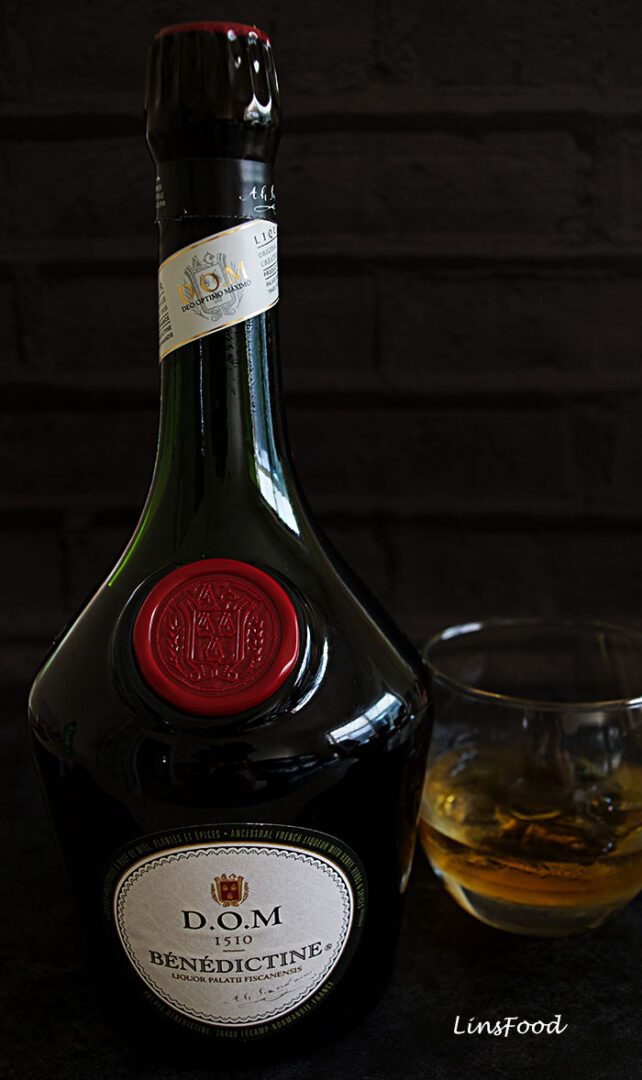
But if you ask me, that sounds suspiciously like D.O.M. Bénédictine.
But hey, what do I know?
Did the Dutch invent Gin?
Dr. Sylvius de Bouve is credited with having invented the drink as we know it today, juniper flavoured grain alcohol, or Genever, as it was called, the Dutch name for juniper. It was prescribed as a digestive aid; not unlike the gin based British Pimm’s, then?
Suffice it to say, British soldiers discovered it in Holland during the 30 Years’ War and took it home with them. Because the Dutch soldiers always had a supply of it wherever they went, gin also became known as Dutch courage, a term still used to this day to mean confidence or strength boosted by alcohol.
Gin proved to be a massive hit with the Brits, with homemade distillations running rampant and the name somehow got shortened from genever to gin. Simon Ford, of Ford’s Gin says,
What I take from this is that the British were too drunk to pronounce genever so they abbreviated the word to ‘gen,’ which eventually gets anglicized to the word that we use today.

What about the Tonic Water in Gin and Tonic?
Fast forward a few hundred years, mid 19th century onwards, and we’re in India during the times of the British Raj, when India came under the British Empire. Taking advantage of the new colony and its warmer weather, many Brits, men and women, flocked to India.
And were introduced to malaria.
By then, quinine was a well known antidote to malaria. The powers that be of the British army mixed it with water and created the first tonic water in an attempt to ward off this tropical evil.
It didn’t take long for the Brits to realise that adding their much loved gin to the tonic water significantly improved its flavour.
And Gin & Tonic was born.
Adding lime to the mix not only made the drink much more enjoyable, but it also improved the scurvy that many would have suffered from the long voyage over. You know, lack of vitamin C?
Winston Churchill said,
Gin and tonic has saved more Englishmen’s lives, and minds, than all the doctors in the Empire.
So that’s the Gin and Tonic taken care of, let’s take a look at the lime that we’re using in this recipe. Because it’s special.

Australian Finger Lime
Click here to read more. The Australian Finger Lime (Citrus australasica), as its name suggests, is native to Australia. When cut open, finger limes release tiny little citrus sacs that are just bursting with flavour.
These tiny, astringent sacs look like caviar, hence their more sophisticated name, lime caviar, or caviar lime. As soon as I started growing the plant, I knew I had to try it in a gin and tonic.
Australian finger limes are citrusy, tart, with a touch of bitter, and just a hint of sweet. Personally, I think it’s almost like a cross between a Persian lime and a young grapefruit, with some lemon basil thrown in. Hence the basil leaves in the drink today.
The combination works perfectly well, with citrusy, bitter, herbal and aniseed aromas and flavour.
What Tonic Water to Use in Gin and Tonic?
Whatever gin and tonic you’re having, the tonic water is a matter of choice. I just love the variety that’s available to us these days by all sorts of brands. These are some of my favourite flavours:
- Pomegranate and Basil Tonic (used here)
- Any Elderflower Tonic
- Fentiman’s Valencian Orange
- Fentiman’s Pink Peppercorn Tonic Water

How much Tonic Water to Use?
This is completely a matter of taste. Some like to drown their gin in tonic, while some like to have just a drop or two. I’m definitely in the second camp, especially when it’s a gin I like.
So how much tonic water you use is completely up to you.
Shall we go have ourselves a glass of gin and tonic?
More Cocktail Recipes on LinsFood


If you like the recipe, don’t forget to leave me a comment and that all important, 5-star rating! Thank you!
And if you make the recipe, share it on any platform and tag me @azlinbloor, and hashtag it #linsfood.
Lin xx

Gin and Tonic with Australian Finger Lime and Basil
Ingredients
- 10 basil leaves
- 1 Australian Finger Lime
- 100 ml (4 fl oz) London Dry Gin
- 4 ice cubes
- 2 small bottles of tonic water about 150ml/6 fl oz each
Garnish
- 2 small top end basil sprigs
- 2 slices of regular lime
Instructions
- Divide the basil leaves into 2 and place them in your chosen glasses.
- Using a cocktail muddler or the back of a teaspoon, crush the basil leaves to release their essential oils and aroma.
- Add the ice cubes to the glass (2 each).
- Squeeze the Australian finger limes into the glass (half a lime each).
- Pour in 50ml (2 fl oz) of gin into each glass.
- Top with as much or as little tonic water as you like. I only use about the same amount as the gin, but it’s a matter of taste.
- Give it a stir, and garnish with the lime slices and basil sprigs.


Fantastic recipe, very descriptive. I’m looking forward to making this soon!!
Cheers!
A classic, my father is English, so this is very popular in our house. Cheers Azlin, have a great weekend!
Cheers Javier, you have a good one too!
Damn girl, you make my heart sing! Where can I get these limes in the UK?
Haha, that’s always a good thing. Besides my conservatory :), you can get finger limes at:
https://www.thewasabicompany.co.uk/ – they’re cheaper
https://www.finefoodspecialist.co.uk/
Cheers Lin, I saw these at the market during the weekend and bought a handful on impulse. Then got home and went huh! So thanks for this idea, my go to weekday drink, so I’m enjoying a glass now, and boy, what a flavour!
This weekend, I plan to try one of your ceviche recipes with them. Thanks!
Cool, really pleased to hear that, Tomas. And I’ve done that, bought something, then got home and scratched my head! Let me know how the ceviche goes!