

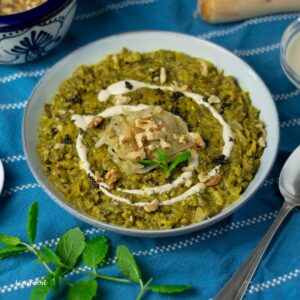
Kashke Bademjan is going to be your new favourite appetiser, it makes a great side dish or part of your mezze or tapa spread.
Estimated reading time: 8 minutes

What is Kashke Bademjan?
Kashke Bademjan is a Persian dip of mashed eggplants that bears a strong resemblance to other Middle Eastern and Mediterranean eggplant dips like Baba Ganoush, Mutabal and the Greek Melitzanolosata.
What is the difference between baba ganoush and kashke bademjan? Or mutabal? This is a question I get asked a lot. Basically, what makes it different from the other eggplant dips mentioned above is the use of kashk, instead of the usual yoghurt or tahini. More below.
Let’s take a look at the name, shall we? You will also find it called Kashko Bademjan or Kashk-e-Bademjan. The letters e and o are what we call ezāfe, a tool in the Persian language that shows relationships between nouns, amongst other things. I mentioned this in our Borani Laboo recipe, right here.
Kashke Bademjan just literally means kashk eggplants.
What is Kashk?
Kashk, to put it in the simplest terms, is fermented dairy/yoghurt. Or fermented whey, if you like, as written on the jars in the image below.
It’s a dairy product that is creamy, tangy and is rich in umami notes, a lot like goat’s cheese and other goat dairy products. With a sprinkling of matured pecorino or parmesan! You can read more about kashk (aka jameed, qurut, etc) on the Homemade Kashk article here.
Kashk is a specialist product, so you need to source out a store that stocks Middle Eastern or Central Asian ingredients. Or go online.
Or make your own kashk with my homemade kashk recipe here.
You’ll find it either in dry or liquid form. My homemade kashk is always frozen in dried form. Whether you’re using it in dried or liquid form, you want it to be the consistency of thick but pourable yoghurt.
When using dry kashk, it’s a simple case of mixing it up with a little water before using it. I’ll give you the exact measurements in the recipe below.
If you’re using liquid kashk, it depends on how thick it is, just add a little water to achieve the right consistency as mentioned above.


Kashk Substitute
Kashk is an acquired taste. It has a pretty strong aroma, think goat’s cheese. So don’t worry if you’ve bought a jar and really, really cannot handle it. You’re not alone. Even amongst Iranians and Central Asians!
So can you substitute yoghurt for kashk? Plain old thick, Greek yoghurt, soured cream or crème fraiche. If you can handle the smell of goat milk yoghurt, then that’s what you want to get, for the best substitute. Sometimes, I also add a grating of pecorino or parmesan for that missing umami note.
My kids can’t stand the stuff, so I use plain yoghurt for them, with nothing else added.

Other Ingredients
There aren’t a whole lot of ingredients to think about in this Persian eggplant dip recipe. Besides the kashk, we’ve got:
- eggplants (aka aubergines, brinjals)
- olive oil
- saffron which we’ll convert to liquid saffron, or bloomed saffron, as its also called
- onion
- garlic
- turmeric
- salt and pepper
- dried mint
- walnuts
- you could finish the dish of with some fresh herbs like parsley or mint
Let’s take a look at the eggplants, liquid saffron and dried mint.

Eggplants
The other main ingredient in today’s recipe is the bademjan, or eggplants in Farsi (the Persian and Afghan language).
The eggplants are traditionally fried in plenty of oil before being mashed and cooked further. But in recent years, this practice has fallen on the wayside purely for health reasons. As you can imagine, eggplants are thirsty little things and soak up lots of oil.
There are various ways you can cook up kashke bademjan without frying the eggplants in oil. I have so many Middle Eastern eggplant recipes on this site that this is something we’ve addressed before.
- use an air fryer.
- bake the peeled and sliced eggplant in the oven before continuing on the stove.
- roast the eggplants whole, in their skin, before scooping out the flesh and proceeding with the recipe on the stove – this is my preferred method, as we will be mashing up the eggplant flesh. Just like in Mutabal and Mirza Ghasemi.
What Eggplants to Use?
It doesn’t really matter what eggplants you use for kashke bademjan. Whether you use Italian eggplants, Chinese eggplants or globe, your end result will be just as delicious.
To that end, I’m giving you an idea of number as well as weight of the eggplants you need.
Liquid Saffron
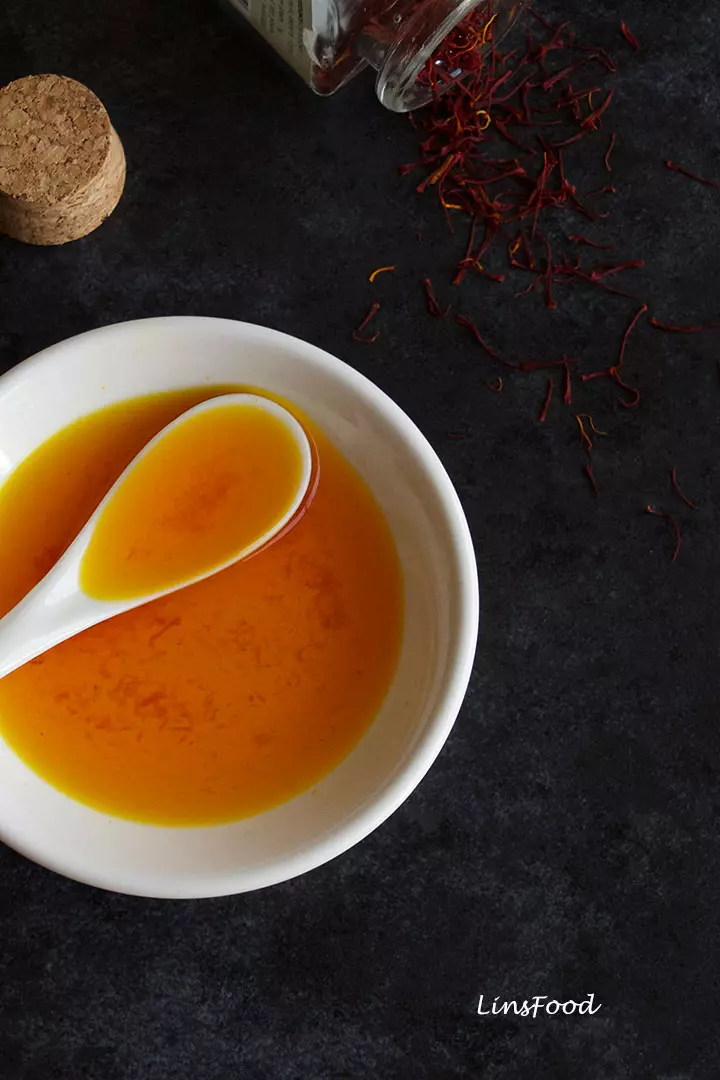
If you’ve been a longtime LinsFood follower, you’ll know that I use saffron the Persian way, no matter what I’m cooking. So essentially, we grind the saffron strands up and soak the whole thing in a little hot water.
This is also called bloomed saffron, and you can read more about it here. It’s a 2-3 minute job. This way, you get the very essence of the saffron.
Kashke Bademjan Recipe
So there are 2 distinct steps in cooking kashke bademjan, preparing the eggplants, then cooking it all up. Let’s take a look at what we’ll be doing.
- Roast the eggplants whole in a hot oven for 45 minutes.
- Make liquid saffron by grinding the saffron pistils in a mortar and adding 2 Tbsp hot water.
- Prep work – onion and garlic and get all the other ingredients ready.
- Lighten the kashk.
- Crush the walnuts – with a pestle and mortar or in a chopper.
- Fry 1 Tbsp dried mint in a little oil for 20 – 30 seconds. OPTIONAL.
- Eggplants – when they’re done, halve and scoop out the soft flesh. Chop with a knife or mass with a potato masher.
- Caramelise onions – optional step: fry the onions for 15 minutes then take about 2 Tbsp out for later to use as garnish. OPTIONAL.
- Continue with the recipe by adding garlic then all the other ingredients. Cook for 15 minutes.
- Add kashk and cook for 5 minutes more. Serve up.
What do you think? Doable?

How to Serve Kashke Bademjan?
As mentioned right at the start, this Persian eggplant dip is served as an appetiser. So the obvious accompaniment would be some sort of flatbread and also crudités for scooping up all that yumminess.
What kind of flatbread to serve with kashke bademjan? Anything you fancy. Lavash, that thin staple of many cuisines in the Middle East and Central Asia, is the most popular and traditional choice.
But you could also serve it with whatever you can get your hands on, whether that’s the traditional sangak, taftoon, barbari, taboon or the more commonplace pita bread, naan or even focaccia.
Psst: I have an amazing homemade focaccia recipe here with a to-die-for crumb with lots of air pockets! It’s a top 10 LinsFood recipe, if you are interested.
But as mentioned above, when I serve kashke bademjan, I also always have vegetable sticks to dip. Anything like celery, cucumber or carrots work amazingly.
How to Store Kashke Bademjan
Leftover kashke bademjan can be kept, covered, in the fridge for up to 2 days.
You could also freeze it for up to a month. Reheat gently on the stove until piping hot, adding a touch of water to lighten it. And a little more kashk or yoghurt if you fancy.
Make Ahead
You can make ahead kashke bademjan right up to the step before you add the kashke. Keep it in the fridge for up to 2 days, then heat up and add the kashk to finish.
The other thing you can do is roast the eggplants, cool and freeze for up to a month. Then defrost and use as in the recipe below. I always have some roasted eggplants because they are so convenient.
And that’s it. Shall we get our aprons on?
If you enjoy the recipe, drop me a comment and let me know. And if you are feeling like a star, don’t forget that 5-star rating! 😉 Merci!
If you make this recipe, post it on Instagram and tag me @azlinbloor with the hashtag #linsfood.
Lin xx
More Eggplant Recipes


Kashke Bademjan Recipe
Ingredients
- 2 large eggplants (about 600g/1.3 lb)
- 2½ Tbsp EV olive oil
- 6 walnut halves
- 125 ml water
- 125 ml liquid kashk (or yoghurt or crème fraiche) to cook with see instructions below under "Other Prep Work"
- 60 ml liquid kashk to garnish
Aromatics and Herbs
- 1 large onion (about 250g/0.5 lb pre peeled weight)
- 2 medium garlic cloves
- 2 Tbsp dried mint
Spices & Seasonings
- 1 pinch saffron + 2 Tbsp hot water about ⅛ tsp
- ¼ tsp ground turmeric
- salt if needed (kashk is salty)
- freshly ground black pepper
Instructions
Roast the Eggplants
- Preheat the oven to 200˚C (400˚F/ Fan 180˚C) and line a baking sheet with foil.Pierce each eggplant twice with a small knife to allow steam to escape. Place them on the foil covered baking sheet and roast in the oven for 45 minutes, until they are very soft.

Other Prep Work
- Make the liquid saffron. Put the kettle on with just a little water. Grind the saffron with a pestle and mortar, then pour 2 Tbsp of the hot water and leave to soak until needed.You can add just a pinch of salt to the saffron to help grind it better.

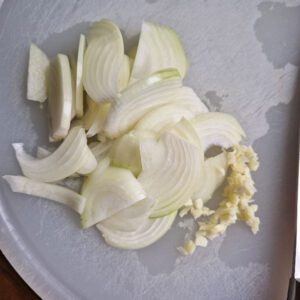
- Onion & Garlic. Halve the onion, then thinly slice it. Finely chop the garlic.
- Prepare the kashk by lightening it with some water.If you have dry kashk, use 2 Tbsp and mix it with 125ml/half a cup of warm water, until you have a smooth mix. You may have to soak it a while or run it through a food chopper/blender. See how I do it in this homemade kashk recipe article.If you have liquid kashk from a jar, you may have to lighten it slightly with 1 or 2 Tbsp water to a pourable consistency. It all depends on the brand you get.

- Crush the walnuts with a pestle and mortar or in a chopper. Or place them in a plastic bag and crush with a rolling pin or smooth glass, by rolling over the nuts.

- Heat ½ Tbsp olive oil in a small frying pan on low heat and fry 1 Tbsp of the dried mint for 20 seconds. Don't let it burn. Tip out this mint mixture onto a saucer so it doesn't burn.

Back to the Eggplants
- When the 45 minutes are up, get the eggplants out of the oven. Slice them in half lengthwise, being careful not to burn your hands.Using a spoon, scrape out the soft flesh from both eggplants and place on a chopping board.

- Chop up roughly with a knife, or use a potato masher to mash up roughly. Set aside until needed.

Let's cook our Kashke Bademjan
- Heat 2 Tbsp of EV olive oil in a large, deep frying pan (skillet) on medium heat and fry the onions for 1 minute. Then reduce the heat down to low and fry for 15 minutes to caramelise the onions. Stir them regularly, about every 2-3 minutes to stop them from catching and burning.Halfway through, add a splash of water (about 60ml/quarter cup), stir and continue cooking.When the onions are done caramelising, take about 2 Tbsp of them out and set aside for garnishing.1. You can start caramelising the onions with about 10 minutes to go of roasting the eggplants, so at the 35 minute mark. Or wait, if you don't fancy multitasking.2. Caramelised onions to garnish our eggplant dip is optional. You could skip this step and just fry the onions for 2 minutes on medium heat before continuing to step 2 below, where we add the garlic.

- Add the garlic, fry for 30 seconds, then add the liquid saffron, turmeric, 1 Tbsp dried mint (unfried) and about 3 turns of some freshly ground black pepper. Stir to mix.

- Tip in the eggplants, along with any liquid, and stir to mix well. Add the water and bring to a simmer. Reduce the heat to low, cover and cook for 15 minutes, stirring twice in that time.

- Pour in 125ml/half cup kashk and stir well. Cover and cook for 5 minutes. Then check seasoning and add salt if necessary. Finish off with a couple of turns of freshly ground black pepper.Add a splash of water or more kashk if you'd like it wetter.

Serving Kashke Bademjan
- Dish up your finished kashke bademjan into a shallow plate. Drizzle the rest of the kashk all over and scatter the fried mint and crushed walnuts. Serve warm or at room temperature.


How long would you bake the eggplants in the airfryer? Probably not as long as in the oven?
Hi Alexandra, apologies for the late reply, I’ve been away.
Preheat the air fryer to 200° (400°F) for 4 minutes.
Pierce the eggplants as in the recipe. Don’t slice them.
Roast the whole eggplants for 10 – 15 minutes, depending on how big they are. You want them at the squishy stage, so you can scrape the flesh out. If your eggplants are huge, you may even need to go 20 minutes.
I love trying new authentic recipes like this. Eggplant is one of our favorite, so excited to give this dip a try!
I love eggplant! I have not heard of this dip before, but excited to give it a try! Thanks for the recipe share!
My pleasure, Ann. Let me know how it goes.
I made this over the weekend with just some yoghurt and thought it was really amazing. I’ve made your other eggplant recipe too where you smoke the eggplants. Would that work here?
Hi Ros, apologies for the tardy reply. Smoking the eggplants will work, giving you a smoky kashke bademjan, which is out of this world!